
📊 Full opportunity report: Women’s Health Radar on IdeaNavigator AI — validation score, market gap, and execution plan.

Get hardware and tech essentials delivered free with Prime
- Fast, free delivery on millions of items
- Prime Video, Amazon Music and more included
- Member-only deals all year
TL;DR
A new mobile app prototype is being tested to detect early perimenopause symptoms in women aged 40-58. The tool compares symptom patterns against validated scales and aims to facilitate earlier diagnosis and care. The development is in initial testing phases, with potential to impact women’s health and employer wellness strategies.
A digital women’s health radar is being tested as a workflow for early detection of perimenopause in women aged 40-58, aiming to improve diagnosis and reduce untreated symptoms. The tool, still in early development, uses symptom logging and pattern detection to flag likely perimenopause, with potential benefits for women, employers, and health plans. For more insights, see the trade and supply-chain operations signal monitor.
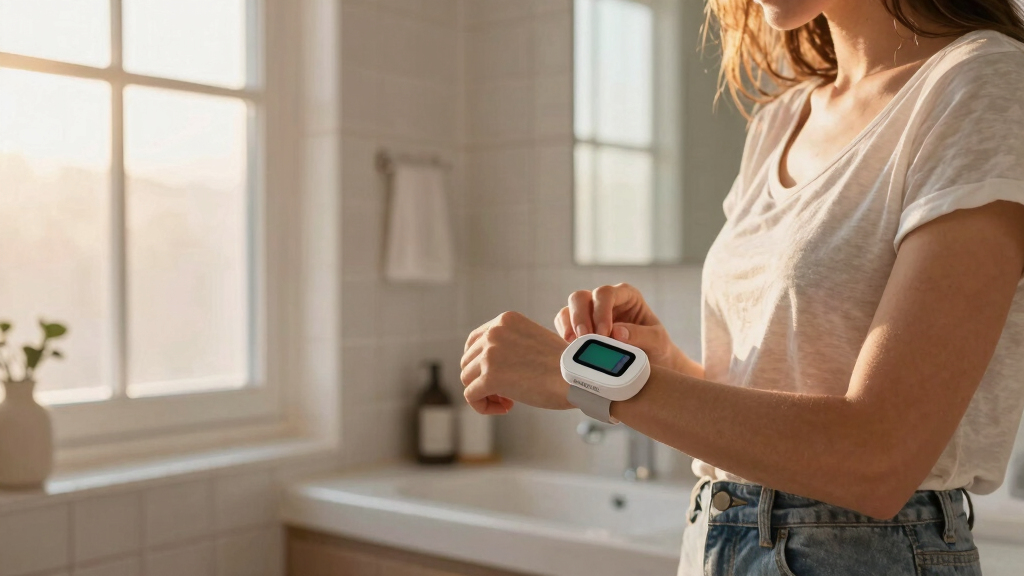
The proposed mobile app allows women aged 40 and above to log daily symptoms such as sleep disruption, mood changes, hot flashes, irregular cycles, and energy levels. It optionally integrates data from wearable devices. Using rules-based and machine learning algorithms, the app compares logged patterns against a validated perimenopause symptom scale to identify early signals. When likely perimenopause is detected, it generates a clinician-ready symptom summary and suggests possible next steps, including telehealth referrals or specialist consultation.
This approach is positioned as an educational tool, not a diagnostic device, and aims to facilitate earlier intervention before symptoms significantly impact health and work. The initiative is targeting a 4-6 week testing period with a landing page and waitlist sign-up, measuring engagement metrics such as symptom tracking and referral requests to validate its utility, similar to trade and supply-chain operations signal monitoring.
Potential Impact on Women’s Health and Workplace Wellbeing
This development could transform how perimenopause is detected and managed, addressing a significant gap where symptoms are often misattributed or dismissed. Early detection can lead to timely treatment, improving quality of life and reducing health risks associated with untreated menopause symptoms. Additionally, employers and health plans see potential benefits in reducing absenteeism and attrition linked to unmanaged menopause symptoms, making this a strategic innovation in women’s health and workplace wellness.
Products Worth Considering

LG 27GR83Q-B 27-inch Ultragear QHD IPS Gaming Monitor

LG UltraGear 34G600A-B 34-Inch Curved WQHD Gaming Monitor

LG 27GS60QC-B Ultragear 27-inch Curved Gaming Monitor (QHD, 180Hz, 1ms, 1000R)
As an affiliate, we earn on qualifying purchases.
Growing Focus on Menopause and Digital Health Innovation
Menopause has shifted from a taboo to a rapidly expanding category within femtech, exemplified by companies like Midi Health reaching a $1 billion valuation in February 2026. Most major PPO insurers now cover virtual menopause consultations, reflecting increased recognition of menopause management as a healthcare priority. Advances in consumer wearables, validated symptom scales, and AI pattern detection are making early identification of perimenopause feasible, creating opportunities for digital health tools to improve outcomes for women in this transitional phase.
Currently, many women experience misdiagnosis or delayed diagnosis, as primary care providers often lack specialized training in menopause management. The proposed women’s health radar aims to fill this gap by providing accessible, early screening that can route women to appropriate care pathways before symptoms escalate.
“The goal is to create a simple, accessible tool that flags early signs of perimenopause, enabling women to seek timely care.”
— an anonymous researcher
Development Stage and Validation Metrics Still Unclear
It is not yet clear how accurately the app will identify early perimenopause signals in diverse populations or how well it will perform in real-world settings. Validation results from the initial testing phase are pending, and the effectiveness of the symptom comparison algorithms remains to be demonstrated. Further, the scope of integration with healthcare providers and insurance coverage models is still in development.
Next Steps: Pilot Testing and Validation Outcomes
The project will proceed with a 4-6 week pilot using a landing page and waitlist to gauge user engagement. Metrics such as symptom logging frequency, referral requests, and user feedback will inform further development. If initial results are promising, broader validation studies and potential commercialization efforts are expected to follow, aiming to establish this radar as a standard early screening tool for perimenopause.
Key Questions
How does the women’s health radar detect perimenopause?
The tool logs daily symptoms and compares patterns against validated scales using rules and machine learning to flag likely perimenopause signals.
Is this a diagnostic device?
No, the app is positioned as an educational pattern detection tool, not a diagnostic device. It aims to prompt women to seek professional care.
Who can benefit from this technology?
Women aged 40-58 experiencing unexplained symptoms, as well as employers and health plans interested in reducing menopause-related health and work disruptions.
When will this tool be available for wider use?
The current phase involves initial testing; broader availability depends on validation results and subsequent development milestones.
What are the privacy considerations?
The project emphasizes secure data handling, with user data stored in compliance with healthcare privacy standards, but specific privacy protocols are still being finalized.
Source: IdeaNavigator AI