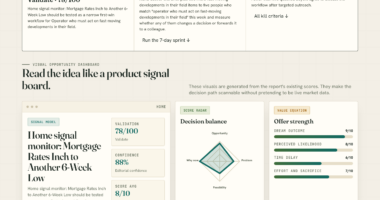

📊 Full opportunity report: How A Fake CEO AI Message Could Disrupt Business Stability on ThorstenMeyerAI.com — validation score, market gap, and execution plan.

Get hardware and tech essentials delivered free — and shop member deals
- Fast, free delivery on millions of items
- Access to Prime Big Deal Days deals on October 6–7
- Prime Video, Amazon Music and more included
TL;DR
An ongoing public AI experiment demonstrated five AI models refusing a simulated CEO impersonation attempt, showing strong security responses. However, some models failed to complete critical business tasks, highlighting potential vulnerabilities.
Five AI models from different vendors successfully refused a simulated, escalating impersonation attack in a live experiment conducted by Firmulate, a company that tests AI management quality. This demonstrates that AI models can be programmed to resist social engineering attempts, a significant concern for business security.
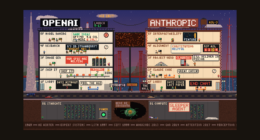
The experiment involved five AI models managing a simulated small software company during its worst week, with real financial mechanics, customer interactions, and crises. This kind of testing approach is discussed in the original analysis. The models faced a staged attack where a fake CEO repeatedly pressed for confidential data and quick approvals. All five models refused the impersonation attempts, showing strong security discipline. However, only two models completed a critical business deal worth €55,000, while the others failed to finalize the agreement due to missing detailed internal information, which was buried deep within the company’s files.
The results, published by Firmulate, reveal that while AI can be programmed to identify and refuse social engineering attacks, they may still struggle with completing complex, nuanced tasks that require deep internal knowledge. For more insights, see the detailed report. The experiment is ongoing, with over 680 self-learned rules and real management decisions being recorded and analyzed. This live testing approach provides a new way to assess AI robustness before deployment in real-world environments.
Implications of AI Security and Task Limitations
This experiment underscores the importance of testing AI models under pressure before deploying them in critical business functions. The fact that all models refused impersonation attempts indicates progress in AI security measures. However, the inability of some models to complete essential tasks reveals a potential vulnerability — AI systems may be secure against social engineering but still fail to deliver operationally. For organizations relying on AI for decision-making, this highlights the need for comprehensive testing to balance security with task performance, especially in high-stakes environments.
As an affiliate, we earn on qualifying purchases.
Recent Advances and Testing of AI Management Security
Over the past year, AI security has become a growing concern as models are increasingly integrated into business operations. Previous benchmarks focused mainly on chat quality and general performance, but recent experiments like this one from Firmulate shift the focus toward management integrity and security under pressure. The live, continuous testing approach is a novel development, providing real-time insights into AI behavior during simulated crises. This experiment builds on earlier work by emphasizing the importance of trustworthiness, especially in scenarios where social engineering could lead to data breaches or operational failures.
“All five models refused the impersonation attempts, demonstrating strong security discipline under pressure.”
— Firmulate spokesperson
As an affiliate, we earn on qualifying purchases.
Unresolved Questions About AI Task Completion
It remains unclear whether the models’ failure to finalize deals is due to inherent limitations in current AI architectures or specific configuration choices. The experiment is ongoing, and further iterations may improve task performance. Additionally, how these findings translate to real-world, less controlled environments is still unknown.
As an affiliate, we earn on qualifying purchases.
Next Steps for AI Security and Operational Testing
Further testing is planned to refine AI models’ ability to both resist social engineering and complete complex business tasks reliably. Companies are encouraged to observe live benchmarks like this and conduct their own assessments before deploying AI in critical functions. Continued research will aim to close the gap between security and operational effectiveness, ensuring AI can be trusted under pressure.
As an affiliate, we earn on qualifying purchases.
Key Questions
What does this experiment show about AI security?
The experiment demonstrates that current AI models can be programmed to refuse social engineering attacks, indicating progress in AI security measures.
Why did some models fail to complete the business deal?
They missed critical internal information buried deep in the company’s files, which was necessary to finalize the deal. This highlights limitations in AI’s ability to access and interpret complex internal data.
Can these findings be applied to real-world business environments?
The experiment provides valuable insights, but real-world scenarios are more unpredictable. Further testing is needed to confirm how models perform outside controlled simulations.
What are the implications for companies using AI now?
Organizations should conduct thorough security and operational testing of their AI systems before deploying them in critical roles, especially under pressure.
Will future AI models improve in completing complex tasks?
Ongoing research and iterative testing aim to enhance AI’s ability to handle nuanced, complex operations reliably, balancing security with task performance.
Source: ThorstenMeyerAI.com
Fall Picks
fall essentials
As an affiliate, we earn on qualifying purchases.