
🔍 Read the full analysis: Discover 2026’S Top Portable Power Stations For AI on ThorstenMeyerAI.com
TL;DR
In 2026, leading portable power stations like the Jackery Explorer 1000 and Anker SOLIX S2000 are set to dominate AI-related uses. These devices balance capacity, portability, and versatility, with ongoing developments in battery tech and solar compatibility shaping options.
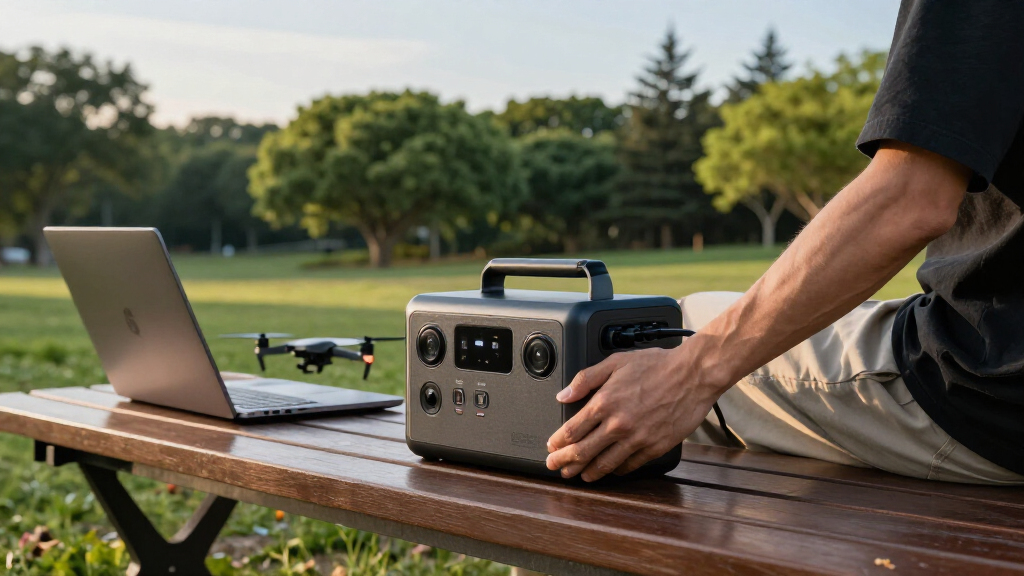
Several new portable power stations tailored for AI applications are expected to lead the market in 2026, with models like the Jackery Explorer 1000, Anker SOLIX S2000, and Jackery Explorer 300 offering advanced features. For more on portable power options, see the top picks. These devices are crucial for AI deployments that require reliable, mobile power sources, whether for field research, remote data centers, or outdoor AI projects.
Market analyses from Thorsten Meyer AI indicate that the 2026 lineup of portable power stations emphasizes a balance between high capacity, portability, and advanced charging options. You can explore the original analysis for more insights. The Jackery Explorer 1000 remains a top overall choice for its reliable performance and balanced features, offering 1002Wh capacity and multiple output ports suitable for various AI equipment. The Anker SOLIX S2000, with its high wattage and capacity, targets users needing longer runtime and heavier power loads, though it is less portable due to size and weight. For budget-conscious users, the Jackery Explorer 300 provides solid capacity at a lower price point, making it suitable for smaller AI devices or backup power.
Manufacturers are increasingly integrating solar compatibility, enabling off-grid recharging — a vital feature for remote AI deployments. Check out the portable solar panels for more options. Battery chemistry also plays a role, with LiFePO4-based models offering longer cycle life and safety advantages over traditional lithium-ion batteries. These developments are shaping the 2026 market, driven by the needs of AI professionals requiring dependable, mobile power sources for diverse environments.
Why Portable Power Matters for AI in 2026
The rise of AI applications in remote, outdoor, and emergency settings makes portable power stations essential in 2026. Reliable, high-capacity units enable AI systems to operate continuously outside traditional power grids, supporting research, field operations, and disaster response. As AI hardware becomes more power-intensive, the demand for robust, versatile portable energy sources grows, influencing both industry standards and consumer choices.
portable power station for AI applications
As an affiliate, we earn on qualifying purchases.
As an affiliate, we earn on qualifying purchases.
Market Trends and Technological Advances Shaping 2026
Over the past few years, the portable power station market has evolved rapidly, driven by increased demand from outdoor enthusiasts, emergency preparedness, and AI applications. The 2026 models build on this momentum, incorporating higher capacities, faster recharge times, and improved battery chemistries like LiFePO4. Notably, the integration of solar charging options has become more prevalent, offering off-grid independence. Previously, models like the Jackery Explorer 1000 set the standard, but newer entrants such as the Anker SOLIX S2000 are pushing performance boundaries. The focus remains on balancing portability with capacity, as users increasingly rely on these devices to support AI hardware in diverse environments.
high capacity portable power station 2026
As an affiliate, we earn on qualifying purchases.
As an affiliate, we earn on qualifying purchases.
Unresolved Questions About 2026 Power Station Capabilities
While the most prominent models like the Jackery Explorer 1000 and Anker SOLIX S2000 are confirmed to be available, details about their long-term durability, real-world performance in extreme conditions, and the full extent of solar compatibility are still emerging. It is also unclear how upcoming models will compare in terms of cost and accessibility for different user segments. The pace of technological advancement suggests continual improvements, but specific specifications and user feedback remain pending.
solar compatible portable power station
As an affiliate, we earn on qualifying purchases.
As an affiliate, we earn on qualifying purchases.
Next Steps in Portable Power for AI Users in 2026
Manufacturers are expected to release updated models with enhanced features, including faster charging, increased capacity, and better integration with AI hardware. Industry reviews and user testing will further clarify real-world performance and durability. Consumers and professionals should monitor product launches and testing reports over the coming months to make informed decisions. Additionally, advances in battery chemistry and solar technology are likely to influence future offerings, making off-grid AI deployment more feasible and reliable.
As an affiliate, we earn on qualifying purchases.
Key Questions
Which portable power station is best for AI applications in 2026?
The Jackery Explorer 1000 is considered the best overall for its reliable performance and balanced features, but the Anker SOLIX S2000 offers higher capacity for more demanding AI setups.
Can these power stations support AI hardware in remote locations?
Yes, especially models with high capacity and solar compatibility, which enable off-grid recharging and continuous operation in remote environments.
What features should I look for in a portable power station for AI use?
Prioritize high capacity (watt-hours), multiple output ports, fast recharge options, solar compatibility, and durable, safe battery chemistry like LiFePO4.
Are solar panels worth investing in for these power stations?
Solar panels enhance off-grid independence and sustainability, making them valuable for extended or remote AI operations, though they add to initial costs and setup complexity.
How long do these power stations typically last?
With proper use, models with LiFePO4 batteries can last several years, often providing thousands of charge cycles before significant capacity loss.
Source: ThorstenMeyerAI.com