
An Everyday Guide To My September AI Stack
AIThis post was created with the assistance of artificial intelligence (AI).

🔍 Read the full analysis: An Everyday Guide To My September AI Stack on ThorstenMeyerAI.com

Prime Big Deal Days · Oct 6–7Offer from Amazon

Get hardware and tech essentials delivered free — and shop member deals

  • Fast, free delivery on millions of items
  • Access to Prime Big Deal Days deals on October 6–7
  • Prime Video, Amazon Music and more included
Start your free Prime trial Free trial for eligible customers · Cancel anytime
As an affiliate, we earn on qualifying purchases.

TL;DR

Thorsten Meyer’s September 29 guide assigns different roles to six AI models, with Claude Opus 5.5 handling most building work and GPT-6.1 Sol serving for detailed analysis and review. The choices draw on Artificial Analysis Intelligence Index v4.3.x scores and estimated cost per task; Meyer says the index is not a substitute for testing models on a team’s own work.

Thorsten Meyer published a guide on September 29, 2026, describing how he assigns six AI models to building, review, and routine tasks as capability scores cluster while reported costs per task vary widely. His current setup uses Claude Opus 5.5 for most development and newly released GPT-6.1 Sol for detailed analysis and independent review.

Meyer bases the comparison mainly on the Artificial Analysis Intelligence Index v4.3.x, which he describes as a general capability measure rather than a verdict on any specific workload. In his table, Opus 5.5 scores 58 at its top setting, GPT-6.1 Sol scores 51 at xhigh, and GPT-6 Luna scores 37. The listed cost per task ranges from $0.07 for Luna to $7.63 for Fable 5.1; these are the guide’s estimates, not prices that every user will necessarily pay.

For development, Meyer selects Opus 5.5 at high effort for routine feature work and xhigh for more demanding problems such as architecture, migrations, and trust boundaries. At those settings, the guide reports scores of 54 and 56, respectively, and costs of $1.82 and $3.46 per task. Meyer says max effort reaches a score of 58 at $5.98 per task, which he considers rarely worthwhile for his work.

GPT-6.1 Sol’s role is narrower: examining details and reviewing work produced by another model. The guide lists its high setting at $0.32 per task and xhigh at $0.39. Meyer says that price makes routine review practical in his workflow. He reserves Astra or Fable for second opinions when Sol and Opus disagree, and names Sonnet 5.5 and Luna as options for scoped subtasks and routine checks.

At a glance
reportWhen: Published September 29, 2026; GPT-6.1 S…
The developmentThorsten Meyer published a September 29 guide to an AI model stack organized around reported capability scores and cost per task, including GPT-6.1 Sol, which was released that day.
Crypto market snapshot
Fear & Greed Index
71/100 — Greed
Bitcoin BTC$83,280▼ 0.5%
Ethereum ETH$2,671▼ 0.7%
Tether USDT$0.9996▼ 0.0%
BNB BNB$763.43▲ 0.4%
XRP XRP$1.5▲ 0.1%
USDC USDC$0.9998▼ 0.0%
Solana SOL$118.96▲ 0.0%
TRON TRX$0.3374▲ 0.8%
Live data · CoinGecko · alternative.me (24h change)

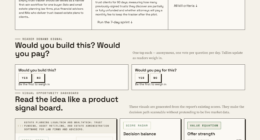
Opus builds. Sol reviews. Jev decides.

The September 2026 AI stack in one page: six frontier models on one price curve, and a decision model for the high-volume judgements that do not need a sentence.
Scores: Artificial Analysis Intelligence Index v4.3.x. Data as of 29 September 2026.
BuildsClaude Opus 5.5 at high or xhigh effort
Digs and reviewsGPT-6.1 Sol at high or xhigh effort
DecidesJev on high-volume yes/no and routing calls

One price tape, six models

Put every model on the same cost-per-task ruler and capability looks compressed. The bill does not.
Price tape: cost per task of six models on a log scale, from GPT-6 Luna at $0.07 to Fable 5.1 at $7.63$0.05$0.10$0.50$1$5$10cost per task, log scale: each tick is a different order of magnitudeGPT-6 Lunaindex 37 · $0.07GPT-6.1 Solindex 51 · $0.39 (xhigh)GPT-6 Astraindex 53 · $3.26Opus 5.5index 58 · $5.98Sonnet 5.5 · index 56 · $7.60Fable 5.1 · index 53 · $7.63about 100× from the cheapest to the priciest, but only 21 index points between them

Score against cost, at every effort setting

Each dot is an effort level. Opus 5.5 at high already matches Astra and Fable at max on this index, for less money.
Intelligence Index score against cost per task for each effort setting of six models$0.01$0.10$1$102030405060cost per Intelligence Index task, log scaleindexOpus high / xhigh: my defaultOpus 5.5Sonnet 5.5Fable 5.1GPT-6 AstraGPT-6.1 Sol (new)GPT-6 Sol (Sep 22), dashedGPT-6 Lunaup and to the left is better
Astra and Fable are shown at their top published setting. Luna starts at $0.0045 per task. GPT-6.1 Sol has no low or max setting published yet.

The effort dial moves the bill more than the model

Going from medium to max on Opus costs 4.46× more for 7 points. That is why I run high or xhigh.

Claude Opus 5.5

$0.55
42
$1.34
51
$1.82
54
$3.46
56
$5.98
58
low
medium
high
xhigh
max
Solid bars are where I run it. Max adds 2 points over xhigh for 73% more cost.

Claude Sonnet 5.5

$0.41
36
$0.59
41
$1.08
47
$2.74
52
$7.60
56
low
medium
high
xhigh
max
Best value is high. At max it writes about 193k output tokens per task, the most measured.

GPT-6.1 Sol: near-Astra scores at a fraction of the price

Launched 29 September at $2 in and $10 out per 1M tokens. It sits 1 to 2 points under Astra and Fable, and Opus xhigh still leads it by 5.

Three published settings

SettingIndexCost per taskOutput tokensFirst token
medium48$0.2115M5.3 s
high50$0.3225M57 s
xhigh51$0.3936M69 s
Median for comparable models is 82M output tokens. High and xhigh are not interactive: plan for a wait before the first token.

Same score band, very different bill

GPT-6.1 Sol xhigh
$0.39index 51
Opus 5.5 high
$1.82index 54
GPT-6 Astra max
$3.26index 53
Opus 5.5 xhigh
$3.46index 56
Fable 5.1 max
$7.63index 53
Cost per Intelligence Index task. A one-point gap is inside the noise.

My stack: who builds, who reviews

Opus does the work. A second model family reviews it, because a different reviewer catches what the author cannot see.
Stack diagram: Opus 5.5 builds at high effort, escalates to xhigh, and sends every change to GPT-6.1 Sol for review; Astra or Fable give a second opinionOpus 5.5 · xhighhard problems: architecture,migrations, trust boundariesOpus 5.5 · highMAIN BUILDERfeatures, APIs, multi-filework, refactorsescalate when it gets hardGPT-6.1 Solhigh or xhighdigs into details andreviews every change$0.32–0.39 per taskdifffindingsAstra or Fablesecond opinion, 8 to 20×the cost per taskif they disagreeSonnet 5.5 · Lunaside work: scopedsubtasks, bulk checksand routingFailed review? Hand Opus the failing case and the evidence.Never just “try harder”: effort cannot supply a missing requirement.
Effort is not capability. Turning the dial up does not make a model smarter.
Effort cannot fill gaps. A missing requirement stays missing at any setting.
Different model, same spec. That is not independent review if both read the same flawed brief.
Green tests are not approval. Passing tests only prove what the tests cover.

Cheaper tokens are not cheaper work

Illustrative, not measured: $1 of model time plus 4 minutes of review at $45 an hour. Halving the model price saves 12.5% of the total. One extra minute of review erases it.
$4.00
review $3.00
model $1.00
Baseline
$3.50
review $3.00
model $0.50
Model price cut 50%
$4.25
review $3.75
model $0.50
Cheaper model plus 1 extra minute of review
Track cost per accepted result: model, tools, review and rework, divided by the results someone actually uses.

Read the numbers with four warnings

The index movesFable scored 66 on an earlier version and 53 on v4.3. Compare within one version only.
Fallback is includedFlagged cyber and biology tasks route to older Anthropic models, now on Sonnet 5.5 too.
Max is not productionReal deployments run medium or high, where gaps narrow and costs fall.
Your work decidesShadow-test on your own tasks. Budget cost per task, not per token.

Part 2: Jev, the model that decides instead of writing

Jev cannot write, summarise or extract. It answers narrow typed questions with a probability and an honest confidence, in under a second, for about $0.04 per million input tokens.

One call in, typed answers out

Your code, not Jev, decides what to do with each answer, usually by confidence band.
Jev flow: state and typed questions go into one Jev call; typed answers with confidence come out; code acts alone, escalates the gray zone, or logsStatea ticket, a story,a site profile,a log line …+ typed questions,many per callJevone call0.3 to 0.9 s$0.042 / M tokens inAnswersnoul: 0.03choice: billing p 0.91, conf 0.86score: 2.7 of 3 conf 0.64code branches on thisAct aloneconf ≥ 0.8Escalategray zone toLLM or humanLogmeasure first

Three question types

noul
A yes/no question. Returns the probability of yes, 0 to 1.
gates, flags, filters
choice
Pick one option. Returns the choice, a probability per option, and a confidence.
routing, classification, taxonomy
score
Rate on your ordered levels. Returns a position (it can fall between levels) plus a confidence.
quality, fit, severity, priority

Confidence is the superpower

In my own measurement on a 31-topic classification, Jev agreed with a frontier LLM almost every time it was sure, and rarely when it was not. So: decide the clear cases, route the gray zone.
confidence 0.8 or higher
97–99%
all answers
89%
confidence below 0.5
42%
Agreement with a frontier LLM, my production data, September 2026, rounded.

Three uses running in my publishing operation

About 90,000 decisions so far. Checks I could only afford on a sample now cover everything.
$2.01
Language check
78,889 articles scanned overnight. 1,576 in the wrong language found, 1,553 fixed in place.
22%
Relevance gate
About 10,000 story-to-site pairings judged in 3 days. Only 22% were clearly on-topic.
89%
Classifier fallback
Agreement with the primary LLM across 31 topics, used when that LLM errors.

The fit test, then the shadow test

Use Jev only when all four hold. Then prove it on past decisions before it acts on anything.
High volumeThousands of small calls, not a handful of big ones.
Narrow questionNo multi-step reasoning needed.
Cheap errorsOr unsure cases go to something smarter.
Heuristic failsVisibly, and measured, not assumed.
  1. Replay 300 to 500 past decisions
  2. Compare overall and per confidence band
  3. Read 20 disagreements, decide who was right
  4. High band at 95% or better?
  5. Own flag, off by default
  6. Canary on 5 to 10 units
  7. Roll out in the confident band only

24 use cases, sorted by how well they fit

Start from the strong fits. The amber ones need a measurement before you trust them, and the red ones fail one of the four conditions.
in productionstrong fitmeasure firstpoor fit

Proven in production

  • 1Relevance gate
  • 2Language check
  • 3Classifier fallback

Publishing and content

  • 4Thin-source detector
  • 5Same-event dedupe
  • 6Product fits roundup
  • 7Disclosure present
  • 8Headline quality
  • 9Comment moderation

Commerce and support

  • 10Support-ticket routing
  • 11Return-reason coding
  • 12Review to feature complaints
  • 13Catalogue taxonomy
  • 14Order-fraud pre-triage

Software and AI systems

  • 15LLM guardrail
  • 16RAG passage filter
  • 17Citation check
  • 18Tool and intent routing
  • 19Log-line triage
  • 20PR risk triage

Business ops and home

  • 21Inbox triage
  • 22Expense categorisation
  • 23Lead qualification
  • 24Smart-home intent

Limits, cost and one hard rule

No writing, summarising or extractionPair it with an LLM for the write step.
No world knowledgePut a snippet in the state; a bare name means nothing.
Reads your wording literallyA rewording moved my results about 2 points. Freeze it, re-measure after changes.
Weaker on non-English, maths, datesKeep those checks on an LLM. Early access, hosted API only.
100,000 decisions ≈ $2.50
About 60M input tokens at $0.042 per million, output free, roughly 600 tokens per three-question call. Latency 0.3 to 0.9 seconds.
Never the sole decision-maker for consequences about people. Hiring, credit, medical and legal outcomes stay with a human. Jev can sort and flag. A person decides.
Sources. Model scores, cost per task and speeds: Artificial Analysis, Intelligence Index v4.3.x, including the GPT-6.1 Sol medium, high and xhigh pages, checked 29 September 2026. Astra and Fable scores from the Artificial Analysis v4.3 announcement. Jev figures are my own production measurements, September 2026, rounded. The review-bill example is illustrative. Read the full article on thorstenmeyerai.com.

Why Meyer Splits Building and Review

The guide’s central point is that model selection can depend on the cost of reaching an acceptable result, not just a leaderboard position. Meyer reports that six models sit within about 20 index points, while their estimated task costs differ substantially. In his account, GPT-6.1 Sol at xhigh scores one to two points below Astra at xhigh or max and Fable 5.1, while costing $0.39 per task compared with $3.26 and $7.63.

That price difference shapes his review process. Meyer argues that a model from a different family can provide a useful second look at code or other work, and says Sol’s cost lets him apply that check to each meaningful change. He also cautions that a second model cannot correct missing requirements in the original specification, and that passing tests alone does not amount to approval to ship. Those are his workflow recommendations, not independently verified findings about review accuracy.

The cost figures also need to be read alongside latency and human effort. Meyer reports that Sol’s high and xhigh settings took 57 to 69 seconds to produce a first token in the index evaluation, which makes them less suited to interactive exchanges. He further argues that human review time can outweigh a modest reduction in model charges. The source gives an illustrative example, not a measured general result, and its final cost discussion is incomplete.

The Index Behind the Model Choices

The guide compares model scores and costs using Artificial Analysis Intelligence Index v4.3.x unless it says otherwise. It presents the index as a map of general capability. Meyer explicitly advises readers to shadow-test models on their own tasks before switching a workflow, since the ranking may not predict performance on a particular team’s work.

Its cost comparisons cover both model choice and effort setting. For Opus 5.5, the table gives scores and estimated costs from low through max: low is 42 at $0.55 per task, medium 51 at $1.34, high 54 at $1.82, xhigh 56 at $3.46, and max 58 at $5.98. Meyer says moving from medium to max raises the estimated cost 4.46 times for seven additional index points. For Sonnet 5.5, the table puts high at 47 and $1.08, while max reaches 56 at $7.60.

The guide also lists token prices, which are distinct from its estimated cost-per-task figures. It gives Opus 5.5 at $4 per million input tokens and $20 per million output tokens, with cache reads at $0.20. GPT-6.1 Sol is listed at $2 and $10 per million input and output tokens, respectively. These rates alone do not establish what a given task will cost; usage and task length affect the bill.

““The index is a map of general capability, not a verdict on your workload.””

— Thorsten Meyer

Limits of the Cost and Score Data

The source does not provide enough information to independently reproduce every cost-per-task estimate or assess how closely the index tasks match a reader’s workload. Meyer says one index point is within the noise, and the guide notes that Artificial Analysis had not yet published GPT-6.1 Sol’s low or max settings when he wrote it. It also does not establish that the listed model choices will perform best for other users.

The guide’s final section on the cost of human review ends mid-sentence in the supplied material. It introduces an illustrative example saying that halving model prices saves 12.5% of “the real cost” and that an extra minute of human review can erase the saving, but the remaining calculation and its assumptions are not available. That claim cannot be assessed from the material provided. The source also does not say whether the listed task costs include all usage, subscription, or operational expenses.

Test the Stack on Real Tasks

Meyer’s stated next step for readers is to run candidate models against their own work before switching. A practical comparison would record quality, cost, and response time for the same tasks, then check whether the result meets the team’s requirements. The guide does not announce a formal benchmark update or a scheduled follow-up.

Further comparisons may change as index results are added, including the missing GPT-6.1 Sol effort settings noted in the article. Until those results appear and teams test the models directly, Meyer’s September 29 stack is a snapshot of his own choices and the cost and capability figures available to him at publication.

Key Questions

Which model does Meyer use for most building work?

He names Claude Opus 5.5 at high effort for routine development and xhigh for harder problems such as architecture and migrations.

What does GPT-6.1 Sol do in his setup?

Meyer uses GPT-6.1 Sol at high or xhigh to investigate details and review work produced by another model. The guide lists estimated costs of $0.32 to $0.39 per task at those settings.

Are the article’s task costs guaranteed prices?

No. They are cost-per-task estimates reported in Meyer’s comparison. The source does not establish that they will match every user’s workload, usage, or total operating costs.

Does the index show which model is best for every team?

No. Meyer says the index measures general capability and advises readers to shadow-test models on their own tasks before making a switch.

Source: ThorstenMeyerAI.com

Nothing in this article is financial or investment advice. Cryptocurrency and precious-metal investments carry significant risk — do your own research and consider a licensed advisor.
FALL

Fall Picks

As an affiliate, we earn on qualifying purchases.

You May Also Like

The Future Of AI With Watermarks: Risks For Claude Users In Employment And Education

Anthropic introduces machine-readable watermarks in Claude-generated content, prompting concerns over detection and privacy in workplaces and schools.

Spatial Focus Room: Make Distraction Impossible

A new deep-work app for Apple Vision Pro creates immersive environments to eliminate distractions and enhance focus, redefining productivity tools.

A Technical Look At Particle Geometry Mapping In AI Via ‘SINGULARITY’

A new project called ‘SINGULARITY’ demonstrates advanced particle geometry mapping techniques, pushing boundaries in AI-driven environment design.

Maximize Mobile Productivity With These AI-Enhanced Laptops In 2026

Discover the top AI-optimized laptops in 2026 designed to boost mobile productivity, featuring advanced hardware and intelligent features for professionals.