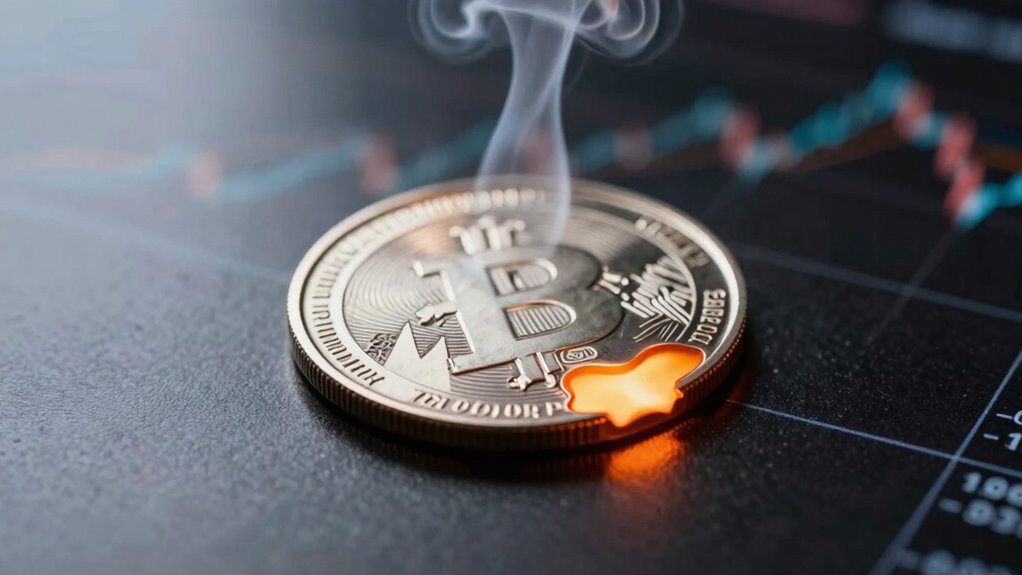
Token burns don’t always boost prices because other factors considerably influence a token’s value. Even if supply decreases, low liquidity can absorb the change without raising prices, and market sentiment might turn negative if investors see burns as desperate moves. External conditions like economic trends or regulations also play roles. Understanding that supply reduction is just one part of a complex market can help you see why burns don’t guarantee higher prices—there’s more to uncover below.
Listen free for 30 days with Audible
Thousands of audiobooks and originals — cancel anytime.
As an affiliate, we earn on qualifying purchases.
Key Takeaways
- Market liquidity may be too low to absorb supply reductions, limiting price impact.
- Investor perception of burns as bullish signals can be overestimated, leading to skepticism.
- External macroeconomic factors and market trends can overshadow the effects of token burns.
- Burning tokens alone does not address other fundamental factors influencing token valuation.
- Market sentiment and broader conditions heavily influence whether burns translate into higher prices.
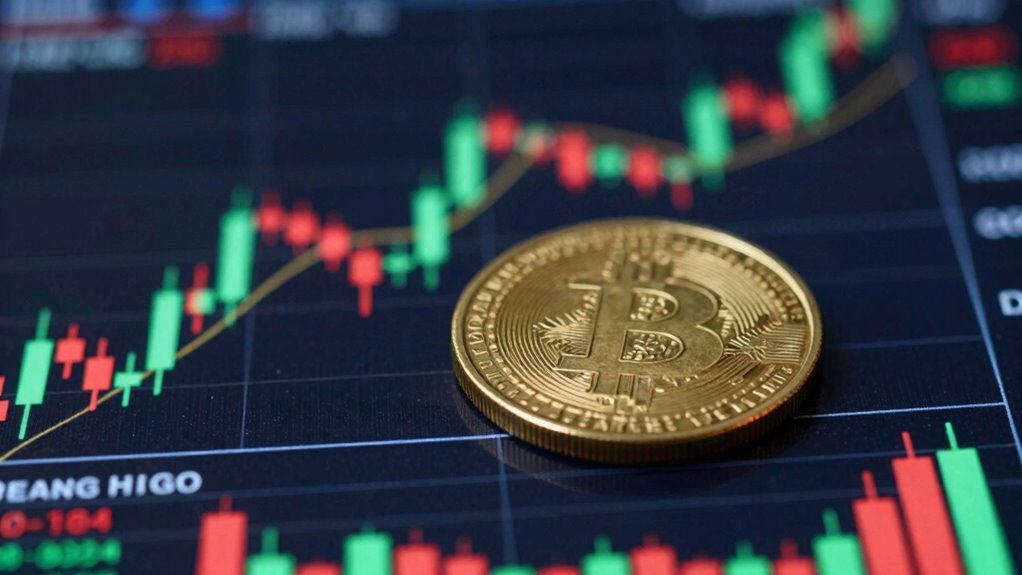
Token burns are a common strategy used to reduce the total supply of a cryptocurrency, but understanding their impact on price is crucial. While burning tokens seems straightforward—less supply should naturally increase value—you often find that prices don’t rise as expected. The reason lies in the complex dynamics of market liquidity and investor psychology. When tokens are burned, it’s tempting to think the scarcity will automatically make the remaining tokens more valuable. However, the market’s liquidity plays a key role. If the overall trading volume is low, even a reduced supply won’t necessarily attract buyers or push prices up. Liquidity determines how easily you can buy or sell tokens without causing significant price swings. If liquidity dries up or remains stagnant, the burn might not generate the demand needed to boost prices. Instead, the market might simply absorb the reduction in supply without any noticeable change in valuation.
Investor psychology further complicates the picture. Many investors view token burns as a bullish signal, expecting prices to surge afterward. But this expectation isn’t always justified. If the market perceives the burn as a desperate move or a sign that the project lacks sustainable growth prospects, investor confidence can wane. This skepticism may lead to selling pressure rather than buying interest, counteracting any potential price gains. Conversely, if investors see the burn as a genuine effort to increase scarcity and trust in the project, they might buy more tokens, but this isn’t guaranteed. The overall sentiment and market context heavily influence whether a burn results in upward price movement or not.
Additionally, external factors such as macroeconomic conditions, regulatory news, and broader market trends also affect how token burns influence prices. If the crypto market as a whole is experiencing downturns, individual token burns may be insufficient to reverse negative momentum. Conversely, in a bullish environment, burns might contribute to a positive feedback loop, but they’re unlikely to be the sole driver. Fundamentally, token burns are just one piece of a larger puzzle. Without increased market liquidity and a positive investor outlook, reducing supply alone won’t necessarily translate into higher prices. The interplay of these elements determines whether a burn will have a meaningful impact or simply become an overlooked technical move in the grand scheme of the market.
cryptocurrency liquidity analysis tools
As an affiliate, we earn on qualifying purchases.
As an affiliate, we earn on qualifying purchases.
Frequently Asked Questions
Can Token Burns Affect Investor Confidence Long-Term?
Token burns can influence investor confidence long-term, but it depends. If you see burns as genuine efforts to reduce supply and boost value, your confidence may grow. However, if you suspect market manipulation or manipulation tactics, your trust might erode. Investor psychology plays a big role—transparency and consistent actions foster trust, while perceived artificial scarcity or misleading burns can undermine long-term confidence.
Are There Alternative Methods to Influence Token Value Besides Burning?
Yes, you can influence token value through other Tokenomics strategies like staking rewards, liquidity provision, or inflation control. These methods encourage holding and active participation, boosting demand naturally. However, be cautious of market manipulation risks, where false signals could mislead investors. Diversifying your approach beyond token burns helps stabilize prices and build long-term confidence, making the ecosystem more resilient against volatility and external pressures.
How Do Market Sentiment and Burns Interact?
You can’t judge a book by its cover, and market sentiment isn’t solely about burns. When burns happen, they influence supply dynamics, but market psychology also plays a huge role. If traders see burns as a sign of confidence, they may buy in, boosting prices. However, if sentiment is negative, burns might be ignored or even perceived skeptically, showing that market perception can override the actual reduction in supply.
Do Burns Impact the Token’s Liquidity?
Token burns do impact your token’s liquidity by causing liquidity reduction, which can make it harder to buy or sell large amounts without affecting the price. When tokens are burned, the market depth decreases, leading to less available supply at various price points. This tighter liquidity can result in higher volatility, making your trades more sensitive to price swings, especially if the remaining supply is limited or concentrated.
What Are the Risks of Relying on Burns for Price Increases?
Relying on burns for price increases can backfire, like if a project burns tokens to combat inflation, but demand drops due to poor fundamentals. This risks supply reduction not boosting value, as investors might see it as a sign of trouble. For example, if inflation control efforts fail, prices could plummet despite burns, making the strategy risky. You shouldn’t depend solely on burns; strong fundamentals matter more for sustained growth.
crypto market sentiment indicators
As an affiliate, we earn on qualifying purchases.
As an affiliate, we earn on qualifying purchases.
Conclusion
So, next time you hear about a token burn, don’t start dreaming of instant riches. It’s like thinking burning a tiny candle will light up the entire city — it’s just not that simple. Market forces are wild and unpredictable, and burns are only one piece of the puzzle. Remember, in the crypto world, even the biggest flames can sometimes flicker out without setting the world on fire. Stay smart, stay cautious!
As an affiliate, we earn on qualifying purchases.
As an affiliate, we earn on qualifying purchases.
NFL season / tailgating Picks
team gear
As an affiliate, we earn on qualifying purchases.