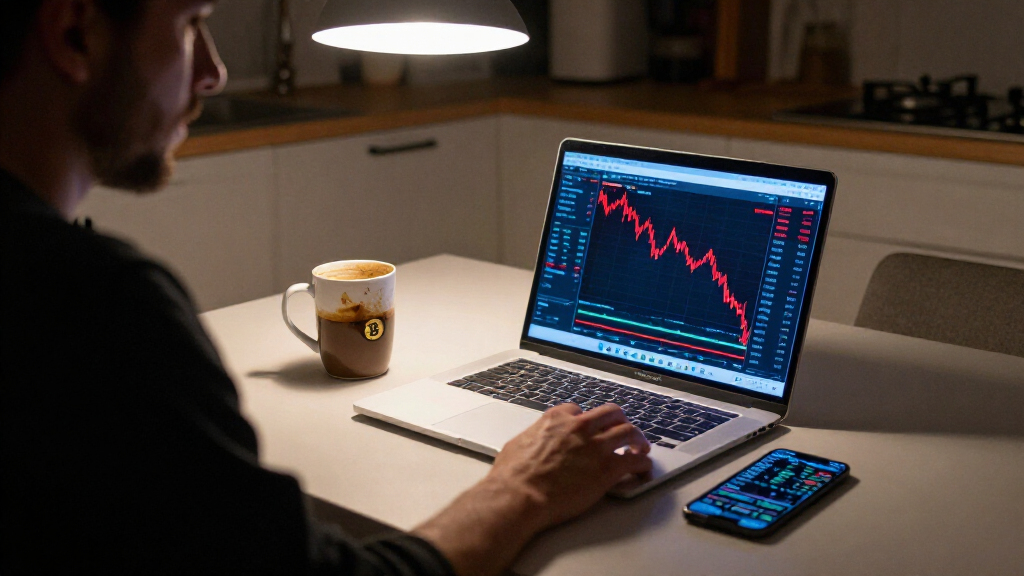

🔍 Read the full analysis: The Week Four Test Of A Viral “100X Trade” Strategy Ends In A Loss on ThorstenMeyerAI.com

Get hardware and tech essentials delivered free with Prime
- Fast, free delivery on millions of items
- Prime Video, Amazon Music and more included
- Member-only deals all year
TL;DR
Thorsten Meyer AI reports that a simulated two-day test of two versions of a viral Polymarket 5-minute crypto strategy lost money across four coins. The key paired-trade event occurred 3 times in 9,486 attempts, while the post-close version’s four settled fills all lost. The results are from paper trading, not real-money executions.
A simulated test of a viral Polymarket “100x trade” strategy ended in a net loss, according to a May 21 report from Thorsten Meyer AI. Across about 13,000 five-minute market windows on BTC, ETH, SOL and XRP, neither of two tested versions proved profitable; the test used simulated money and did not involve real funds.
The strategy was prompted by a YouTube video showing a trader turning $1 into $50 in a Polymarket five-minute Bitcoin Up/Down market. The source report says the video included on-chain transactions that could be checked on PolygonScan. Its creator described the trade as rare and said he did not yet have results showing whether it could be repeated.
Thorsten Meyer AI rebuilt the idea in two forms and tested them against live order-book activity over two days. In the paired-switch version, the bot placed bids on both Up and Down shares. If it bought both at two cents each, the winning share would pay $1, making the paired outcome profitable regardless of direction. But that depended on both orders filling.
That double fill happened just 3 times in 9,486 paired attempts, or 0.032%, according to the report. By comparison, 1,297 attempts filled only on the losing side; the report puts the paired strategy’s paper result at minus $280. The second version placed bids after the market’s apparent close on the side its price feed identified as the winner. It recorded eight fills from 3,482 posts, and all four fills that settled lost.
Why the Double Fill Matters
The result tests the difference between a striking individual trade and a repeatable method. A large return can be genuine while still depending on an unusual market event that is too rare to offset ordinary losses. In this test, the paired strategy’s premise relied on buying both sides cheaply, but the report says the bot much more often acquired only the eventual losing side.
The post-close results also point to a separate risk: identifying a likely winner just after a market window ends may not match the platform’s final resolution. That matters for traders evaluating automated strategies because a short delay or a mismatch in price sources can change which binary share pays. The findings do not establish how the strategy would perform under every market condition, but they do show that the tested approach did not turn the observed viral trade into a positive result in this sample.
These were paper-trading results, not evidence of real-money returns or live execution costs. Crypto markets and prediction-market positions can be volatile, and funds placed in such trades can be lost. The report itself cautions that using real funds could result in losses; this coverage is reporting, not financial advice.
As an affiliate, we earn on qualifying purchases.
From One Trade to a Test
The original video described a trade in a five-minute BTC Up/Down market, where one side pays $1 per share and the other pays nothing after resolution. The apparent opportunity was to buy both sides at very low prices during a brief period when stale orders remained available near the close. If both purchases filled at two cents apiece, the combined cost would be four cents per pair while one share would later pay $1.
The strategy’s central uncertainty was always whether those stale orders would fill on both sides often enough. The video creator, as quoted in the Thorsten Meyer AI report, said the event was rare and that the video did not yet establish results. The follow-up attempted to test repeatability rather than treating the displayed high-return trade as proof.
The report describes 24 parallel experiments across four coins and roughly 13,000 windows. It says its paper-fill model only counted a simulated bid as filled when a real taker sold into it. The published article is identified as the fourth installment in an ongoing series; the supplied source material does not provide the details of the earlier installments.
“This is going to take time because this is a rare event… probably I didn’t have anything for you in this video about the results.”
— The YouTube video creator, as quoted by Thorsten Meyer AI
As an affiliate, we earn on qualifying purchases.
Limits of the Paper Results
The source presents a two-day simulated test, not a live-money trial. It does not establish how the strategy would perform over a longer period, under different market conditions, or after accounting for real execution constraints and costs. The report provides aggregate figures but does not include enough detail here to independently reproduce every experiment.
The post-close version’s four settled fills all lost, which the report attributes to a timing mismatch between its price feed and Polymarket’s official resolution. It does not provide a full account of the resolution differences or explain whether changes to the feed or timing would alter the result. The test’s negative outcome is clear as reported; the broader performance of other implementations remains untested.
As an affiliate, we earn on qualifying purchases.
Further Testing Would Be Needed
Thorsten Meyer AI describes the article as Part 4 of an ongoing series, but the supplied source does not name a publication date or plan for a next installment. The immediate reported finding is therefore limited to the completed two-day test and its paper results.
Any follow-up would need to state whether it changes the strategy, testing period, or execution assumptions, and report both wins and losses over a defined sample. Until then, the source’s findings do not support treating the isolated high-return trade as evidence that the approach is repeatable.
As an affiliate, we earn on qualifying purchases.
Key Questions
What was tested?
The report tested two simulated versions of a strategy based on buying Polymarket five-minute crypto-market shares around the close: bids on both sides, and bids after the apparent close on the side identified as the winner.
Did the test use real money?
No. Thorsten Meyer AI says the experiments used simulated money and that no real funds were involved.
How often did both sides fill?
The report counted 3 double fills in 9,486 paired attempts, a reported share of 0.032%.
Why did the post-close version lose?
The report says the bot’s price reading shortly after the market close sometimes disagreed with Polymarket’s official resolution. All four fills that settled were reported as losses.
Does this prove the strategy can never work?
No. It reports negative results for two versions in a two-day simulated test across four coins. The findings do not establish how every possible implementation would perform in other conditions.
Source: ThorstenMeyerAI.com
Halloween Picks
halloween
As an affiliate, we earn on qualifying purchases.