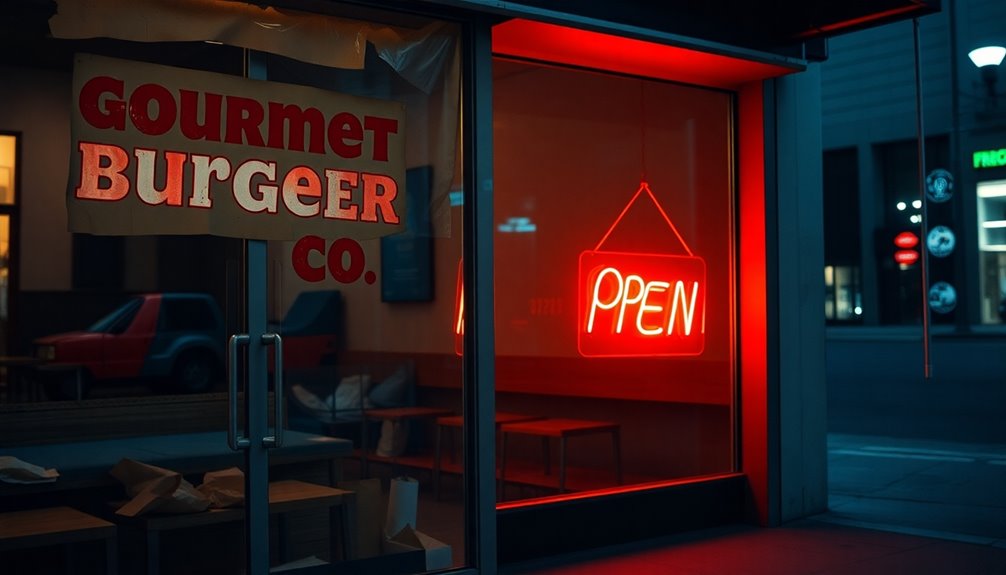

When you hear that your favorite gourmet burger chain has filed for Chapter 7 bankruptcy, it’s natural to feel surprised and disappointed. The sudden closure impacts not just the brand but the community that supported it. As the reasons behind its downfall unfold, you may wonder what led to this unexpected end and what it means for the future of casual dining options. The story isn’t over yet, and there’s more to uncover.

Get hardware and tech essentials delivered free with Prime
- Fast, free delivery on millions of items
- Prime Video, Amazon Music and more included
- Member-only deals all year
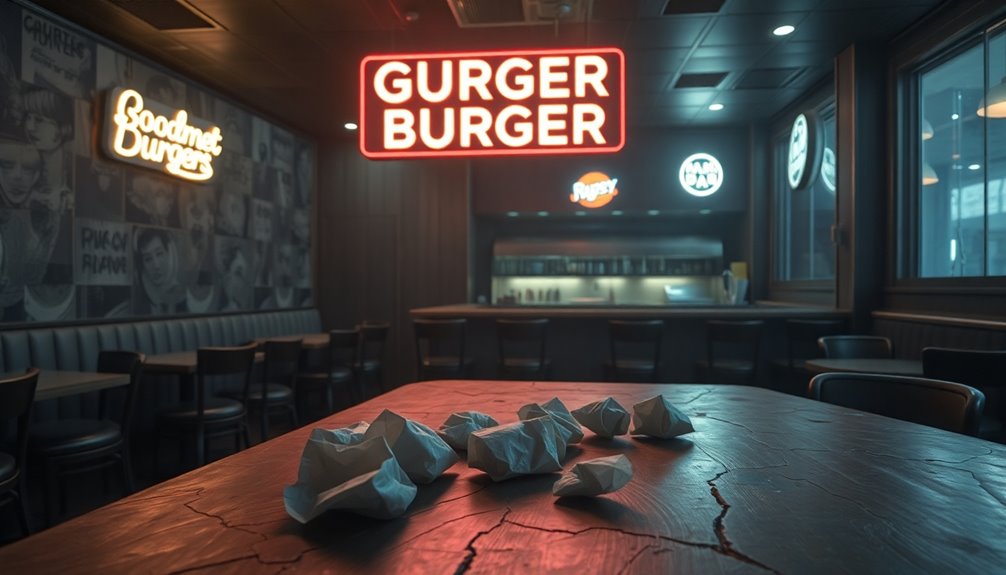
When a beloved gourmet burger chain files for Chapter 7 bankruptcy, it signals the end of its operations and assets being sold off to pay creditors. You might’ve enjoyed their signature burgers or visited their locations for special occasions, but now, those experiences are coming to an abrupt halt.
Unlike Chapter 11, which allows a company to reorganize and attempt a comeback, Chapter 7 means liquidation—selling off everything to settle debts. This shift caught many fans off guard, especially since the brand had built a loyal following that didn’t expect such a sudden shutdown.
The decision to file was driven by poor financial health, with unmanageable debt and declining sales making it impossible to sustain operations. As a result, the company is stepping away entirely, leaving behind a fading presence in the competitive gourmet burger market.
You’ll notice that the brand is planning to close multiple locations, significantly shrinking its footprint. It’s a strategy aimed at cutting losses by shuttering underperforming stores, many of which are closing quietly as lease agreements expire without renewal. This trend is consistent across the industry, with many chains facing similar fates. In addition, creating a clutter-free space is essential for maintaining a positive atmosphere, which can be vital for restaurants to thrive.
These closures are part of a broader trend seen across similar chains. For instance, Red Robin plans to close around 15 locations in 2025, with a total of up to 70 closures over the next five years. Such moves involve targeting stores that aren’t generating enough revenue, often those in less busy areas or with outdated facilities.
These closures not only reduce costs but also create a sense of the brand retreating from the market, leaving behind fewer options for customers who once relied on their gourmet offerings.
Economic pressures have played a major role in pushing these chains toward bankruptcy. Rising inflation and wages have squeezed restaurant profits, while declining foot traffic and changing consumer habits have further weakened sales.
Many people are tightening their discretionary spending, opting for faster, cheaper dining options or cooking at home. Other brands like TGI Fridays and Hooters are experiencing similar struggles, reflecting a broader downturn in the casual dining sector.
The crowded marketplace, combined with high operational costs, has made it increasingly difficult for traditional gourmet burger brands to stay afloat. Market saturation and stiff competition from newer fast casual concepts have also chipped away at their relevance.
The financial situation was dire enough that the company had to sell assets and close locations to generate cash and pay down debt. Despite these efforts, the mounting fiscal strain proved too much, and leadership acknowledged the tough reality during recent earnings calls.
The debt load played a pivotal role in seeking bankruptcy protection, with the sale of some assets seen as a last-ditch effort to stabilize finances. Loyal customers and fans expressed shock and disappointment, mourning the sudden loss of a favorite spot.
Media coverage highlights community reactions and the end of an era, casting doubt on whether the brand can recover or if this is truly the final chapter. The closures, some pre-emptive and discreet, reflect the brand’s struggle to maintain relevance amid a shifting market landscape. [In addition to financial issues, changing consumer preferences have significantly impacted the brand’s viability.
As an affiliate, we earn on qualifying purchases.
As an affiliate, we earn on qualifying purchases.
As an affiliate, we earn on qualifying purchases.
As an affiliate, we earn on qualifying purchases.
Fall Picks
fall essentials
As an affiliate, we earn on qualifying purchases.