📊 Full opportunity report: Anonymous daily check-ins for 12-step sponsors on IdeaNavigator AI — validation score, market gap, and execution plan.

Get hardware and tech essentials delivered free — and shop member deals
- Fast, free delivery on millions of items
- Access to Prime Big Deal Days deals on October 6–7
- Prime Video, Amazon Music and more included
TL;DR
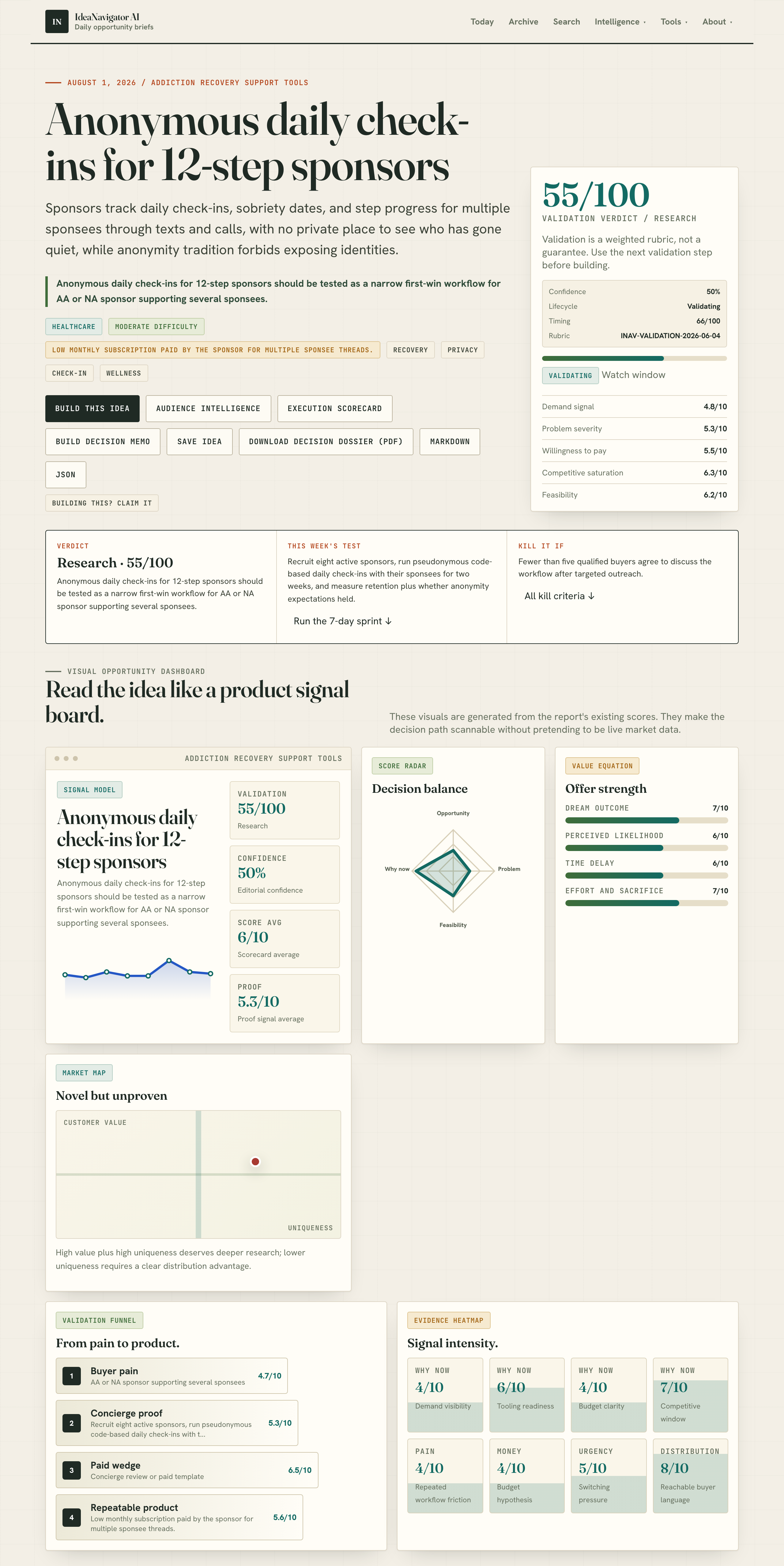
A pilot program is testing a pseudonymous check-in system for 12-step sponsors supporting multiple sponsees. The initiative seeks to enhance privacy while maintaining accountability in recovery support.
Developers are piloting a system that enables 12-step sponsors to conduct anonymous daily check-ins with multiple sponsees through pseudonymous threads, aiming to address privacy concerns while maintaining accountability. Read about innovative recovery support methods. This innovation targets the core challenge of balancing anonymity with effective support, which is central to the traditions of Alcoholics Anonymous (AA) and Narcotics Anonymous (NA).
The proposed system involves a simple, secure platform where a sponsor invites each sponsee using a one-time code, without storing real names or phone numbers. Learn more about the benefits of daily check-ins. The sponsee then reports their daily sobriety status with a green or red check-in and an optional note. This setup aims to prevent the leakage of personal contact details common in mainstream messaging apps, which often conflict with the anonymity principles of 12-step programs.
According to an anonymous researcher involved in the project, the initial test will involve recruiting eight active sponsors to run the pseudonymous check-ins with their sponsees over a two-week period. The goal is to measure retention rates, adherence to anonymity expectations, and overall usability. The platform is designed to be low-cost, with sponsors paying a monthly subscription fee for access to multiple sponsee threads.
While the concept is still in the testing phase, early feedback aims to determine whether this approach can serve as a scalable, privacy-preserving solution for recovery communities increasingly reliant on digital communication. Discover related support strategies.
Potential Impact on Privacy and Support in Recovery
This development could significantly improve privacy for individuals in recovery who are concerned about exposing their identities online. By offering a pseudonymous check-in method, sponsors may better support multiple sponsees without risking personal contact leaks or violating anonymity traditions. If successful, this approach could influence how digital tools are integrated into recovery programs, balancing accountability with confidentiality.
Moreover, the system addresses a growing need as recovery support shifts onto smartphones and messaging apps, many of which do not prioritize privacy or are incompatible with 12-step traditions. This innovation might set a precedent for more secure, privacy-focused tools tailored specifically for addiction recovery communities.
As an affiliate, we earn on qualifying purchases.
Digital Support Tools and Anonymity Challenges in Recovery
As recovery communities increasingly adopt digital communication, concerns about privacy and confidentiality have grown. Mainstream messaging apps often require users to share personal contact information, which conflicts with the core principle of anonymity upheld by AA and NA. Historically, sponsors have tracked check-ins and progress through calls or texts, but these methods lack a private, centralized system to monitor multiple sponsees effectively.
Recent efforts have explored various apps and platforms, but most fall short of aligning with the traditions of anonymity. The proposed pseudonymous check-in system emerges as a response to these challenges, aiming to provide a secure alternative that respects the confidentiality of participants while supporting accountability and engagement. The initiative is still in early testing, with results expected in the coming weeks.
“This system aims to create a private, scalable way for sponsors to check in with multiple sponsees without exposing their identities or contact details.”
— an anonymous researcher
privacy-focused recovery support platform
As an affiliate, we earn on qualifying purchases.
As an affiliate, we earn on qualifying purchases.
Unconfirmed Effectiveness and Adoption of the System
It is not yet clear whether the pseudonymous check-in platform will achieve widespread adoption or meet all privacy expectations during the pilot phase. The effectiveness of the system in maintaining accountability without compromising anonymity remains to be validated through the upcoming testing period. Additionally, user feedback and technical performance are still being evaluated, and broader acceptance by recovery communities is uncertain at this stage.
12-step sponsor sponsee communication tool
As an affiliate, we earn on qualifying purchases.
As an affiliate, we earn on qualifying purchases.
Next Steps for Pilot Testing and Evaluation Results
The project team plans to conduct the two-week pilot with eight active sponsors and their sponsees, collecting data on retention, usability, and privacy compliance. Results from this pilot will inform potential adjustments and scalability prospects. If successful, developers intend to expand testing and seek feedback from a broader user base before considering wider deployment or integration into existing recovery support platforms.
As an affiliate, we earn on qualifying purchases.
Key Questions
How does the pseudonymous check-in system protect privacy?
The system uses one-time codes to identify sponsees, avoiding the storage of real names or phone numbers, thus preventing contact details from being leaked or exposed.
Can sponsors still monitor progress effectively with this system?
Yes, sponsors will see simple daily status indicators (green or red check-ins) and optional notes, providing ongoing accountability without revealing personal identities.
Is this system officially endorsed by AA or NA?
No, this is a pilot project currently in testing and has not received official endorsement from any 12-step organization. It is developed independently to explore privacy solutions.
Will this platform replace traditional sponsor-sponsee communication?
Not necessarily; it aims to supplement existing methods by providing a more private, scalable check-in option, especially suited for digital communication.
When will the results of the pilot be available?
Results are expected after the two-week testing period, likely within a month of the pilot’s completion.
Source: IdeaNavigator AI
Fall Picks
fall essentials
As an affiliate, we earn on qualifying purchases.