
TL;DR
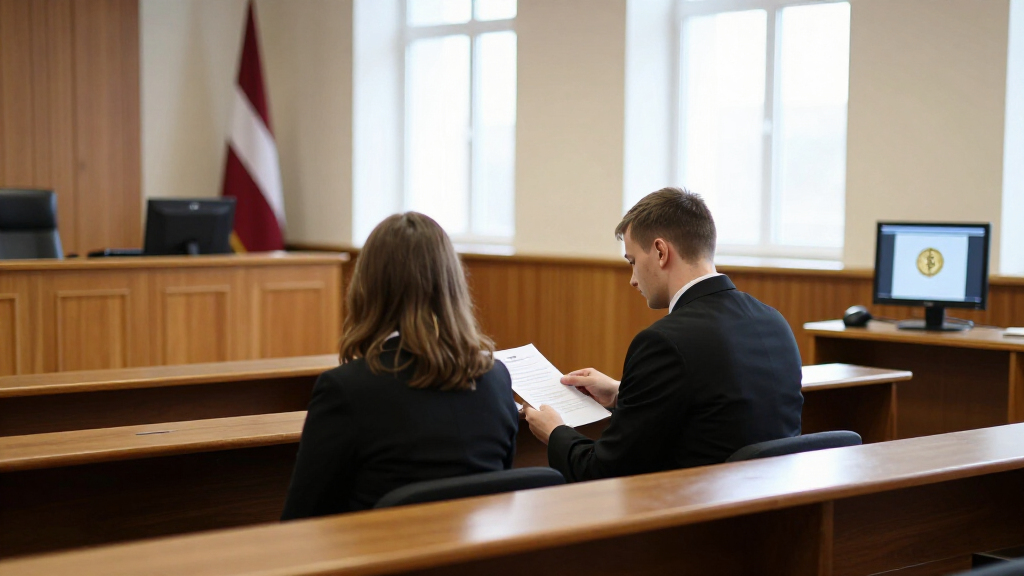
The Riga City Court sentenced Polina Kamleva, a resident of Rēzekne, to six years in prison for financing an armed conflict. Investigators said a €43 transfer was intended to help buy a drone-jamming system for Russian forces; Kamleva denied intending to finance the Russian army.
The Riga City Court sentenced Polina Kamleva to six years in prison for financing an armed conflict, in a case centered on a €43 transfer that investigators said was intended to help buy drone-jamming equipment for Russian forces. Kamleva disputed that she had criminal intent, according to reporting by Delfi cited by Meduza.

Get hardware and tech essentials delivered free with Prime
- Fast, free delivery on millions of items
- Prime Video, Amazon Music and more included
- Member-only deals all year
Investigators said Kamleva agreed in a December 2024 WhatsApp exchange to help raise money for military equipment for the Russian army. According to the account reported by Delfi, an acquaintance connected with Russia’s Kaskad military-patriotic center asked her to help fund a mobile electronic warfare system.
Investigators said Kamleva then asked an acquaintance living in Belarus to send the money on her behalf because transfers from Latvian banks to Russian banks were not possible. He sent 157 Belarusian rubles, reported as about €43, from his personal account. Latvia’s State Security Service detained Kamleva in December 2025.
In her final statement to the court, Kamleva said she had not intended to finance the Russian army and argued that messages recovered from her phone did not clearly show the money was meant for Russian forces. She said she had been unemployed and in serious psychological distress when asked to help. Prosecutors had sought an eight-year sentence; the court imposed six years.
A Small Transfer, Serious Sentence
The case concerns a €43 transfer that investigators said was intended to support military activity linked to Russia’s war against Ukraine. The court imposed a six-year sentence; Latvia’s criminal code allows a prison term of up to 10 years for financing an armed conflict.
Investigators linked the transfer to a military electronic warfare system, while Kamleva denied knowingly financing Russian forces. The available report does not provide the court’s full reasoning or explain how the judges assessed the messages, the transfer, and her account.
Products Worth Considering

Logitech MX Master 4 Ergonomic Wireless Mouse with Haptics – Graphite

Trezor Safe 7 Crypto Hardware Wallet with Bluetooth and Color Touchscreen

Apple MacBook Pro 14.2-inch with M5 Pro, 15-Core CPU, 16-Core GPU, 24GB Memory, 2TB SSD, Wi-Fi 7, Space Black
As an affiliate, we earn on qualifying purchases.
How Investigators Traced the Transfer
The reported sequence began with a request in December 2024, when an acquaintance in Russia allegedly sought help raising money for a mobile electronic warfare system. Investigators said Kamleva contacted someone in Belarus to make the payment, citing difficulties sending money directly from Latvia to Russia. The transfer was reportedly made from that person’s own account.
Delfi reported that Kamleva was a resident of Rēzekne and described her as a pro-Russian activist. At the time of her detention, Delfi also reported that she was a member of the Latvian Russian Union Party. These descriptions are attributed to the outlet; the available report does not provide further detail about her party role or political activity.
The prosecution sought eight years in prison. The court’s six-year term is below that request and below the maximum penalty of 10 years specified for the offense, according to the source report.
Key Details Not Yet Reported
The available account does not specify when the court issued its sentence, whether Kamleva plans to appeal, or when she would begin serving the term. It also does not provide the court’s written judgment or a detailed explanation of how the judges assessed her intent.
The equipment was described by investigators as a mobile electronic warfare system intended for Russian forces, and the transfer was reported as approximately €43. The source material does not independently establish whether the equipment was purchased or delivered, or whether the payment itself completed the proposed fundraising effort.
Appeal and Judgment Details
The immediate next developments to watch are whether Kamleva challenges the sentence and whether further details emerge from the court’s judgment. The source report does not state an appeal deadline, confirm that an appeal has been filed, or give a schedule for any further proceedings.
Any fuller account of the ruling could clarify how the court interpreted the December 2024 messages and the Belarus-based transfer, and how it addressed Kamleva’s denial of criminal intent. Until such information is reported, those points remain unresolved in the available material.
Key Questions
Who was sentenced, and what was the sentence?
Polina Kamleva, a resident of Rēzekne, was sentenced by the Riga City Court to six years in prison for financing an armed conflict, according to Delfi reporting cited by Meduza.
What was the €43 transfer allegedly for?
Investigators said the payment was intended to help fund a mobile electronic warfare system, described in reporting as equipment to jam drones for Russian forces. The source does not confirm that the equipment was bought or delivered.
Did Kamleva admit intending to support the Russian army?
No. In her final statement, Kamleva said she had not intended to finance the Russian army and argued that the messages did not clearly establish that purpose. She said she had acted wrongly but denied criminal intent.
Why was the payment made through Belarus?
Investigators said Kamleva asked an acquaintance in Belarus to send the money because transfers from Latvian banks to Russian banks were not possible. The acquaintance reportedly sent 157 Belarusian rubles, described as about €43.
Can Kamleva appeal the sentence?
The available report does not say whether she has appealed or give an appeal deadline. Her next legal steps have not been reported.
Source: rss