📊 Full opportunity report: The Benefits Of Group-Driven Recovery For Digital Health on IdeaNavigator AI — validation score, market gap, and execution plan.
TL;DR
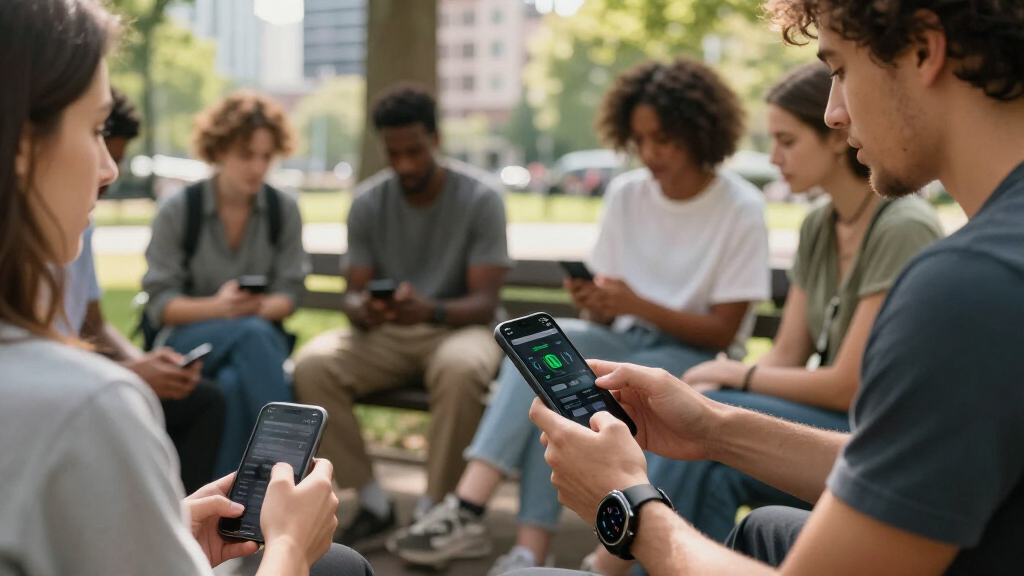
A pilot program testing eight-week group recovery for phone addiction among adults has been proposed, aiming to fill a market gap with structured peer support. The initiative seeks to measure effectiveness through screen-time reduction and alumni engagement, offering a new approach in digital wellness.
IdeaNavigator AI has identified a potential breakthrough in digital health interventions: the development of cohort-based recovery programs specifically designed for adults with severe phone overuse who have previously failed traditional blocking apps. This initiative aims to address a significant market gap by leveraging structured group support, peer accountability, and digital tools to reduce screen time and promote sustainable behavioral change.
The proposed program involves eight-week cohorts of ten adults each, featuring weekly facilitated sessions, daily check-ins, personalized trigger maps, relapse prevention plans, and optional in-group screen-time sharing. Participants would graduate into ongoing alumni groups to maintain engagement and accountability.
Funding would come from program fees—set at $400 for each cohort—and ongoing alumni subscriptions. The pilot aims to measure success through reductions in screen time at the eight-week and 16-week marks, as well as through conversion rates into alumni groups, providing concrete data on effectiveness.
This initiative responds to a market that currently offers low-cost blocking apps, which are often overridden within days, and high-cost private coaching that reaches a limited audience. The gap for structured, accessible group recovery remains unfilled, especially for adults with entrenched phone habits, making this approach potentially scalable and cost-effective.
Why Structured Group Support Matters in Digital Wellness
This approach could revolutionize how digital overuse is addressed by combining behavioral health principles with scalable digital tools. Peer accountability and structured support are proven to enhance motivation and adherence in behavioral change, and applying these in a digital health context could improve outcomes for adults with severe phone habits.
By filling the market gap between simple blockers and expensive coaching, this model could make effective recovery programs more accessible, potentially reducing the societal impact of phone addiction, such as decreased productivity, mental health issues, and social disconnection. If successful, it could also serve as a blueprint for other behavioral health interventions targeting entrenched habits.
phone addiction recovery group programs
As an affiliate, we earn on qualifying purchases.
As an affiliate, we earn on qualifying purchases.
The Rise of Digital Overuse and Existing Intervention Gaps
Growing concern over excessive phone use has led to increased interest in digital wellness solutions, with mainstream discussions now including clinical perspectives. Current market options are limited: low-cost blockers are often ineffective for persistent users, while high-end coaching services are financially out of reach for many. This leaves a substantial segment of adults with severe habits underserved.
Recent technological advancements, such as screen-time APIs, and the infrastructure for cohort-based courses, offer new opportunities to develop structured, scalable programs. Pilot studies and research into behavioral interventions suggest that peer support and accountability significantly improve long-term adherence, but these approaches have yet to be widely implemented in digital health for phone addiction.
Developers and health providers are now exploring models that combine digital tools with group dynamics, aiming to create effective, affordable recovery pathways that can be tested and refined through pilot programs.
adult digital detox support groups
As an affiliate, we earn on qualifying purchases.
As an affiliate, we earn on qualifying purchases.
Effectiveness and Scalability of Cohort-Based Recovery
It is not yet confirmed how effective this cohort-based model will be in reducing screen time long-term or whether participants will sustain behavioral changes after graduation. The pilot results, including screen-time reductions and alumni engagement, are still to be measured and analyzed.
Questions remain about optimal cohort size, session structure, and whether optional features like in-group sharing significantly influence outcomes. Additionally, the scalability of this model across diverse populations and digital health settings remains uncertain until pilot data is available.
cohort-based behavioral change apps
As an affiliate, we earn on qualifying purchases.
As an affiliate, we earn on qualifying purchases.
Upcoming Pilot Programs and Evaluation Timeline
IdeaNavigator AI plans to run two paid pilot cohorts at $400 each in the coming months, with the primary goal of measuring reductions in screen time at weeks 8 and 16. Success metrics will include participant engagement, relapse rates, and conversion into alumni groups.
Results from these pilots will inform potential scaling, refinement of program components, and broader deployment strategies. Ongoing monitoring and participant feedback will be critical to validating the model and establishing best practices for group-driven digital health recovery.
peer accountability digital health tools
As an affiliate, we earn on qualifying purchases.
As an affiliate, we earn on qualifying purchases.
Key Questions
What makes cohort-based recovery different from existing apps?
Cohort-based recovery emphasizes structured group support, peer accountability, and personalized relapse prevention, which are not typically features of simple blocking apps or one-on-one coaching.
How will success be measured in the pilot?
Success will be primarily measured by reductions in participants’ screen time at 8 and 16 weeks, along with engagement metrics like alumni group participation and relapse rates.
Who is this program designed for?
It targets adults with severe, entrenched phone habits who have previously failed to change behavior using blockers or other self-help methods.
When will the pilot results be available?
Results are expected after the completion of the two pilot cohorts, likely within three to six months from program launch.
Could this model be adapted for other behavioral health issues?
Potentially, yes. The principles of peer support, structured sessions, and accountability could be applied to various habits and addictions, pending further research and testing.
Source: IdeaNavigator AI