
To organize your cold storage supplies at home, group similar items like vegetables, meats, and leftovers together in clear, labeled containers. Use pre-portioned bags for easy access and place older items at the front to encourage consumption. Regularly check expiration dates and tidy your fridge and freezer weekly to prevent clutter and spoilage. Incorporate good airflow and clean storage spaces to keep food safe and fresh. Keep exploring for more tips on maintaining your cold storage efficiently.

Get hardware and tech essentials delivered free — and shop member deals
- Fast, free delivery on millions of items
- Access to Prime Big Deal Days deals on October 6–7
- Prime Video, Amazon Music and more included
Key Takeaways
- Group similar items together, such as vegetables, meats, and leftovers, using clear labeled containers or bins.
- Prioritize older items at the front or top for easy access and prompt consumption.
- Regularly check expiration dates and discard unsafe or expired items to prevent waste.
- Maintain proper airflow and ventilation to ensure consistent temperatures and food safety.
- Establish a routine for weekly organization and inventory checks to keep storage efficient and clean.
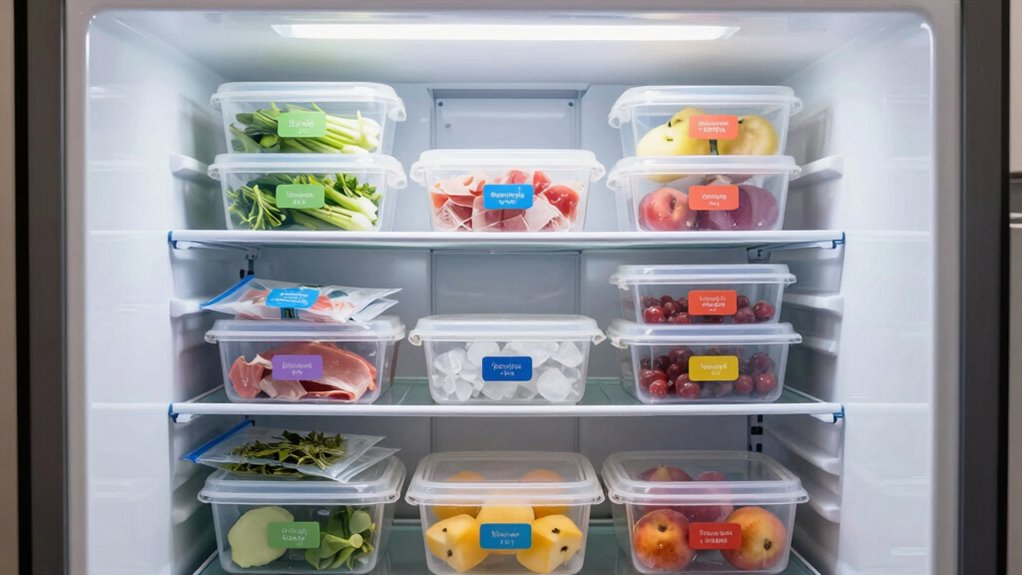
Keeping cold storage supplies organized at home can be a game-changer for saving space and reducing waste. When your freezer and fridge are tidy and well-structured, you can quickly find what you need, making meal prep more efficient. Plus, proper organization plays an essential role in maintaining food safety, as it helps prevent cross-contamination and keeps perishable items at the correct temperature. To start, consider grouping similar items together—vegetables, meats, leftovers, and frozen fruits—so you can easily locate what you need without rummaging through everything. Use clear, labeled containers or bins to categorize bulky or loose items; this way, you avoid stacking things haphazardly, which can lead to forgotten leftovers or expired goods.
Organize freezer and fridge with labeled containers to save space and prevent food waste.
Implementing a system where older items are placed at the front or on top encourages you to consume them first, reducing food waste. When it comes to meal prep, having your frozen ingredients organized allows you to plan meals more effectively. You can store pre-portioned ingredients in freezer-safe bags or containers, making it simple to grab exactly what you need for quick, nutritious meals. This not only saves time but also minimizes the risk of freezer burn and spoilage, supporting food safety. Remember to regularly check expiration dates and discard anything that’s no longer safe to eat, keeping your cold storage clean and safe. Additionally, understanding renewable energy options can help you make your home more energy-efficient, even in your cold storage solutions. Incorporating proper airflow techniques can further improve the longevity and safety of stored items by maintaining consistent temperatures. Maintaining good ventilation in your freezer and fridge can prevent moisture buildup and help regulate temperature fluctuations, which is crucial for food preservation. Finally, develop a routine of tidying up your cold storage once a week. This habit helps you stay on top of inventory, ensures expired items are promptly removed, and keeps everything fresh and accessible. Maintaining proper airflow techniques can further improve the longevity and safety of stored items by maintaining consistent temperatures. With a well-organized system, meal prep becomes more straightforward, food safety is enhanced, and you waste less food. Over time, this not only saves you money but also gives you peace of mind knowing your family’s food is stored safely and efficiently.
clear labeled food storage containers for fridge
As an affiliate, we earn on qualifying purchases.
As an affiliate, we earn on qualifying purchases.
Frequently Asked Questions
What Is the Ideal Temperature for Home Cold Storage?
You should keep your home cold storage at around 0°F (-18°C) for maximum preservation. Regular temperature monitoring helps you maintain this level consistently. To guarantee efficient storage organization, label and arrange items based on their use and expiration dates. Proper temperature control prevents spoilage and freezer burn, keeping your supplies fresh longer. Make it a habit to check your freezer’s temperature regularly and adjust settings as needed.
How Often Should I Defrost My Cold Storage?
Did you know that ice buildup can reduce your freezer’s efficiency by up to 30%? You should defrost your cold storage when ice accumulation reaches about a quarter-inch thick. Regular defrosting prevents excessive ice buildup, which hampers storage rotation and food preservation. Aim to defrost every 3 to 6 months or as needed. Keeping up with this maintenance guarantees peak performance and helps maintain consistent temperatures for your frozen goods.
What Are the Best Containers for Freezing Food?
The best containers for freezing food are airtight, BPA-free plastic or glass containers designed for freezer use, which help prevent freezer burn. For effective freezer organization, choose uniform containers to maximize space and make stacking easy. Always label your containers with clear, permanent labels indicating contents and date. Proper container selection and labeling streamline freezer organization, making it simple to find what you need quickly and keep your cold storage orderly.
How Do I Prevent Freezer Burn on Stored Items?
Ever wonder how to keep your frozen foods fresh longer? To prevent freezer burn, focus on proper packaging techniques and ideal storage duration. Wrap items tightly with airtight containers or freezer-specific wraps, removing as much air as possible. Label everything with dates to track storage time. By minimizing air exposure and adhering to recommended storage durations, you’ll preserve flavor and texture, ensuring your frozen foods stay delicious until you’re ready to enjoy them.
Can I Store Non-Food Items in My Cold Storage?
Yes, you can store non-food items in your cold storage, but you need to take into account cold storage safety. Use designated containers to prevent contamination or damage to your food supplies. Keep chemicals, batteries, or other non-food items separate from edible goods to avoid cross-contamination. Proper organization helps maintain a safe environment, ensuring your cold storage remains effective and safe for both food and non-food items.
freezer-safe portion bags for meal prep
As an affiliate, we earn on qualifying purchases.
As an affiliate, we earn on qualifying purchases.
Conclusion
By keeping your cold storage supplies organized, you turn chaos into a well-oiled machine, making your kitchen feel like a sanctuary rather than a cluttered mess. Once everything has its place, you’ll save time, reduce waste, and enjoy peace of mind, knowing your supplies are always ready when you need them. Think of your organized freezer as a treasure chest—hidden gems waiting to be discovered, making every meal prep feel like unearthing a small victory.
fridge and freezer organization bins
As an affiliate, we earn on qualifying purchases.
As an affiliate, we earn on qualifying purchases.
As an affiliate, we earn on qualifying purchases.
Fall Picks
fall essentials
As an affiliate, we earn on qualifying purchases.