
📊 Full opportunity report: AMÁLIA · The Three Hard Questions. on ThorstenMeyerAI.com — validation score, market gap, and execution plan.

Get hardware and tech essentials delivered free — and shop member deals
- Fast, free delivery on millions of items
- Access to Prime Big Deal Days deals on October 6–7
- Prime Video, Amazon Music and more included
TL;DR
Portugal’s AMÁLIA, a €5.5 million European Portuguese language model, is operational with promising benchmarks but prompts three fundamental questions about its openness, native data, and goals. These questions highlight broader issues in Europe’s sovereign-LLM efforts.
Portugal’s €5.5 million AMÁLIA language model is now operational, marking a significant step in the country’s AI efforts. Despite its promising benchmarks, the project faces three fundamental questions about its openness, native-language data, and strategic objectives, which are crucial for evaluating its long-term impact and alignment with European AI sovereignty goals.
The AMÁLIA project, involving approximately 60 researchers from Portugal’s leading institutions, was announced in December 2024 and completed its base version by September 2025. It is built as a continuation of the EuroLLM multilingual model, not from scratch, and is currently accessible to 450,000 academic users via the FCT’s IAedu platform. The model demonstrates strong performance on European Portuguese benchmarks, outperforming previous open models and most benchmarks of Qwen 3-8B, although it still lags on some specific tests like ALBA.
The project’s technical approach involves extending an existing multilingual foundation rather than training a new model from zero. The training data includes approximately 5.8 billion tokens from Portugal’s web archive, Arquivo.pt, representing about 5.5% of the extended pre-training corpus. The model’s current version handles only text, with multimodal capabilities planned for future versions. The final version is scheduled for release in June 2026, but key questions about its openness, native data sufficiency, and strategic aims remain.
AMÁLIA
The three hard
questions.
Portugal spent €5.5M to build a European Portuguese LLM. The base version is operational, the benchmarks beat Qwen 3-8B on most pt-PT tasks. So why are the most important questions still unanswered?
Last month, Duarte O.Carmo published the sharpest public analysis of AMÁLIA — Portugal’s state-funded European Portuguese large language model. He prefaces his critique with the necessary diplomatic apparatus before doing what almost nobody else in the European-sovereign-LLM discourse has been willing to do publicly: asking hard questions about whether the work, as released, actually does what it set out to do. This piece is a structural extension of his analysis. The AMÁLIA case study exposes three hard questions every national LLM effort needs to answer publicly — and the broader European sovereign-LLM movement has been operating without explicit answers to any of them.
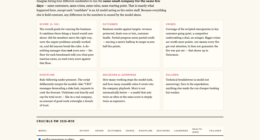
Three questions every national LLM effort needs to answer publicly.
Duarte O.Carmo’s framing maps cleanly onto the structural argument. Each question lands specifically in AMÁLIA — and the broader European sovereign-LLM movement has been operating without explicit answers to any of them.
The three questions form a structural feedback loop. Q3 (optimization target) determines Q2 (data volume needed) which conditions Q1 (openness sufficient for community contribution). The European sovereign-LLM movement collectively benefits from these questions becoming standard methodology disclosure, not exceptional critique.
107 billion tokens. 5.8 billion clearly pt-PT.
The structurally tractable question with a structurally surprising answer. For a model whose entire stated purpose is European Portuguese prioritization, the native-language share of extended pre-training is 5.5%. The implications cascade into every other question.
The Olmo standard. AMÁLIA’s current state.
Allen Institute for AI’s Olmo project defines what “fully open” operationally requires. Olmo doesn’t lead frontier benchmarks. That’s not the point. The point is to be the structural reference for openness. AMÁLIA’s “fully open source” claim should track to the operational standard.
Four strategic positions. AMÁLIA between two and three.
Approximately €100M+ in publicly disclosed European sovereign-LLM funding across the major initiatives. The structural question every project faces: what is the actual competitive position you’re staking? Four options — none mutually exclusive — but each requiring different commitments.
Three standards. For AMÁLIA and the movement.
The structural critique generalizes beyond AMÁLIA. Italy, France, Germany, Switzerland, the OpenEuroLLM consortium, and every subsequent national project benefit from public discourse holding national LLM efforts to operational standards on openness, data accounting, and strategic positioning.
The European sovereign-AI agenda is a serious strategic project that deserves serious public discourse. O.Carmo’s analysis is what serious public discourse looks like. Appropriately diplomatic. Structurally rigorous. Willing to ask the hard questions in public when the public investment justifies it. More of this is needed — across every European sovereign-LLM project, not just AMÁLIA.
Implications for European Sovereign-Language AI Development
The questions raised by AMÁLIA’s development reflect broader issues facing Europe’s efforts to create sovereign-language large language models. How open these models truly are, how much native-language data is enough, and what their primary objectives should be are critical for shaping national and regional AI policies. The answers will influence Europe’s competitiveness, data sovereignty, and strategic autonomy in AI development.
Portuguese language learning AI software
As an affiliate, we earn on qualifying purchases.
As an affiliate, we earn on qualifying purchases.
European Sovereign-Language Models and Strategic Challenges
Across Europe, countries like Italy, Germany, France, and Norway are developing their own LLMs, often with similar structural questions about openness, native data, and purpose. Portugal’s AMÁLIA is part of this broader movement, which is characterized by significant public investment and institutional collaboration. However, public discourse often focuses on individual model capabilities rather than these underlying structural questions, which are vital for understanding the long-term viability and strategic alignment of these projects.
The debate intensified after Duarte O.Carmo’s analysis, which highlighted that many European projects are operating in a similar structural space, often without clear answers to these foundational questions. This reveals a systemic challenge: balancing openness, native data use, and strategic goals in a context of limited resources and high expectations.
“The three questions about openness, native data, and objectives are not just technical—they are strategic and must be addressed transparently.”
— Duarte O.Carmo
AI language model development tools
As an affiliate, we earn on qualifying purchases.
As an affiliate, we earn on qualifying purchases.
Unanswered Questions About AMÁLIA’s Long-Term Strategy
It is not yet clear how open the final version of AMÁLIA will be, whether the native Portuguese data used is sufficient for future improvements, or what the ultimate strategic objectives of the project are. The final release in June 2026 may address some gaps, but current details remain incomplete, and the broader implications are still being debated among stakeholders.
multilingual NLP model training kit
As an affiliate, we earn on qualifying purchases.
As an affiliate, we earn on qualifying purchases.
Next Milestones and Ongoing Evaluations
The upcoming months will see the release of the final version of AMÁLIA in June 2026, alongside further benchmark testing and strategic assessments. Portugal’s research institutions and government officials are expected to clarify the project’s openness and objectives, while broader European initiatives will continue grappling with similar questions. Monitoring how AMÁLIA’s development addresses these issues will be key to understanding its long-term impact.
AI research platform for language models
As an affiliate, we earn on qualifying purchases.
As an affiliate, we earn on qualifying purchases.
Key Questions
What are the main technical features of AMÁLIA?
AMÁLIA is a continuation of the EuroLLM multilingual model, trained on approximately 107 billion tokens, including 5.8 billion tokens from Portugal’s web archive. It performs well on European Portuguese benchmarks and is designed to handle text, with multimodal capabilities planned for future versions.
Why are questions about openness and native data important?
These questions determine how accessible and representative the model truly is, affecting transparency, strategic control, and the model’s capacity to serve Portuguese and European needs effectively.
What are the broader implications for European AI policy?
Addressing these questions will influence how European countries develop, share, and regulate sovereign-language models, impacting regional competitiveness and data sovereignty.
Will the final version of AMÁLIA resolve these questions?
It is uncertain; the final release in June 2026 may clarify some issues, but ongoing debates suggest some questions will remain open, requiring further policy and technical evaluation.
Source: ThorstenMeyerAI.com
Fall Picks
fall essentials
As an affiliate, we earn on qualifying purchases.