
📊 Full opportunity report: Loan covenant calendar for bootstrapped companies on IdeaNavigator AI — validation score, market gap, and execution plan.

Get hardware and tech essentials delivered free with Prime
- Fast, free delivery on millions of items
- Prime Video, Amazon Music and more included
- Member-only deals all year
TL;DR
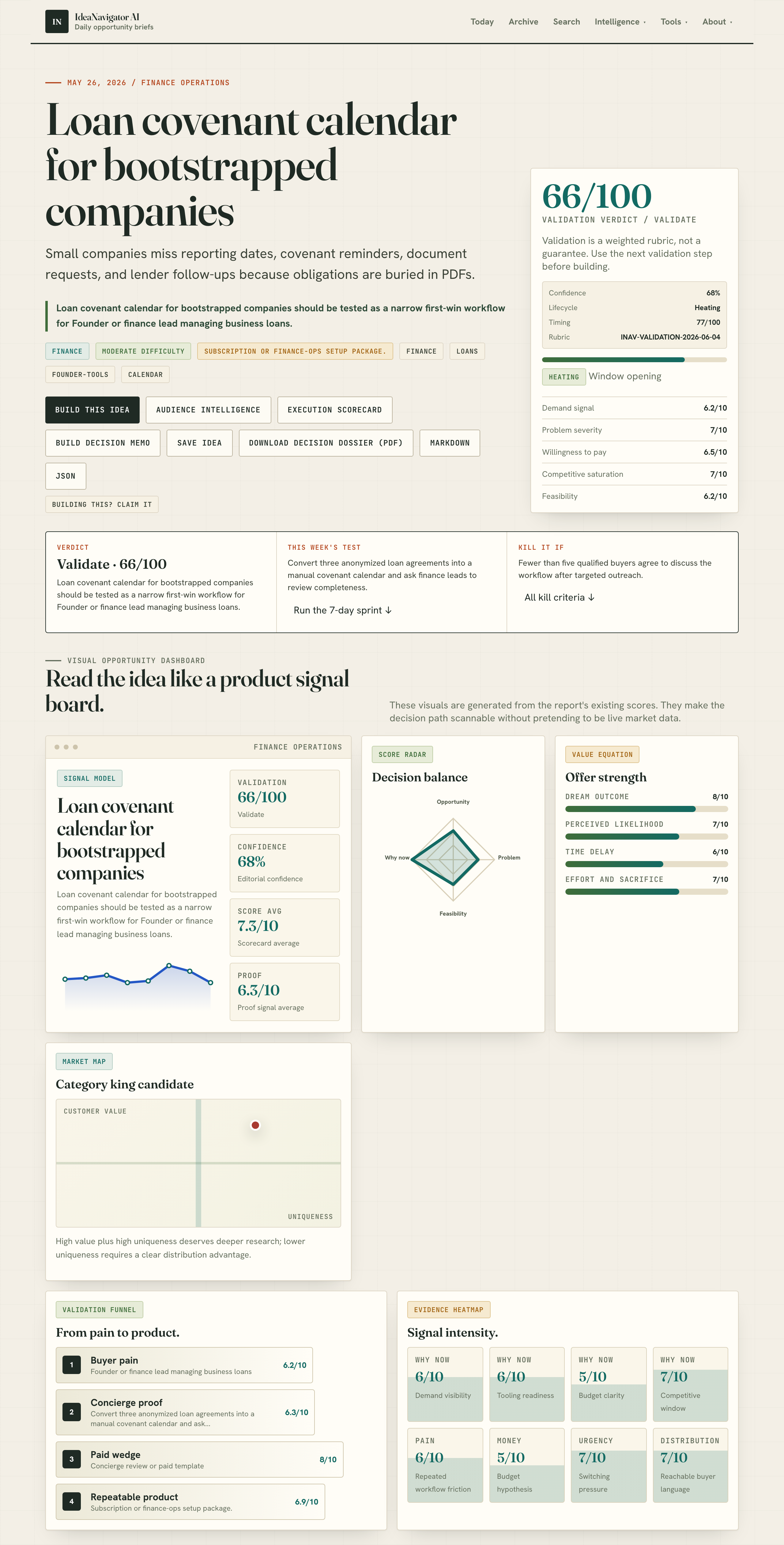
A prototype loan covenant calendar tailored for bootstrapped companies is in testing, aiming to help founders and finance leads manage loan obligations more effectively. The initiative addresses a common compliance challenge and could streamline operational follow-up.
A new loan covenant calendar prototype is under development for bootstrapped companies, aiming to improve compliance tracking and operational follow-up for small business loans. The initiative responds to increased scrutiny of small business financing and addresses common reporting challenges faced by founders and finance leads.
The proposed covenant calendar extracts key obligations from loan agreements, including due dates, responsible owners, required evidence files, and communication history with lenders. The initial validation involves converting three anonymized loan agreements into manual covenant calendars and soliciting feedback from finance leads on completeness and usability.
This tool aims to automate and organize covenant management, reducing missed reporting deadlines and follow-ups, which are frequent issues for small companies that often track obligations buried in PDFs or scattered documents. The project is being tested as a narrow workflow to establish proof of concept before broader development or commercialization.
Why a Covenant Calendar Could Transform Small Business Loan Management
This development matters because small companies often struggle with compliance due to manual, disorganized processes, risking loan breaches and penalties. An effective covenant calendar could streamline operations, reduce errors, and improve lender relationships, especially as scrutiny of small business financing increases. If successful, it could become a standard tool for finance operations in bootstrapped firms, enhancing their ability to manage debt obligations proactively and efficiently.Products Worth Considering

Logitech MX Keys Combo for Business Keyboard and Mouse – Graphite

Logitech MX Keys S Combo Wireless Keyboard and Mouse, Graphite

Apple MacBook Pro 16.3-inch with PROLED XDR Display, Silver
As an affiliate, we earn on qualifying purchases.
Growing Need for Better Loan Compliance Tools in Small Business Sector
Small, bootstrapped companies frequently manage multiple loans with complex covenant requirements. Currently, most rely on manual tracking, often through PDFs or spreadsheets, which leads to missed deadlines and compliance issues. Rising regulatory and lender scrutiny has increased the importance of operational follow-through, prompting startups and small firms to seek more automated, reliable solutions. The concept of a covenant calendar is emerging as a targeted workflow to address these operational gaps, with initial testing phases underway based on converting existing agreements into manageable formats.“Automating covenant management could significantly reduce missed obligations and improve compliance for small companies.”
— an anonymous researcher
Unconfirmed Aspects of the Covenant Calendar’s Development
It is not yet clear how well the prototype will perform in real-world settings or whether it will be adopted widely by small companies. The effectiveness of the manual validation process and subsequent automation remains to be seen, and broader market interest has not been confirmed.Next Steps in Testing and Potential Market Adoption
The current phase involves converting three anonymized loan agreements into manual covenant calendars and gathering feedback from finance leads on their completeness and usability. Based on this, further development may include automating data extraction and integrating the calendar into existing finance operations tools. If the validation proves successful, the project may move toward commercialization or broader pilot testing with small companies managing multiple loans.
Key Questions
What is a loan covenant calendar?
A loan covenant calendar is a tool that extracts and tracks borrower obligations, due dates, required evidence, and communication history related to loan agreements, helping ensure compliance.
Who is this tool designed for?
It is intended for founders and finance leads managing small business loans, particularly in bootstrapped companies.
How is the covenant calendar being tested?
The testing involves manually converting three anonymized loan agreements into covenant calendars and reviewing their completeness with finance professionals.
Why is this development important now?
Rising scrutiny of small business financing makes operational follow-up more critical, and current manual processes are often error-prone and inefficient.
What are the next steps for this project?
Next steps include automating the extraction process, expanding testing, and potentially bringing the tool to market if validation is successful.
Source: IdeaNavigator AI