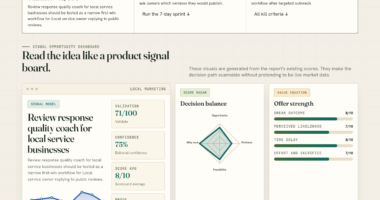
📊 Full opportunity report: Remote Work Wellness Programs: Incorporating Strength And MSK Tests on IdeaNavigator AI — validation score, market gap, and execution plan.

Get hardware and tech essentials delivered free — and shop member deals
- Fast, free delivery on millions of items
- Access to Prime Big Deal Days deals on October 6–7
- Prime Video, Amazon Music and more included
TL;DR
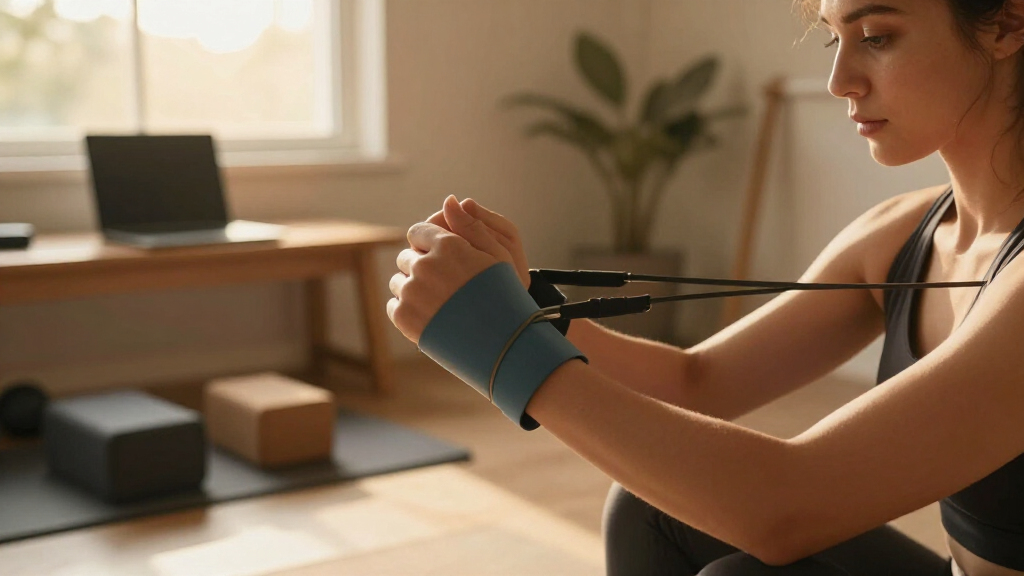
A new remote wellness program leveraging phone cameras is being piloted by employers to assess employees’ strength and musculoskeletal health. This initiative aims to identify early MSK decline and reduce related medical costs. Validation and adoption are still in early stages.
Employers and benefits providers are piloting a new remote wellness assessment that uses smartphone cameras to evaluate employees’ strength and musculoskeletal health, aiming to prevent costly MSK issues in distributed workforces. This development offers a proactive approach to employee health management, particularly as remote and hybrid work models become permanent. The initiative is driven by the rise in MSK problems linked to sedentary remote work, which has led to increased medical claims and work absences.
According to recent insights, the new program involves a 10-minute guided self-assessment where employees perform strength, mobility, and posture tests using their phone’s camera. The system employs pose estimation technology to score movement quality, producing a personalized MSK risk score, along with tailored corrective routines and progress tracking over time. Employers receive a privacy-safe dashboard showing team-level risk trends and engagement metrics, with options to refer employees to clinical MSK or physical therapy providers if needed.
Initial pilots involve deploying this assessment to remote staff over 60 to 90 days, measuring metrics such as completion rates, retention, and the correlation of camera-derived scores with validated clinical questionnaires. Success depends on meaningful engagement and the ability to validate the risk scores against established clinical tools, with the ultimate goal of integrating the program into broader benefits offerings.
Implications for Employee Health and Employer Costs
This initiative could significantly shift how employers approach MSK health management by enabling early detection of mobility decline before symptoms become severe. It addresses a key gap in current reactive programs, potentially reducing medical claims and work disruptions caused by MSK issues. As remote work persists, scalable, non-invasive screening tools like this could become standard components of comprehensive employee wellness strategies.
musculoskeletal assessment smartphone app
As an affiliate, we earn on qualifying purchases.
As an affiliate, we earn on qualifying purchases.
Rise of Remote Work and MSK Challenges
Remote and hybrid work arrangements have become a permanent fixture for many knowledge workers, especially since the COVID-19 pandemic. This shift has led to a decline in incidental movement, increased sedentary behavior, and ergonomic challenges, which collectively contribute to a surge in neck, back, and posture-related MSK problems. Employers have noted rising medical claims and absenteeism linked to these issues but lack lightweight tools for early screening.
Existing programs tend to be reactive, focusing on treatment after pain develops. The advent of mature smartphone camera-based pose estimation technology now offers an opportunity to implement proactive, self-guided assessments that can identify early signs of MSK decline, facilitating timely intervention and potentially reducing long-term costs.
As an affiliate, we earn on qualifying purchases.
Validation and Adoption Challenges
It remains unclear how accurately the camera-based assessments will correlate with clinical MSK evaluations, and whether employees will consistently complete the self-assessments. Validation results from pilot programs are still pending, and broader adoption will depend on demonstrated efficacy, privacy considerations, and integration with existing benefits systems.
As an affiliate, we earn on qualifying purchases.
Upcoming Pilot Results and Scale-Up Plans
Employers and vendors plan to conduct pilot programs over the next 60 to 90 days, focusing on assessment completion rates, score validity, and engagement. Pending successful validation, the program could expand to larger employee populations and be integrated into comprehensive wellness offerings, with further refinement based on pilot feedback.
As an affiliate, we earn on qualifying purchases.
Key Questions
How does the remote MSK assessment work?
The employee performs a series of strength, mobility, and posture tests guided by an app, which uses the phone’s camera and pose estimation technology to evaluate movement quality and produce a risk score.
What are the benefits of early MSK screening for remote workers?
Early screening can identify mobility decline before symptoms develop, enabling preventive exercises and reducing the risk of costly clinical interventions and work disruptions.
Will employee privacy be protected?
Yes, the system is designed to be privacy-safe, with data stored securely and assessments conducted locally on the device, with only aggregated risk trends shared with employers.
When will this program be widely available?
Widespread adoption depends on pilot validation outcomes; if successful, broader rollout could occur within the next year as part of employer wellness benefits.
Can this assessment replace clinical MSK evaluations?
No, it is intended as a screening tool to identify early risk; employees with high risk scores should be referred to clinical providers for comprehensive evaluation and treatment.
Source: IdeaNavigator AI
Fall Picks
fall essentials
As an affiliate, we earn on qualifying purchases.