
TL;DR

Get hardware and tech essentials delivered free with Prime
- Fast, free delivery on millions of items
- Prime Video, Amazon Music and more included
- Member-only deals all year
EU Commissioner Hoekstra officially launched Europe’s largest carbon capture and storage project at Yara Sluiskil, Netherlands. The project aims to significantly reduce industrial emissions, marking a major step in Europe’s climate goals.
European Commissioner for Environment, Climate and Infrastructure, Hoekstra, announced the launch of Europe’s largest carbon capture and storage (CCS) project at Yara Sluiskil in the Netherlands, marking a significant milestone in the continent’s efforts to reduce industrial emissions. The project aims to capture up to 1 million tons of CO2 annually, representing a major step toward achieving the EU’s climate targets for 2030 and beyond.
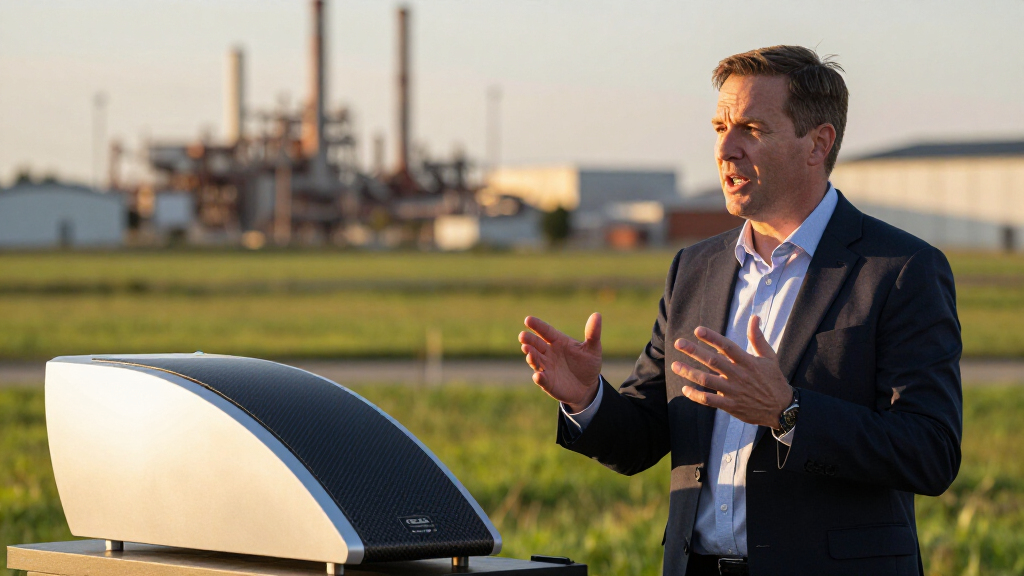
The project, led by Yara International in partnership with several European energy and industrial firms, is designed to capture carbon dioxide emissions directly from the plant’s production processes. Commissioner Hoekstra highlighted that this initiative is part of the EU’s broader strategy to deploy advanced carbon removal technologies and transition to a low-carbon economy. Keynote Speech By Commissioner Hoekstra At The Opening Of The Academic Year In Delft. The event took place at the Sluiskil facility, which is one of Europe’s largest fertilizer manufacturing plants, and the project is expected to become operational by late 2024.
According to the EU Commission, the CCS facility will utilize state-of-the-art capture technology and store the captured CO2 in deep underground geological formations, ensuring long-term containment. The project is estimated to cost approximately €500 million, with funding from both public and private sources, including the EU Innovation Fund. Hoekstra emphasized that the initiative aligns with the EU’s climate law and its commitment to reducing greenhouse gas emissions by at least 55% by 2030.
Impact on Europe’s Climate Goals
This project signifies a major advance in Europe’s climate mitigation efforts, demonstrating the EU’s commitment to deploying large-scale CCS technology as a tool to meet its ambitious emissions reduction targets. It also sets a precedent for other industrial sectors in Europe to adopt similar measures. The successful deployment of this project could accelerate the adoption of CCS across the continent, potentially influencing policy and investment decisions in the energy and industrial sectors.
Environmental advocates see CCS as a crucial technology to offset residual emissions from hard-to-abate industries like cement, steel, and fertilizer manufacturing. However, critics caution that reliance on CCS alone is insufficient and that it must be part of a broader strategy including renewable energy and energy efficiency.
carbon capture and storage technology
As an affiliate, we earn on qualifying purchases.
As an affiliate, we earn on qualifying purchases.
Background of Europe’s CCS Initiatives
Europe has been increasingly investing in CCS technology over the past decade, with several pilot projects and commercial-scale facilities in development. The EU’s climate policies have prioritized innovative solutions to reduce industrial emissions, which are among the most challenging to cut. The Yara Sluiskil project is among the largest announced in recent years, following a series of smaller initiatives aimed at demonstrating the viability of CCS at industrial sites.
While the technology has been proven in limited contexts, large-scale deployment remains limited due to high costs, regulatory hurdles, and concerns over long-term storage safety. The EU has pledged to support such projects through funding mechanisms like the Innovation Fund and strategic investments, aiming to create a network of CCS facilities across member states.
As an affiliate, we earn on qualifying purchases.
Uncertainties About Project Implementation and Impact
While the project has been officially launched, details about its operational timeline, long-term storage safety, and actual emission reduction capacity remain to be fully verified. It is also unclear how this project will influence broader policy shifts or industry adoption of CCS technology across Europe. Critics and industry analysts are watching closely to see if the project meets its ambitious targets and if it can serve as a scalable model.
industrial emission reduction devices
As an affiliate, we earn on qualifying purchases.
As an affiliate, we earn on qualifying purchases.
Next Steps and Monitoring Developments
The project is expected to become operational by late 2024, with ongoing monitoring and reporting required to assess its performance. The EU Commission and project partners will likely publish regular updates on CO2 capture volumes, safety measures, and cost-effectiveness. Additional projects may follow if this initiative proves successful, potentially shaping future policy and funding priorities for CCS in Europe.
As an affiliate, we earn on qualifying purchases.
Key Questions
What is the main goal of the Yara Sluiskil CCS project?
The main goal is to capture up to 1 million tons of CO2 annually from the fertilizer plant to reduce industrial emissions and support Europe’s climate targets.
How is the captured CO2 stored?
The CO2 will be stored in deep underground geological formations designed for long-term containment, ensuring environmental safety.
When will the project become operational?
The project is expected to be fully operational by late 2024, with ongoing assessments of its performance.
What funding supports this project?
The project is funded with approximately €500 million, drawing from public sources like the EU Innovation Fund and private investments.
Why is CCS important for Europe’s climate strategy?
CCS is seen as a critical technology to offset emissions from hard-to-abate industries, helping Europe meet its ambitious emission reduction targets.
Source: primary
Fall Picks
fall essentials
As an affiliate, we earn on qualifying purchases.