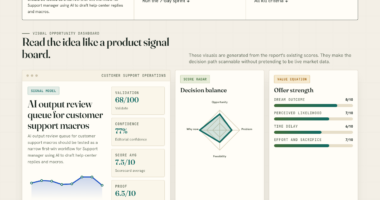

📊 Full opportunity report: The Role Of AI In Ukraine’s Strategy To Take Down Russia’s Amazon on ThorstenMeyerAI.com — validation score, market gap, and execution plan.

Get hardware and tech essentials delivered free — and shop member deals
- Fast, free delivery on millions of items
- Access to Prime Big Deal Days deals on October 6–7
- Prime Video, Amazon Music and more included
TL;DR
Ukraine is leveraging AI and cyber tactics to target Russia’s Wildberries logistics network, disrupting its decentralized supply chain during the Ukraine conflict. The strategy aims to impair military and civilian procurement channels.
Ukraine has begun deploying advanced AI-driven tactics to target Wildberries, Russia’s largest online marketplace, in an effort to disrupt its logistics network amid the ongoing war. This strategic move aims to weaken Russia’s decentralized supply chain, which plays a critical role in both civilian commerce and military procurement, according to sources familiar with Ukrainian cyber operations. The attacks, which began in mid-July, have damaged or destroyed over 1.18 million square meters of warehouse space, according to satellite imagery reviewed by Reuters.
Since July 18, Ukrainian drone strikes have targeted Wildberries logistics facilities across Russia, with at least 20 sites attacked by early August. These strikes are part of a broader campaign to impair Russia’s supply infrastructure during the war, focusing on key hubs that facilitate the distribution of civilian goods, military equipment, and components used in drone production. Ukrainian officials have indicated that the strikes aim to disrupt the availability of critical materials such as fibre-optic cables, electronic components, and tactical gear, which are often purchased through civilian channels but are essential for military applications.
Analysts note that Ukraine’s strategy involves not just physical destruction but also leveraging AI to identify and attack logistical nodes that enable decentralized procurement. This approach complicates Russia’s ability to supply both military and civilian needs, creating ripple effects across the economy and military readiness. Ukrainian authorities have not publicly confirmed the deployment of specific AI tools but have emphasized the importance of targeting supply chain vulnerabilities that are exploited via commercial platforms like Wildberries.
Since 18 July, Ukrainian drones have hit ~20 Wildberries logistics sites. It looks like an odd target — until you see that one strike can hit three systems at once: the battlefield supply chain, the civilian economy, and the banks.
Wildberries is a consumer marketplace, a national logistics network, a decentralised military-supply channel, and an increasingly important node in Russia’s banking system. Hit a warehouse and the cost propagates outward.
Impact of AI-Driven Disruption on Russia’s War Effort
The Ukrainian strategy to target Wildberries using AI and cyber tactics represents a novel approach to wartime logistics disruption. By attacking decentralized supply hubs, Ukraine aims to increase logistical friction, making it more costly and difficult for Russia to supply its military and civilian sectors. The damage to infrastructure not only hampers immediate logistics but also creates long-term economic ripple effects, affecting thousands of independent sellers and businesses across Russia. This approach signifies a shift toward asymmetric warfare that leverages technology to weaken Russia’s internal supply networks, potentially altering the dynamics of the ongoing conflict and setting a precedent for future cyber-physical warfare.
industrial RFID tags for supply chain
As an affiliate, we earn on qualifying purchases.
As an affiliate, we earn on qualifying purchases.
Wildberries as a Strategic Target in Russia’s War Economy
Wildberries, handling goods worth roughly 3% of Russia’s GDP last year, has become a key node in Russia’s supply network, especially during wartime. The platform connects thousands of independent sellers, logistics hubs, and consumers, creating a decentralized system that is difficult to control or shut down. Since the start of Ukraine’s campaign, Ukrainian forces have conducted drone strikes on over 20 warehouses, damaging significant portions of the company’s capacity. These strikes are part of a broader effort to target the supply chain that supports both civilian life and military logistics, including the procurement of military gear and components used in drone manufacturing.
Experts highlight that Ukraine’s focus on fibre-optic cables and electronic components underscores a strategy to impair the availability of critical materials rather than merely destroy physical assets. This approach aims to create supply delays and increase costs, thereby weakening Russia’s logistical capabilities over time.
"Our goal is to disrupt the supply chain that enables Russia’s military and civilian logistics, making it harder for them to sustain their war effort."
— Ukrainian defense official
As an affiliate, we earn on qualifying purchases.
Unconfirmed Details on AI’s Specific Role in Attacks
It is not yet clear how Ukraine specifically employs AI in these operations. While officials emphasize targeting supply chain vulnerabilities, details about the use of AI algorithms, cyber tools, or automated targeting systems remain undisclosed. It is also uncertain whether AI is used for reconnaissance, target identification, or operational planning, as Ukrainian authorities have not publicly confirmed the technological methods involved.
As an affiliate, we earn on qualifying purchases.
Next Steps in Ukraine’s Disruption Campaign
Ukrainian officials are expected to continue targeting key logistics hubs, potentially expanding the scope to other supply chains critical to Russia’s war effort. Monitoring satellite imagery and cyber intelligence will likely reveal further strikes and technological developments. Additionally, Kyiv may develop more sophisticated AI tools to enhance target identification and operational precision, increasing the impact of future operations.
cybersecurity tools for supply chain
As an affiliate, we earn on qualifying purchases.
As an affiliate, we earn on qualifying purchases.
Key Questions
How is Ukraine using AI in its attacks on Russia’s logistics?
While specific details are not publicly confirmed, Ukraine is believed to use AI and cyber tools to identify and target critical logistics hubs, disrupting supply chains that support both civilian and military needs.
Why target Wildberries instead of military bases?
Wildberries functions as a decentralized supply network that facilitates procurement of military equipment, electronics, and everyday goods. Attacking it hampers both civilian commerce and military logistics, creating widespread disruption.
What are the potential long-term effects of these strikes?
The strikes could increase logistical delays, raise costs for procurement, and weaken Russia’s internal supply chain, potentially impacting military operations and civilian life over time.
Is Ukraine’s use of AI legal under international law?
The legality of using AI in military operations is complex and subject to ongoing debate. Ukraine states its goal is to weaken logistical vulnerabilities, but detailed legal assessments are still pending.
Could these tactics escalate into broader cyber warfare?
There is potential for escalation, especially if cyber and AI tools are used more aggressively. However, current reports focus on physical strikes combined with cyber reconnaissance and targeting.
Source: ThorstenMeyerAI.com
Fall Picks
fall essentials
As an affiliate, we earn on qualifying purchases.