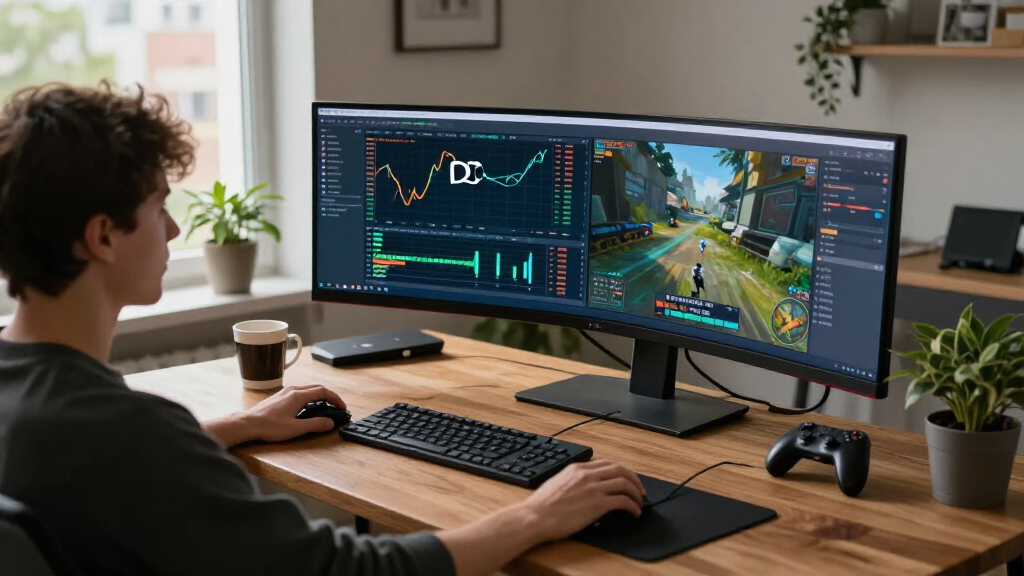
🔍 Read the full analysis: 10 Best Ultrawide Monitors To Bring Work And Gaming Together In 2027 on ThorstenMeyerAI.com

Get hardware and tech essentials delivered free — and shop member deals
- Fast, free delivery on millions of items
- Access to Prime Big Deal Days deals on October 6–7
- Prime Video, Amazon Music and more included
TL;DR
This 2027 guide compares 10 ultrawide monitors by listed specifications and intended use, rather than hands-on testing. The Dell S3425DW is the broad-use pick, while Samsung’s 49-inch Business model favors a larger workspace and high-refresh SANSUI and Sceptre models target gaming.
A 2027 buyer’s guide from ThorstenMeyerAI.com compares 10 ultrawide monitors for people who want one display for work and gaming, naming the Dell 34 Plus USB-C Curved Monitor S3425DW its most balanced pick, as detailed in the original analysis. The ranking is based on listed specifications and intended use, not hands-on testing, and emphasizes that the right choice depends on desk space, computer capability and whether work connectivity or gaming speed matters more.
The guide favors the Dell S3425DW for its 34-inch curved format and USB-C connectivity, which may suit laptop users who want a shared screen for office tasks and entertainment. It describes the Samsung 49-Inch Business Curved Ultrawide as the broadest-workspace option: its Dual QHD panel may serve as an alternative to multiple monitors, but its physical size and pixel load require more desk space and a computer able to drive it.
For gaming, the guide points to the SANSUI 34-Inch 200Hz model and Sceptre’s 165Hz and 180Hz options, alongside other high-refresh-rate gaming monitors. Those refresh-rate figures are listed specifications, not a guarantee of performance in every game; the computer must be capable of producing enough frames at the monitor’s resolution. The guide also warns that the Acer Nitro ED300C X1 uses UWFHD resolution, with fewer vertical pixels than QHD-class 34-inch options.
The other named models are Samsung’s ViewFinity S65UA, a curved QHD option, and the ViewFinity S50GC, an Ultra-WQHD alternative presented as a productivity-focused choice. The source does not supply full specifications or detailed descriptions for every model in its 10-pick list, so the comparison below covers the stated distinctions without filling in missing features.
The 10 picks
- 1
 Samsung 49-Inch Business Curved Ultrawide Dual QHD Monitor with USB-CView on Amazon →
 - 2
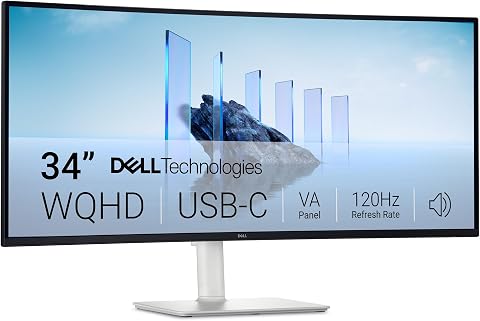 Dell 34 Plus USB-C Curved Monitor S3425DWView on Amazon →
 - 3
 Samsung ViewFinity S65UA 34-Inch Ultrawide QHD Curved MonitorView on Amazon →
 - 4
 Samsung 34-Inch Odyssey G5 Ultra-Wide Curved Gaming MonitorView on Amazon →
 - 5
 Samsung 34" ViewFinity S50GC Series Ultra-WQHD Monitor, 100Hz, 5ms, HDR10, AM…View on Amazon →
 - 6
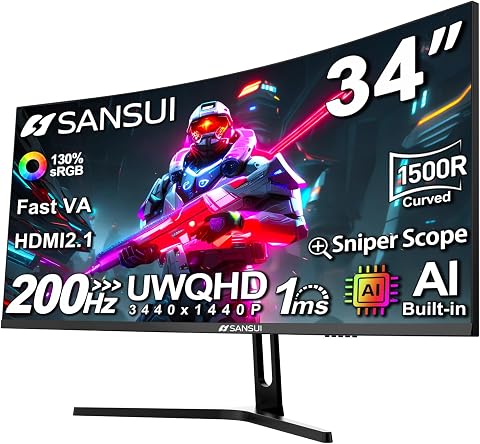 SANSUI 34-Inch Curved Gaming Monitor UWQHD 3440 x 1440P Up to 200Hz 165Hz Cur…View on Amazon →
 - 7
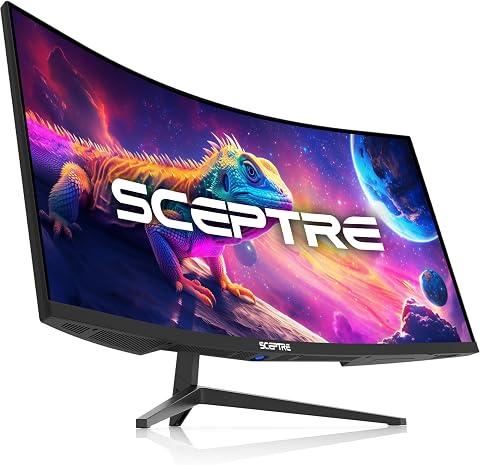 Sceptre 34-Inch Curved Ultrawide WQHD Monitor, 3440 x 1440, Up to 180Hz, Free…View on Amazon →
 - 8
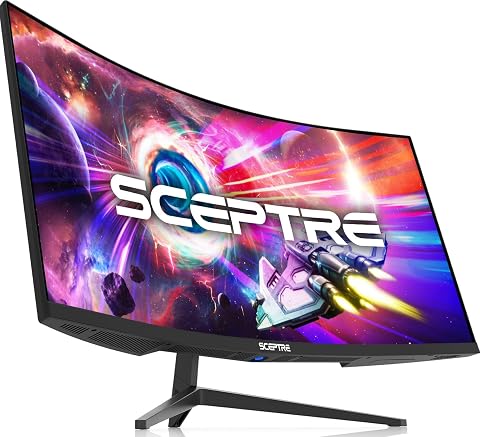 Sceptre 34-Inch Curved WQHD Ultrawide Gaming Monitor, 3440 × 1440, 165Hz, C34…View on Amazon →
 - 9
 CRUA 34 Inch 165Hz UWQHD IPS Ultrawide Gaming Monitor with Speakers and PIP/PBPView on Amazon →
 - 10
 Acer Nitro ED300C X1 29.5-Inch Curved UWFHD Gaming MonitorView on Amazon →
Choosing Between Space and Speed
The practical value of the list is its focus on tradeoffs rather than a single best specification. A wider screen can make it easier to keep documents, timelines or applications side by side, but it does not automatically provide higher pixel density or better gaming performance. Buyers who prioritize laptop connections may value USB-C more than a high refresh rate; players may prefer speed, provided their graphics hardware can support it.
Ultrawides also affect the physical setup. A 49-inch panel can take up substantial desk width and depth, while a 34-inch model is a more moderate fit for many workspaces. Comparing resolution, the stand and the computer’s output capability before purchase can help prevent a mismatch between the monitor’s advertised features and the way it will actually be used.
How the Guide Ranks Displays
The source says it compared resolution, screen area, refresh rate, curvature and connectivity, along with whether each monitor’s features match a likely role. Its ranking puts versatility first, which explains the Dell’s lead; more specialized models rank higher for buyers with a defined need, such as a very wide desktop or fast gaming display.
The guide explicitly describes its rankings as a comparison of listed specifications and intended fit, not results from lab measurements or extended use. It also advises checking the full model specifications before buying: USB-C does not guarantee a particular charging capacity, and the required connection can affect which resolution and refresh rate a computer can output.
“The Dell S3425DW is the most balanced pick.”
— ThorstenMeyerAI.com guide
What the Specifications Do Not Show
The source material does not include a complete specification sheet for all 10 picks, testing data, prices, availability or a publication date. It also does not identify the exact computer configurations used to assess refresh rates. Claims about gaming smoothness or productivity benefits should therefore be read as potential fit based on listed features, not verified performance outcomes.
Compatibility details remain model- and setup-dependent. The guide advises checking USB-C charging and data support, the computer’s ability to drive the target resolution and refresh rate, and support for variable-refresh features. It does not establish that every monitor offers the same connectivity, adjustment range or mounting options.
Checks Before You Choose
Readers comparing the models should confirm each monitor’s current price and full manufacturer specifications, then match its resolution and refresh rate to their computer’s available ports and graphics capability. Laptop users should verify USB-C power delivery rather than assuming the port can charge their device; gamers should check the connection needed for their intended resolution and refresh rate.
They should also measure desk width and depth, including space for the stand, keyboard and viewing distance. The guide supplies a framework for narrowing choices, but a final recommendation depends on current product details and the buyer’s own workspace and workload.
Key Questions
Which monitor does the guide recommend for mixed work and gaming?
It names the Dell S3425DW as its most balanced pick, citing its 34-inch curved screen and USB-C connectivity. The ranking is based on listed specifications, not hands-on testing.
Is the Samsung 49-inch model suitable for every desk?
No. The guide says its Dual QHD, 49-inch workspace can suit people seeking a broad desktop, but the monitor needs more desk space and a capable computer. Buyers should measure their setup before choosing it.
Does a 200Hz monitor guarantee smoother gaming?
No. The SANSUI model’s 200Hz figure is a listed specification. Realized performance depends on the game, computer hardware, resolution and connection; the source does not provide hands-on performance tests.
What does USB-C add to a work monitor?
USB-C may simplify a laptop setup by carrying video and, on supported monitors and computers, power and data. The guide advises checking the monitor’s charging capacity and supported functions rather than assuming all USB-C ports are equivalent.
Were all 10 monitors tested in person?
The source says the ranking compares listed specifications and intended fit, not hands-on results. It does not provide lab measurements or a full specification breakdown for every pick.
Source: ThorstenMeyerAI.com
Halloween Picks
halloween
As an affiliate, we earn on qualifying purchases.