🔍 Read the full analysis: Deep Learning, Decoded: A Plain-English Guide For Work AI Users on ThorstenMeyerAI.com

Get hardware and tech essentials delivered free with Prime
- Fast, free delivery on millions of items
- Prime Video, Amazon Music and more included
- Member-only deals all year
TL;DR
Deep learning systems learn patterns by adjusting network weights to reduce errors on training examples. For people using AI at work, the method explains both the tools’ strengths and their limits: a fluent answer can still be wrong, and a larger model is not automatically better.
A November 17 explainer from ThorstenMeyerAI.com sets out how deep-learning systems learn from examples and why that matters to people using AI at work: their answers come from patterns learned during training, not rules written for every situation. The account explains the basic training loop and highlights limits that users should keep in mind, including errors, gaps in training data and difficulty with situations unlike those the model has encountered.
At the center of the explanation is a neural network: a set of layers that process input numbers. Each artificial neuron combines inputs using weights, adds a bias and passes the result through an activation function. The weights determine how much each input affects the output. During training, the system adjusts those weights so its answers better match examples with known results.
The process repeats a simple sequence: a model makes a prediction, a loss function measures its error, and an optimization method adjusts the weights. The explainer describes gradient descent as moving weights in a direction that reduces the measured error. Back-propagation carries information about that error backward through the network, helping calculate how each weight contributed. The learning rate sets the size of each adjustment.
“Deep” refers to a network’s many layers. The article, drawing on the textbook Deep Learning by Ian Goodfellow, Yoshua Bengio and Aaron Courville, describes how earlier layers can respond to simpler patterns and later ones combine them into more complex representations. These stages are learned during training; programmers do not have to specify each pattern by hand.
The explainer distinguishes training, when weights are set, from inference, when a trained model is applied to new examples. It cites Google’s machine-learning glossary for the definition of inference as making predictions with a trained model. In ordinary use, the model applies its learned weights; using it does not, by itself, retrain those weights.
What Work Users Should Expect
This account matters because it links a technical process to a practical workplace risk: a model produces outputs by applying learned patterns, not by checking every answer against reality. A response can sound polished while still being inaccurate, especially if the request is ambiguous or concerns information outside the model’s training experience. Users should treat an AI output as a result to review, not as proof that the answer is correct.
The training process also helps explain why performance depends on more than model size. ThorstenMeyerAI.com cites DeepMind’s comparison of Chinchilla, with 70 billion parameters trained on 1.4 trillion tokens, and Gopher, with 280 billion parameters trained on 300 billion tokens. The source says Chinchilla performed better in the comparison. That example is not a guarantee that a smaller system will always outperform a larger one; it shows that parameter count alone does not establish capability.
For organizations, the distinction between training and inference can inform expectations about data and model behavior. Unless a tool has a separate mechanism for updating or remembering information, users should not assume that correcting one answer changes the underlying model. The article’s explanation does not establish how any particular workplace product stores prompts, handles confidential data or updates its systems, so those matters require product-specific information.
Products Worth Considering
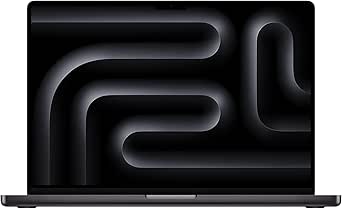
Apple MacBook Pro 16.2-inch with M5 Max, 18-core CPU, 32-core GPU, 36GB Memory, 2TB SSD, Wi-Fi 7, Space Black

LG UltraGear 32GX870A-B 32-inch 4K OLED Dual-Mode Gaming Monitor

Logitech MX Keys S Combo Wireless Keyboard and Mouse, Graphite
As an affiliate, we earn on qualifying purchases.
From 1986 Research to Modern Models
The explainer traces the core learning idea to a 1986 paper by David Rumelhart, Geoffrey Hinton and Ronald Williams, published in Nature. The paper described repeatedly changing network weights to reduce the difference between actual and desired outputs. In plain terms, the loop remains: make a prediction, measure how wrong it is and adjust.
It also uses image recognition results to show how deeper networks accompanied major improvements in one benchmark. In the ImageNet challenge, the source reports that the best error rate fell from 28.2% in 2010 to 3.57% in 2015. It says the winning networks increased from eight layers in 2012 to 152 in 2015. Those figures describe that challenge and period; they should not be read as a direct measure of how every current AI system performs.
The article draws on CS231n course notes for its description of artificial neurons and gradient descent, and on Goodfellow, Bengio and Courville’s textbook for the idea of learning a hierarchy of concepts. These sources provide background for the explainer’s account of the method; they do not independently verify the capabilities of any specific AI product.
““the procedure of repeatedly evaluating the gradient and then performing a parameter update is called Gradient Descent.””
— CS231n course notes, as quoted by ThorstenMeyerAI.com
What the Explainer Does Not Establish
The source explains general deep-learning concepts, but it does not test a particular workplace AI tool or establish how accurate one will be for a given task. Its benchmark figures are tied to ImageNet and specific years; they do not predict performance on writing, research, customer support or other work applications.
It is also not clear from the article how different products handle user data, add new information, use retrieval systems or change model weights after deployment. Those features vary by tool. The Chinchilla and Gopher comparison is presented as an example of model size not being the only relevant factor, not as a universal ranking rule. The source does not provide a broad evaluation of costs or performance across current commercial models.
How to Apply the Guide at Work
The article does not announce a product release, policy change or scheduled follow-up. Its practical implication is that users should check AI-generated work against reliable sources, particularly when errors could affect customers, business decisions or sensitive information. Teams should also consult the documentation for the specific tools they use to understand data handling and whether the system can draw on updated information.
For now, the guide offers a framework rather than a test of particular products: understand that model outputs reflect patterns learned during training, and do not assume that fluency, depth or parameter count alone establishes correctness. Whether a given AI system is suitable for a workplace task remains a product- and use-specific question.
Key Questions
What does deep learning mean?
Deep learning uses neural networks with multiple layers to learn patterns from examples. Earlier layers can represent simpler patterns, while later layers combine them into more complex ones.
Does an AI model learn every time I use it?
Not necessarily. The explainer distinguishes training, when model weights are set, from inference, when a trained model makes predictions. A product may have other ways to retain information or update, but that depends on the tool.
Why can an AI answer be wrong if it sounds confident?
A model generates answers from patterns learned from data; fluent wording does not establish that a statement is true. The source notes that models can guess when uncertain and can struggle when circumstances differ from their training data.
Does a larger model always perform better?
No. The explainer cites DeepMind’s Chinchilla and Gopher comparison to show that parameter count alone does not determine performance. That example does not mean smaller models always perform better.
Source: ThorstenMeyerAI.com