
TL;DR

Get hardware and tech essentials delivered free with Prime
- Fast, free delivery on millions of items
- Prime Video, Amazon Music and more included
- Member-only deals all year
In 2026, leading portable SSDs like Samsung T9 2TB, SanDisk Extreme PRO, and Samsung T7 1TB offer AI developers fast transfer speeds, high capacity, and rugged features. These drives support demanding workflows, but compatibility and real-world performance vary. The choice depends on specific needs and hardware support, as detailed in the original analysis of portable SSD options.
In 2026, leading portable SSDs such as the Samsung T9 2TB, SanDisk Extreme PRO, and Samsung T7 1TB are gaining popularity among AI professionals for their high transfer speeds, large capacities, and rugged designs. These drives are critical for managing large datasets, training models, and transferring AI workloads efficiently, making them essential tools for AI professionals working in fast-paced, data-intensive environments.
The Samsung T9 2TB ranks as the top choice due to its balanced combination of fast transfer speeds, ample capacity, and thermal management, supporting sustained large data transfers. The SanDisk Extreme PRO 1TB offers premium speed and an IP65 rating for environmental protection, appealing to field researchers and mobile AI developers. Meanwhile, the Samsung T7 1TB provides strong value with a 10Gbps connection compatible with more devices, making it suitable for everyday AI tasks and backups.
These models reflect a trend toward high-capacity, high-speed drives optimized for demanding workflows, with 2TB capacities becoming the preferred size for large datasets and AI training data. Compatibility considerations, such as connection interface (USB 3.2 Gen 2×2 or Thunderbolt), remain important, especially for users with specific hardware setups. The drives’ ruggedness features, like IP ratings, are also increasingly relevant for mobile AI workflows in field conditions.
The 9 picks
- 1
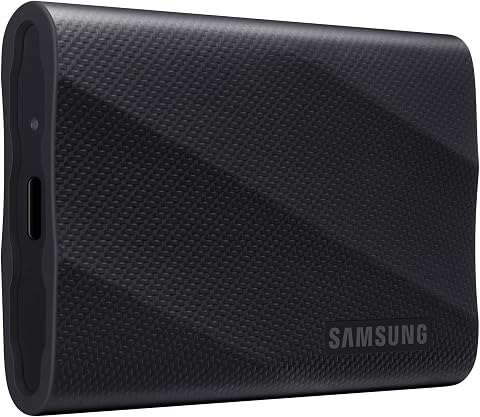 Samsung T9 Portable SSD 2TB USB 3.2 Gen 2×2 External Solid State DriveView on Amazon →
- 2
 Crucial X10 2TB Portable SSD, Up to 2,100MB/s, USB-C, External Solid State Dr…View on Amazon →
- 3
 SanDisk 2TB Extreme Portable SSDView on Amazon →
- 4Samsung T9 Portable SSD 1TB USB 3.2 Gen 2×2 External Solid State DriveView on Amazon →
- 5
 SanDisk 1TB Extreme Portable SSDView on Amazon →
- 6
 Samsung T7 Portable SSD 1TB External Solid State DriveView on Amazon →
- 7
 SanDisk 1TB Extreme PRO Portable SSD – Up to 2000MB/s – USB-C, IP65 Water and…View on Amazon →
- 8SanDisk 1TB Extreme Portable SSD – USB-C, Up to 1050MB/s, IP65 Water & Dust R…View on Amazon →
- 9
 SSK Portable SSD 500GB External Solid State Drive USB C SSD External Hard DriveView on Amazon →
Why High-Performance Portable SSDs Matter for AI in 2026
For AI professionals, the ability to quickly transfer and store large datasets directly impacts productivity and project timelines. High-capacity, fast, and durable SSDs enable seamless data management, reduce bottlenecks during model training, and support mobile workflows. As AI workloads grow in size and complexity, having reliable storage solutions like these becomes essential for staying competitive and efficient in the field.
Products Worth Considering
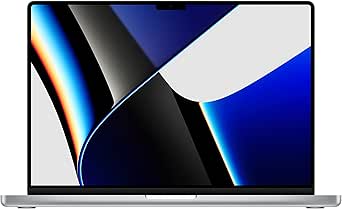
Apple MacBook Pro 16-inch (2021), M1 Pro, 10-core CPU, 16-core GPU, 16GB RAM, 512GB SSD, Silver

Apple MacBook Pro 2026 14.2 Laptop with M5 Pro chip, 15‑core CPU, 16‑core GPU, 24 GB Unified Memory, 1 TB SSD, Wi‑Fi 7 – Silver

Apple MacBook Pro 16.2-inch with M5 Pro, 18-core CPU, 20-core GPU, Nano-Texture Display, 48GB Memory, 1TB SSD, Space Black
As an affiliate, we earn on qualifying purchases.
Evolution of Portable SSDs and Their Role in AI Workflows
Over the past few years, portable SSDs have evolved from simple storage devices to critical components for AI development, especially for those working remotely or in the field. The 2026 models build on previous generations by offering faster interfaces, larger capacities, and rugged features tailored for demanding environments. The shift toward 2TB drives reflects the increasing size of datasets used in AI training and inference, making high-capacity storage more accessible and affordable.
Earlier models prioritized speed but often lacked durability or capacity, limiting their utility for professional AI workflows. The latest releases aim to balance these factors, with manufacturers emphasizing thermal management, compatibility, and environmental resistance to meet the needs of AI researchers, data scientists, and developers working across diverse settings.
“Our latest T9 2TB drive is designed to meet the demanding needs of AI developers, offering high-speed data transfer and reliable performance in a portable form factor.”
— Samsung spokesperson
Unanswered Questions About Compatibility and Real-World Performance
It remains unclear how these new drives will perform across diverse hardware setups, especially regarding real-world sustained speeds and thermal management under prolonged use. Compatibility issues may arise with older computers or specific ports, and the actual benefits of high-end rugged features are still being evaluated in field conditions. Further testing and user feedback are needed to confirm these drives’ effectiveness in demanding AI environments.
Upcoming Releases and Field Testing of 2026 SSDs
Manufacturers are expected to release firmware updates and new models throughout 2026, with ongoing testing by industry experts. AI professionals and data scientists will likely evaluate these drives in real-world scenarios to verify performance claims, compatibility, and durability. Monitoring user feedback and independent benchmarks will be essential to determine which models truly deliver on their promises for AI workloads.
Key Questions
Which portable SSD is best for AI data transfer in 2026?
The Samsung T9 2TB is currently considered the top choice due to its balance of speed, capacity, and thermal management, suitable for large AI datasets and frequent transfers.
Are rugged features necessary for AI work?
Rugged features like IP ratings are beneficial for fieldwork or mobile setups but are less critical for desk-based AI development. Prioritize capacity and speed if working primarily indoors.
Will higher interface speeds always improve AI workflows?
Not necessarily. The benefit depends on whether your hardware supports higher bandwidths (like 20Gbps connections). For many users, a 10Gbps drive still offers sufficient performance.
What should I consider when choosing capacity for AI projects?
Estimate your current and future data needs, aiming for a drive with at least 2TB if working with large datasets or multiple models, to avoid frequent upgrades or transfers.
When will new models for AI-specific storage be available?
Manufacturers are expected to announce new models throughout 2026, with ongoing updates based on user feedback and technological advancements.
Source: ThorstenMeyerAI.com