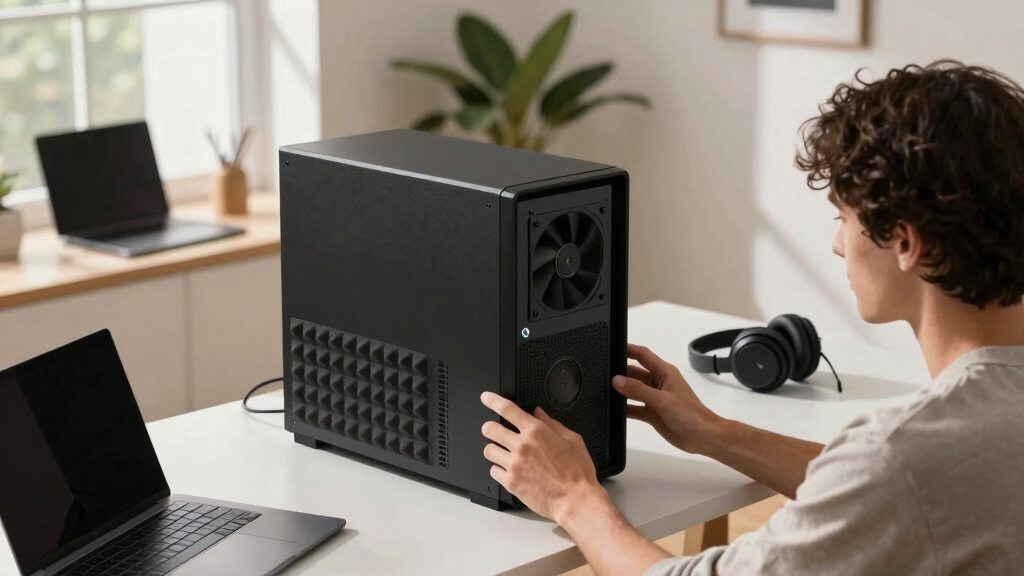

📊 Full opportunity report: How to Reduce Heat and Noise in a High-Power AI Workstation on ThorstenMeyerAI.com — validation score, market gap, and execution plan.

Get hardware and tech essentials delivered free — and shop member deals
- Fast, free delivery on millions of items
- Access to Prime Big Deal Days deals on October 6–7
- Prime Video, Amazon Music and more included
TL;DR
High-power AI workstations generate significant heat and noise due to sustained GPU loads. Key fixes include undervolting GPUs, improving cooling, and optimizing case airflow. This guide details proven methods to reduce thermal and acoustic issues.
High-power AI workstations often produce excessive heat and noise under sustained loads, impacting workspace comfort and equipment longevity. Recent insights confirm that targeted undervolting, improved cooling solutions, and case airflow adjustments can significantly mitigate these issues, making AI rigs quieter and cooler without sacrificing performance.
AI workstations running large models or continuous inference generate more heat and noise than typical gaming PCs because their GPUs operate at or near full load for extended periods. Unlike gaming setups, which experience bursty loads, AI workloads are sustained, preventing cooling systems from catching up, resulting in higher internal temperatures and louder fan noise. The primary heat source is the GPU, which can produce over 70% of the total thermal load, and its fans are often the loudest component during prolonged operation. The CPU, power supply, VRMs, and case airflow also contribute to the thermal and noise profile. Effective mitigation involves reducing heat at the source through undervolting and power capping, upgrading cooling solutions, and optimizing case airflow. These measures can lower fan speeds, reduce noise, and improve overall thermal management, with undervolting being the most impactful and cost-effective step.An AI workstation isn’t a gaming PC —
and that’s why it runs hot.
Local inference is a sustained load: the GPU sits near full power for hours with no loading screens, so the heat never dissipates and the fans never get a break. Here’s where the heat comes from — and the five levers that reduce it.
Why Managing Heat and Noise Matters for AI Workstations
Reducing heat and noise in high-power AI workstations enhances workspace comfort, extends hardware lifespan, and maintains consistent performance. Effective thermal management allows AI practitioners to operate rigs more quietly and reliably, especially in home or office environments where noise can be disruptive. Implementing these strategies can also reduce energy consumption and improve the efficiency of cooling systems, making AI workloads more sustainable and accessible for a broader range of users.As an affiliate, we earn on qualifying purchases.
Understanding Heat and Noise in AI Workstation Design
AI workstations differ from gaming PCs because they sustain high GPU loads over long periods, unlike the bursty loads typical in gaming. This continuous operation causes persistent heat buildup and fan noise. Historically, many users rely on standard cooling setups designed for gaming, which are insufficient for AI workloads. Recent developments emphasize the importance of undervolting GPUs, optimizing airflow, and selecting cooling solutions tailored for sustained high loads. These insights build on existing knowledge about thermal management, but applying them specifically to AI workloads remains an evolving area with ongoing research and community experimentation.“The key to quieter, cooler AI workstations is understanding that sustained loads require different cooling strategies than gaming PCs. Undervolting and airflow optimization are game changers.”
— Thorsten Meyer, AI hardware expert
high-performance CPU cooling solutions
As an affiliate, we earn on qualifying purchases.
As an affiliate, we earn on qualifying purchases.
Uncertainties in Long-Term Effectiveness of Cooling Strategies
While undervolting and airflow improvements are proven to reduce heat and noise, their long-term effects on hardware stability and performance under various workloads are still being studied. Variations in hardware models and configurations can influence outcomes, and some users report mixed results with aggressive undervolting. Further research is needed to establish optimal settings for different GPU and case types, and to understand the impact on hardware longevity over extended periods.
As an affiliate, we earn on qualifying purchases.
Next Steps for Optimizing AI Workstation Cooling
Practitioners should experiment with undervolting and power capping techniques tailored to their specific hardware, guided by community-tested settings. Upgrading case fans, improving case airflow, and considering liquid cooling solutions can further enhance thermal management. Ongoing research and user feedback will refine these strategies, making high-performance AI workstations quieter and more reliable. Future developments may include smarter cooling systems that dynamically adjust based on workload and thermal conditions.
As an affiliate, we earn on qualifying purchases.
Key Questions
Can undervolting GPU affect AI performance?
In most cases, undervolting reduces power consumption and heat without significantly impacting performance, especially for memory-bound inference tasks. However, aggressive undervolting may cause instability; testing and gradual adjustments are recommended.
What cooling solutions are best for high-power AI workstations?
High-quality air coolers with larger heatsinks and high-CFM fans are effective, but liquid cooling systems can provide better thermal headroom and quieter operation, especially for multi-GPU setups.
How much can airflow improvements reduce noise?
Optimizing case airflow can cut fan speeds and noise levels by up to 50%, depending on case design and fan quality, while also lowering overall temperatures.
Is liquid cooling necessary for AI workloads?
Not always, but liquid cooling can significantly improve thermal performance and reduce noise in high-load, multi-GPU systems. It’s a worthwhile investment for demanding setups.
Are there risks associated with undervolting?
Yes, if done aggressively, undervolting can cause system instability or crashes. It’s important to follow tested guidelines and monitor system stability during adjustments.
Source: ThorstenMeyerAI.com
Evergreen bestsellers Picks
bestsellers
As an affiliate, we earn on qualifying purchases.