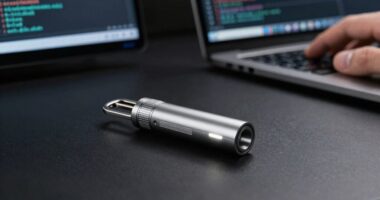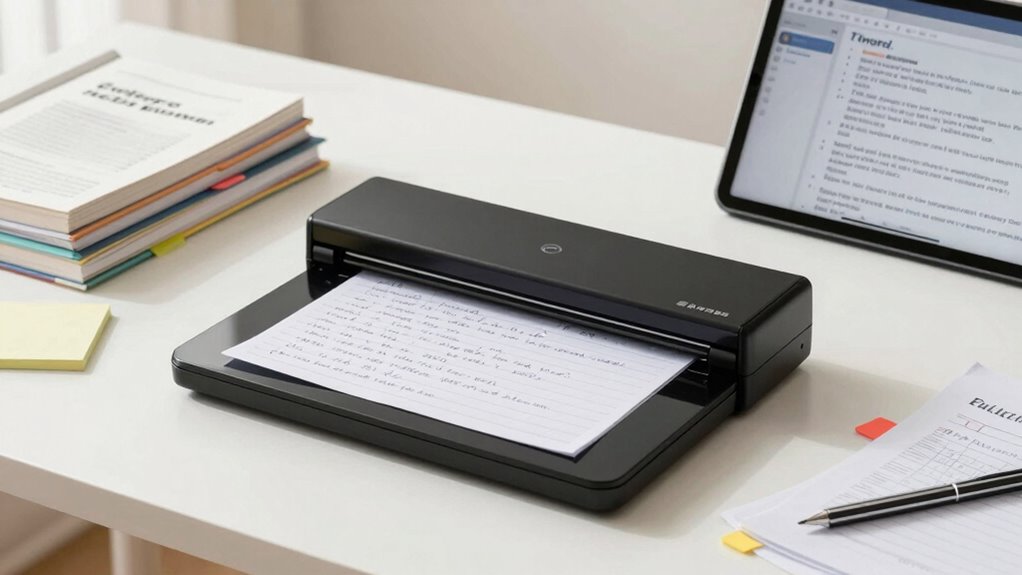

Notebook scanners boost your research archiving by quickly converting handwritten notes into organized digital files, making it easier to search and access information later. They eliminate the hassle of manual transcription and reduce errors, ensuring your data stays accurate. These scanners also facilitate collaboration by sharing files effortlessly and securely. By integrating with your workflow, they keep your research neat and accessible. Keep exploring to discover how these tools can transform your research process even further.

Get hardware and tech essentials delivered free with Prime
- Fast, free delivery on millions of items
- Prime Video, Amazon Music and more included
- Member-only deals all year
Key Takeaways
- Enable quick digitization of handwritten notes for seamless integration into digital research archives.
- Improve organization through tagging, categorization, and secure storage of digital notes.
- Incorporate OCR technology to convert handwriting into searchable, editable text, speeding up information retrieval.
- Facilitate easy sharing and collaboration of research materials across multiple devices and locations.
- Support long-term digital archiving, preserving research data and maintaining workflow resilience.
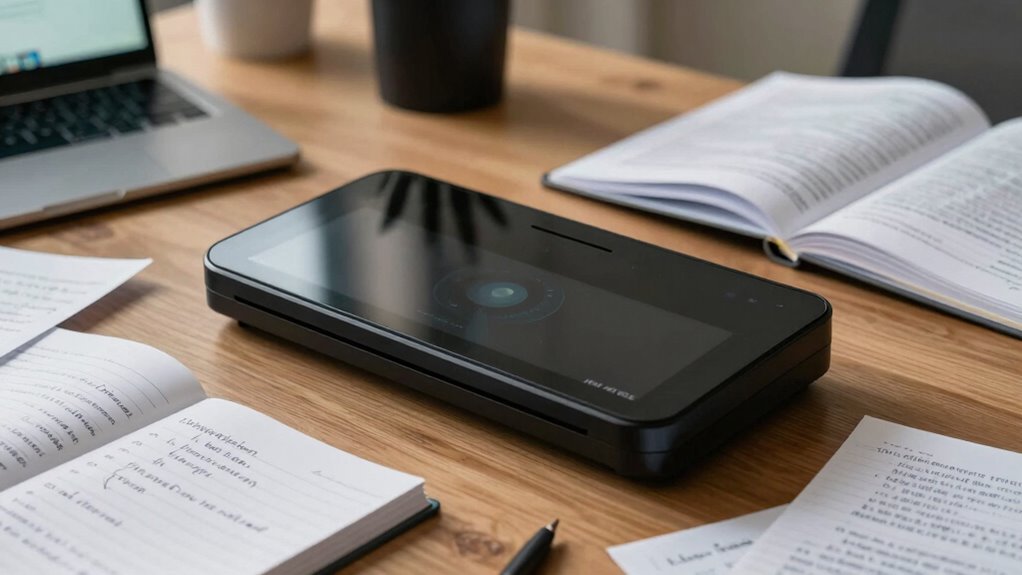
In today’s research environment, notebook scanners have become essential tools for efficiently capturing and organizing handwritten notes, sketches, and diagrams. These devices streamline how you handle your research materials, making digital organization much smoother. Instead of manually typing out every note or trying to decipher messy handwriting later, you can scan pages directly into your digital files. This not only saves time but also reduces errors associated with manual transcription. With a notebook scanner, your handwritten research becomes instantly accessible and easy to search through, which means you waste less time hunting for specific details buried in notebooks.
Notebook scanners make capturing, organizing, and searching handwritten research quick and effortless.
One of the biggest advantages is how these scanners enhance your digital organization. You can categorize, tag, and store your notes in a systematic way, integrating them with your existing research management systems. When your notes are digitized, you can back them up securely and access them from multiple devices, whether you’re in the lab, at home, or in the field. This makes your workflow more flexible and resilient against data loss. Additionally, many notebook scanners come with OCR (Optical Character Recognition) technology, allowing you to convert handwritten notes into editable, searchable text. This feature reduces the need for manual transcription, which is often time-consuming and prone to mistakes.
By digitizing your notebooks, you also facilitate collaboration. Sharing specific notes or diagrams becomes as simple as sending a file or providing access to a cloud-stored document. This seamless sharing accelerates teamwork and knowledge transfer, especially when working with colleagues across different locations. Furthermore, scanning your handwritten work keeps your research organized and clutter-free, eliminating the need to store and manage numerous physical notebooks. Digital archiving is a crucial benefit, enabling long-term preservation and easy retrieval of your research data. Incorporating digital tools like notebook scanners can significantly improve overall efficiency and data security in research workflows. Moreover, the ability to convert handwritten notes into searchable text can dramatically streamline the process of locating specific information within large collections of research notes.
Another important aspect is how these tools can help bridge the gap between physical and digital note-taking, making it easier to transition between traditional methods and modern digital workflows. The addition of notebook scanners to your workflow doesn’t mean you have to abandon your traditional note-taking habits. Instead, it complements your process by providing a quick, reliable way to convert physical notes into digital assets. This reduces the hassle of manual transcription, which often slows down research progress. You can maintain your personal note style while enjoying the benefits of digital searchability and secure storage. Over time, integrating notebook scanners into your research routine helps create a detailed, accessible archive of your work, ensuring that no detail gets lost and that your research materials are always organized, easy to retrieve, and ready for analysis or sharing.
handheld notebook scanner with OCR
As an affiliate, we earn on qualifying purchases.
As an affiliate, we earn on qualifying purchases.
Frequently Asked Questions
How Do Notebook Scanners Handle Fragile or Damaged Pages?
Notebook scanners handle fragile or damaged pages carefully by using gentle scanning methods like adjustable pressure and specialized rollers to prevent further damage. They prioritize page preservation, ensuring that fragile pages are supported during the process. Damage assessment is essential; scanners often include features to detect tears or deterioration, allowing you to decide whether to proceed or take extra precautions to protect the material. This careful approach maintains the integrity of delicate pages.
Can Notebook Scanners Digitize Handwritten Notes Accurately?
Think of your handwritten notes as a delicate painting; a notebook scanner captures its essence with precision. Yes, notebook scanners can digitize handwritten notes accurately, especially with advanced handwriting recognition technology. They use image enhancement to clarify smudges and faint lines, ensuring your writing is preserved faithfully. This process transforms your handwritten thoughts into searchable, editable digital files, making your research more accessible and organized than ever before.
What Are the Security Features of Notebook Scanners?
Notebook scanners offer robust security features like data encryption to protect your sensitive information during scanning and storage. Many models also support secure cloud storage options, ensuring your digitized notes are safely backed up and accessible only to authorized users. These features help prevent unauthorized access, safeguarding your research data and personal notes, and give you peace of mind knowing your information remains confidential and protected from cyber threats.
How Do Notebook Scanners Integrate With Research Management Software?
Notebook scanners easily integrate with research management software by using cloud synchronization, allowing you to access your scans across devices instantly. They also support user authentication, ensuring only authorized users can access sensitive data. This seamless integration streamlines your workflow, making it simple to organize, search, and share research materials. As a result, your research process becomes more efficient, secure, and collaborative, saving you time and reducing data management hassles.
What Is the Typical Maintenance Required for Notebook Scanners?
You’ll need to regularly check your notebook scanner’s maintenance, focusing on paper quality and scanner calibration. Confirm the paper is smooth and free of wrinkles, tears, or dust to prevent jams and blurry scans. Calibrate the scanner periodically to maintain image quality and accuracy. Clean the scanner’s glass and sensors gently, and replace any worn-out parts as needed, so your workflow remains efficient and your research stays well-preserved.
digital research notebook scanner
As an affiliate, we earn on qualifying purchases.
As an affiliate, we earn on qualifying purchases.
Conclusion
Incorporating notebook scanners into your research workflow transforms how you archive and access your work, making it as seamless as a well-choreographed dance. They guarantee your notes are digital, organized, and easily retrievable—no need for a time machine to revisit old ideas. Embrace this modern tool now, and you’ll wonder how you ever managed without it. After all, in research, staying ahead means never losing sight of your discoveries, even if they’re from the age of Gutenberg!
portable document scanner for handwritten notes
As an affiliate, we earn on qualifying purchases.
As an affiliate, we earn on qualifying purchases.
As an affiliate, we earn on qualifying purchases.
Halloween Picks
halloween
As an affiliate, we earn on qualifying purchases.