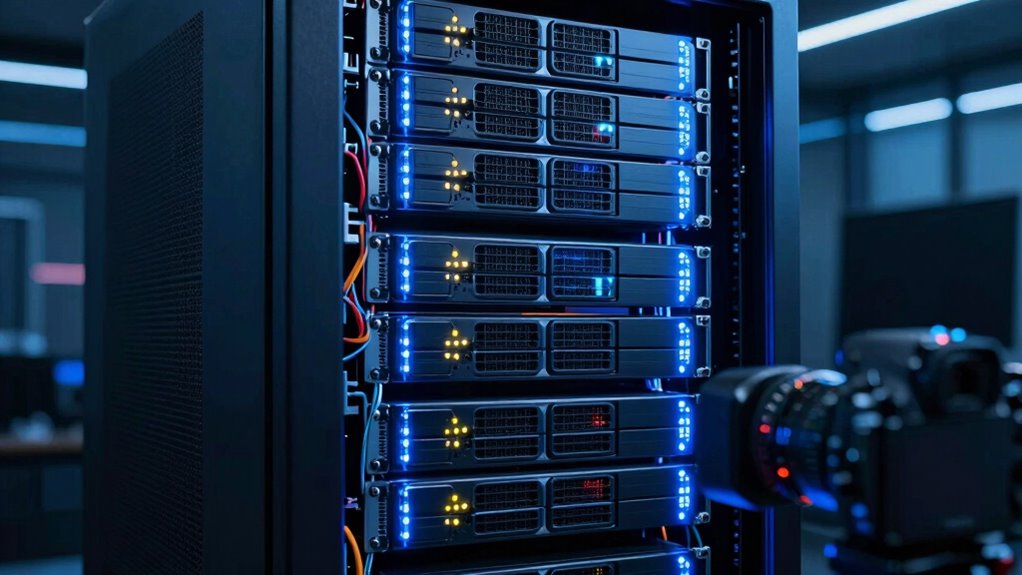

If you’re part of a crypto video team, RAID storage means faster access to large files, better redundancy, and increased reliability, helping you handle high-volume, sensitive data confidently. It minimizes downtime, prevents data loss, and speeds up editing and rendering tasks, keeping your project on track. By customizing your RAID setup, you can optimize performance and protection based on your needs. Keep exploring to discover how specific configurations can boost your workflow even further.

Get hardware and tech essentials delivered free — and shop member deals
- Fast, free delivery on millions of items
- Access to Prime Big Deal Days deals on October 6–7
- Prime Video, Amazon Music and more included
Key Takeaways
- RAID ensures data redundancy and fault tolerance, protecting critical crypto video files from drive failures.
- It offers optimized performance for handling large, high-resolution footage and complex editing tasks.
- RAID configurations can be customized to balance speed and data protection based on project needs.
- Reliable RAID storage minimizes downtime, ensuring timely project delivery and reducing workflow disruptions.
- For crypto video teams, RAID enhances data security, quick access, and efficient recovery during high-stakes projects.
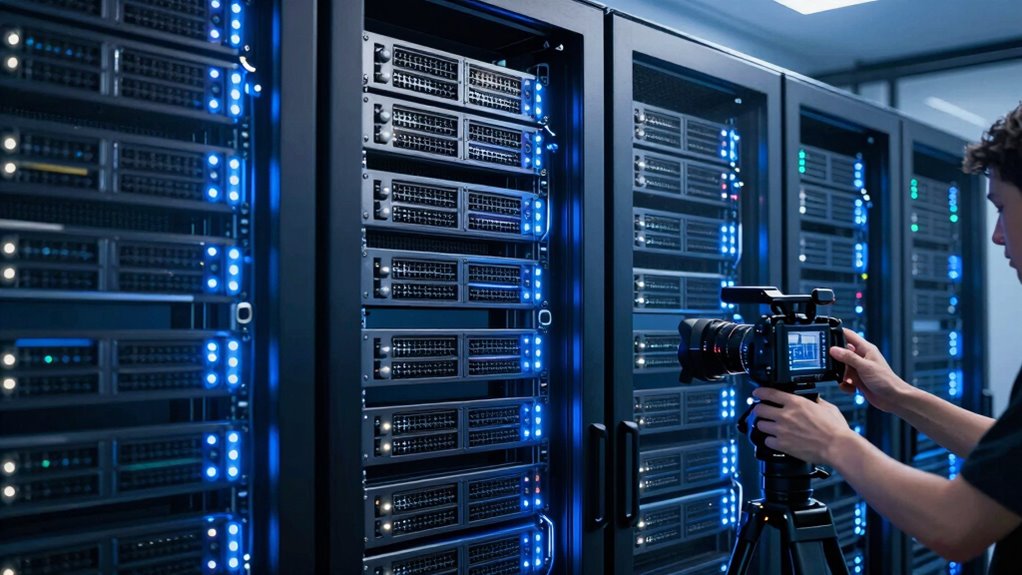
When managing high-stakes crypto video projects, having reliable storage isn’t just a luxury—it’s a necessity. You need a system that ensures your invaluable footage stays safe, accessible, and ready for quick editing. That’s where RAID storage comes into play. RAID, or Redundant Array of Independent Disks, helps you achieve these goals by combining multiple drives into a single, resilient system. It offers data redundancy, meaning if one drive fails, your data remains protected and accessible from the remaining drives. This level of fault tolerance is crucial when you’re handling large, sensitive video files that can’t afford to be lost or corrupted. It minimizes downtime, keeps your workflow smooth, and prevents costly delays, especially during tight project deadlines.
Reliable RAID storage is essential for safeguarding and ensuring quick access to high-stakes crypto video project files.
But RAID isn’t just about data safety; it also helps optimize performance. Depending on the configuration you choose, RAID can significantly speed up data transfer rates, which is vital when working with high-resolution footage or complex editing software. For example, RAID 0 stripes data across multiple disks, increasing read and write speeds—perfect when you need to load or render large files quickly. Meanwhile, RAID 10 combines both performance and redundancy by mirroring and striping, giving you fast access alongside protection against drive failure. This balance ensures your editing process remains fluid, without bottlenecks that slow down production.
As a crypto video professional, you understand that your work involves handling enormous amounts of data, often in real-time. Performance optimization through RAID configurations means your editing timeline is more responsive, and rendering times are reduced. You won’t waste precious hours waiting for files to load or export, allowing you to meet tight project deadlines or respond swiftly to client revisions. Additionally, understanding RAID configurations helps you choose the best setup for your workflow, ensuring maximum efficiency. Knowing about disaster recovery strategies can further safeguard your projects from unexpected hardware failures, which are not uncommon when dealing with intensive data tasks. Incorporating redundant storage strategies into your workflow can help prevent data loss and downtime, especially critical in high-stakes projects. Effective data management strategies are essential to maintain workflow continuity and protect your valuable assets.
Furthermore, RAID’s flexibility allows you to tailor your setup to your specific needs. Whether you prioritize maximum speed, data protection, or a combination of both, there’s a RAID configuration suited for your workflow. By investing in this technology, you ensure your storage system is both reliable and efficient, minimizing risks and maximizing productivity. In high-stakes crypto video projects, where every second counts and data integrity is paramount, RAID storage isn’t just a technical choice—it’s an essential safeguard for your creative and professional success.
RAID storage system for video editing
As an affiliate, we earn on qualifying purchases.
As an affiliate, we earn on qualifying purchases.
Frequently Asked Questions
Can RAID Prevent Data Loss From Hacking or Malware Attacks?
RAID storage alone can’t fully prevent data loss from hacking or malware attacks, but it markedly reduces the risk by providing backup redundancy. You should also implement data encryption to protect sensitive information and regularly update your security measures. Combining RAID with robust backup strategies and strong security practices ensures your crypto video team’s data stays safer, even if an attack occurs. This layered approach enhances your overall data resilience.
How Does RAID Affect Data Transfer Speeds During Editing?
RAID greatly boosts data transfer speeds during editing by optimizing storage performance. With data redundancy across multiple drives, RAID configurations allow simultaneous read and write operations, reducing bottlenecks. This means you experience faster rendering and smoother playback, especially with large video files. Storage optimization guarantees your workflow remains efficient, minimizing downtime. Overall, RAID enhances editing productivity by providing high-speed data access coupled with reliable data redundancy, essential for crypto video teams handling sizable, sensitive files.
Is RAID Suitable for Remote Crypto Video Teams?
Jumping the gun, RAID can be suitable for remote crypto video teams if you prioritize hardware compatibility and cloud backup strategies. It offers redundancy and improved data security, vital for handling large files remotely. However, make certain your setup supports remote access and that your hardware integrates seamlessly with cloud solutions. With the right configuration, RAID helps you maintain smooth workflows and safeguard your valuable crypto videos, even from afar.
What’s the Cost Difference Between Different RAID Levels?
The cost difference between RAID levels varies considerably, mainly due to backup redundancy needs. For example, RAID 5 offers a good balance with redundancy and lower costs, while RAID 10 provides faster performance but at a higher price. Conducting a thorough cost analysis helps you decide which level fits your budget and backup redundancy requirements, ensuring your crypto video team’s data stays safe without overspending.
How Often Should RAID Arrays Be Maintained or Checked?
Think of your RAID array like a car—you wouldn’t drive it without regular checkups. You should check your RAID at least monthly, especially for critical crypto videos, to guarantee performance and detect issues early. Maintain a consistent backup schedule and follow your maintenance schedules diligently. Regularly reviewing drive health, firmware updates, and testing rebuild processes will help prevent data loss and keep your crypto video projects safe and running smoothly.
high-performance NAS for crypto video teams
As an affiliate, we earn on qualifying purchases.
As an affiliate, we earn on qualifying purchases.
Conclusion
Think of RAID storage as a safety net for your crypto video team. It catches you when one hard drive fails, preventing data loss and keeping your projects on track. With RAID, you’re like a tightrope walker with a sturdy safety net below—confident to perform without fear of falling. Embrace RAID to guarantee your valuable footage stays secure and accessible, so you can focus on creating without constantly looking over your shoulder.
redundant hard drive array for data security
As an affiliate, we earn on qualifying purchases.
As an affiliate, we earn on qualifying purchases.
As an affiliate, we earn on qualifying purchases.
Fall Picks
fall essentials
As an affiliate, we earn on qualifying purchases.