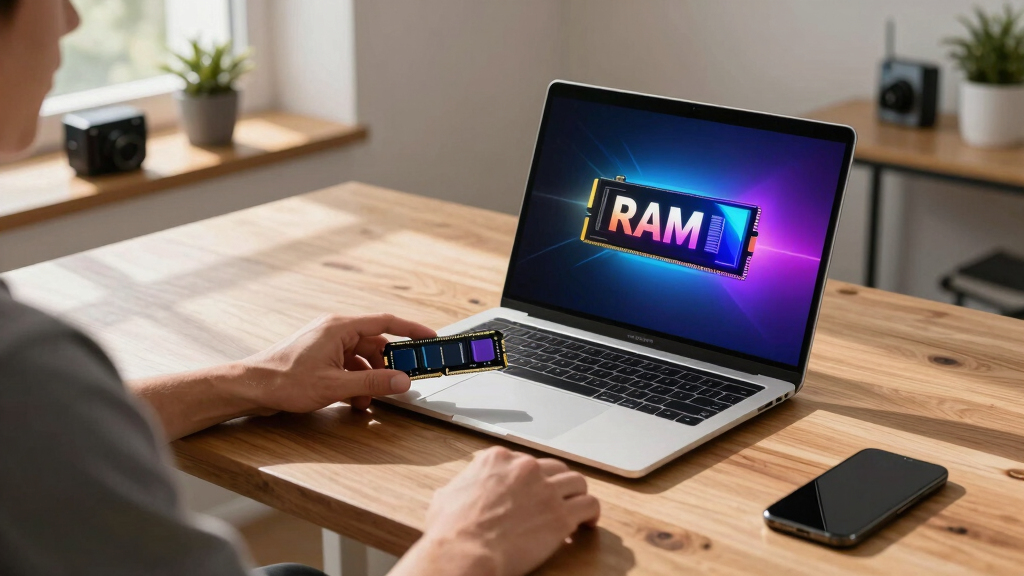

📊 Full opportunity report: The Memory Squeeze: Why Your RAM Bill Doubled on ThorstenMeyerAI.com — validation score, market gap, and execution plan.

Get hardware and tech essentials delivered free with Prime
- Fast, free delivery on millions of items
- Prime Video, Amazon Music and more included
- Member-only deals all year
TL;DR
RAM prices have doubled in 2026, driven by a shift in chip manufacturing toward AI hardware. This shortage is not temporary but a result of deliberate capacity reallocation, affecting consumer and enterprise markets.
DRAM prices have approximately doubled in 2026, with the cost of 32GB DDR5 kits rising from about $80–$120 in 2025 to over $370 in June 2026, according to Tom’s Hardware. This surge is driven by a fundamental shift in chip manufacturing priorities, not a temporary supply disruption, making RAM now the most expensive component in many PC builds. Apple Wants Blacklisted Chinese RAM
The main driver behind the price increase is a deliberate reallocation of wafer manufacturing capacity by the three dominant DRAM producers—Samsung, SK Hynix, and Micron. These companies are redirecting their production from consumer DDR5 modules to High Bandwidth Memory (HBM), a specialized, high-margin DRAM used in AI accelerators like Nvidia’s GPUs. HBM modules sell for roughly $60–$100 each, compared to just $5–$10 for standard DDR5, incentivizing manufacturers to favor the more profitable product.
HBM consumes significantly more wafer area—about three to four times that of DDR5—due to the complexity of stacking multiple DRAM dies and linking them with microscopic vias. As a result, about 23% of total DRAM wafer output is now dedicated to HBM, up from 19% in 2025. AI applications are projected to absorb roughly 20% of all DRAM capacity in 2026, intensifying the shortage for consumer and enterprise markets.
Unlike past shortages, which eased when new fabs flooded the market, this crisis persists because manufacturers are intentionally managing supply to maintain high margins. New capacity expansions are not expected to significantly impact prices until 2027–2028, and current supply growth is below historical norms, with IDC estimating only 16% growth in DRAM capacity for 2026.
Why your RAM bill doubled
“Doubled” is the polite version — consumer DRAM is running 3–6× its 2024 lows. The boom-bust cycle that always brought cheap RAM back isn’t coming this time, because the factories that make your RAM now make something far more profitable instead.
HBM
This is the quiet tax on the whole AI era. Relief isn’t forecast before 2028, and even then prices may settle 30–50% above pre-crisis levels. Buy what you genuinely need now; don’t panic-buy capacity you won’t use. You can’t out-wait the fab math — but, as this series will show, you can shrink what you need. Next: HBM Ate the Fab.
Why the RAM Price Surge Matters for Consumers and Industry
The sustained increase in RAM prices impacts a broad range of stakeholders, from consumers upgrading PCs to enterprise buyers. PC builders face higher costs, with some manufacturers like HP reporting memory costs rising from 15–18% to about 35% of total build materials. Major brands such as Apple and Dell are passing these costs onto consumers through price hikes, potentially slowing demand and affecting product availability.
Furthermore, the shift toward high-margin AI hardware indicates a structural change in the memory market, reducing the likelihood of a quick price correction. This could influence future technology costs, supply chain dynamics, and the pace of AI development, making memory a critical factor in the broader tech ecosystem.
As an affiliate, we earn on qualifying purchases.
The 2026 Memory Crunch: Origins and Industry Shifts
Historically, memory shortages have been temporary, resolved by building new fabs and flooding the market with supply. However, in 2026, the primary cause is a strategic reallocation of wafer capacity by the three dominant DRAM producers—Samsung, SK Hynix, and Micron—toward AI-focused products like HBM. These products generate significantly higher margins, incentivizing manufacturers to prioritize their production over consumer DRAM modules.
This shift is driven by the booming AI industry, which demands high-capacity, high-speed memory solutions. The physics of wafer usage and yield losses make HBM much less efficient in terms of wafer area, effectively reducing the supply of consumer DRAM. The market’s current structure, with high concentration and long-term contracts, limits the ability of supply to respond quickly to demand, unlike past cycles.
As an affiliate, we earn on qualifying purchases.
Unresolved Questions About Market Dynamics
It remains unclear whether the current high prices are solely due to deliberate capacity management or if there is any collusion among the dominant manufacturers. While no antitrust actions are reported, the high market concentration and past collusion cases raise questions about potential coordinated behavior. Additionally, the full impact of long-term contracts and whether new capacity will eventually alleviate shortages are still uncertain.
As an affiliate, we earn on qualifying purchases.
Expected Developments in Memory Supply and Pricing
Manufacturers plan to expand capacity in the coming years, but significant volume increases are not expected until 2027–2028. Consumers and industry buyers should anticipate continued high prices and possible shortages through at least the next two years. Monitoring capacity expansions, technological innovations, and industry policies will be key to understanding how the market evolves.
As an affiliate, we earn on qualifying purchases.
Key Questions
Will RAM prices ever return to 2024 levels?
It is uncertain when prices will fall back, as current supply constraints are driven by strategic reallocations toward AI hardware, not just temporary shortages. Significant capacity increases are expected only around 2027–2028.
How does AI development influence memory prices?
AI requires high-capacity, high-speed memory like HBM, which is more profitable for manufacturers. This demand incentivizes reallocating wafer capacity away from consumer RAM, contributing to shortages and higher prices.
Are there alternatives to DDR5 for consumers?
DDR4 modules are still available but are now at end-of-life and priced similarly to DDR5, with no significant cost advantage. The supply shortage affects all types of consumer memory.
Could new manufacturing technologies ease the shortage?
While technological innovations may improve wafer efficiency, the current trend favors high-margin AI hardware, and capacity expansion is slow. It is unlikely that new tech alone will resolve the shortage in the near term.
Source: ThorstenMeyerAI.com
Halloween Picks
halloween
As an affiliate, we earn on qualifying purchases.