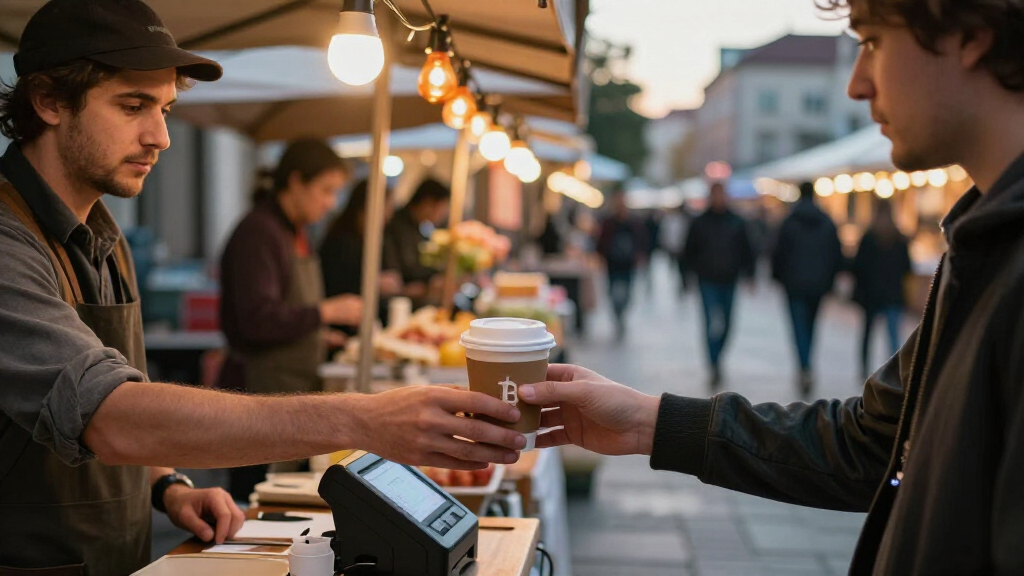

🔍 Read the full analysis: Time Runs Through The Closing Scene Of “Nightmarket — Mercado De Medianoche” on ThorstenMeyerAI.com

Get hardware and tech essentials delivered free with Prime
- Fast, free delivery on millions of items
- Prime Video, Amazon Music and more included
- Member-only deals all year
TL;DR
ThorstenMeyerAI.com has published a field guide and live room for “Nightmarket — Mercado de Medianoche,” a digital market scene designed to change as it winds down. The page describes time-driven shifts in lighting, steam and stalls, but does not provide technical specifications, performance data or a release schedule.
ThorstenMeyerAI.com has presented “Nightmarket — Mercado de Medianoche,” a live digital market scene and accompanying field guide in which the environment gradually changes as closing time approaches. The project uses time as a design mechanism, shifting visual details such as lantern-like lighting, neon, steam and the presence of stalls to make the market appear to wind down.
The project is framed as both a live room for visitors and a design teardown explaining how its effects work together. The description emphasizes a gradual shift: the market begins with the feel of a busy night-time setting and moves toward a quieter scene in which the final stalls start to disappear. The page does not identify a specific clock duration or say whether visitors encounter the same sequence each time.
Its visual language includes warm, lantern-like light, deliberately imperfect neon and steam rising through the night. These details are presented as parts of a changing environment rather than a fixed decorative image. The account describes the intended effect, but does not publish implementation details such as the software, code structure, generative models or hardware used to create it.
The central design idea is that small changes accumulate over time until the entire room feels as if it is closing. The guide suggests this approach may be relevant to generative environments and interfaces that respond through more than a simple status update. That is a proposed application, not evidence that the project has been tested in other settings or that it produces measurable user benefits.
Field Guide / Time-Based Atmosphere
Time Runs Through the Closing Scene of Nightmarket — Mercado de Medianoche
A live digital market and its design teardown use the approach of closing time to reshape the room. Warm light, imperfect neon, rising steam and receding stalls make time part of the scene.
The central question
“What if the most convincing way to make a digital market feel alive were to give it a closing time?”ThorstenMeyerAI.com
01 / The progression
How time shapes the market
The scene is described as moving from a busy nighttime setting toward a quieter, nearly empty market. Small environmental changes accumulate to suggest a transition rather than one abrupt status change.
Busy night
The market begins with the feeling of an active late-night setting.
Atmosphere shifts
Lantern-like warmth, uneven neon and rising steam shape the room.
Stalls recede
The final stalls start to disappear as closing time approaches.
Quieter scene
The market feels nearly empty; what remains is left as a thematic prompt.
02 / A scene made of cues
Details that make time visible
These elements are presented as parts of a changing environment, not merely a fixed decorative image. The description does not explain their exact order or implementation.
01 / Illumination
Lantern-like warmth
Warm light gives the market its intimate nighttime character as the room moves toward closing.
02 / Signage
Imperfect neon
Deliberately uneven neon adds a lived-in visual texture to the digital setting.
03 / Movement
Steam and stalls
Steam rises through the night while stalls gradually recede, signaling a shift in activity.
“Instead of treating atmosphere as a static visual layer, the room uses time as a design mechanism.”
The guide frames the scene as an idea to observe and examine. It does not establish how audiences respond or whether this approach improves usability elsewhere.
03 / What the page establishes
A field guide and a live room
ThorstenMeyerAI.com presents the project as both a place to visit and a design teardown. The available description supports an artistic proposition, while leaving many practical details open.
Described
Observable concept
- Time-based atmosphere organizes the market’s transition.
- Visual elements work together to suggest a lived-in place.
- Live room + guide invite visitors to view and examine the scene.
Not specified
Open questions
- How long the closing sequence takes, or whether it follows a fixed schedule.
- Whether visitors can interact or influence the changes.
- Which software, code, models or hardware were used.
- Whether the approach has been tested in other settings or measured with audiences.
04 / From idea to implication
A design proposition, not a proven result
The project suggests that environments and interfaces might communicate transitions through the setting itself. That possibility is not evidence of better usability or measured user benefit.
05 / Reader questions
What we know—and what remains open
The published account is clearest about the design intent: a digital market that changes as closing time approaches.
What is Nightmarket — Mercado de Medianoche?
A digital night-market scene presented by ThorstenMeyerAI.com alongside a field guide about its closing-time progression.
What changes as the scene winds down?
The account names warm light, imperfect neon, rising steam and stalls. It does not detail exact timing or sequence.
Can visitors control the market?
The page invites visitors to the live room but does not say whether they can interact or affect its changes.
Does this show time-based interfaces work better?
No. The approach is offered as a design idea; no audience research or performance results are reported.
How Time Shapes the Market
Nightmarket presents an example of time-based atmosphere: rather than keeping a digital space visually constant, it lets environmental details change in sequence. That distinction matters for designers of interactive rooms and interfaces, where a system’s response can be conveyed through the setting itself rather than through text or a notification alone.
The concept also offers a way to signal a transition in activity without relying on a single abrupt change. As the light, steam and stalls shift, the viewer is meant to read the scene as moving from busy to nearly empty. The project’s description makes that an artistic design proposition; it does not establish how audiences respond, whether the sequence improves usability, or whether the approach is suitable for operational interfaces where clarity and predictability are essential.
For readers following AI tools and automation, the live room is notable as a visual-design experiment tied to a field guide. Its potential relevance extends beyond a market scene, but the available account does not document deployment beyond this presentation. The clearest confirmed point is the use of a closing-time progression to organize the experience.
digital environment lighting effects
As an affiliate, we earn on qualifying purchases.
As an affiliate, we earn on qualifying purchases.
A Field Guide and Live Room
The page introduces Nightmarket as a field guide for understanding how a digital setting can feel lived-in rather than polished and static. Its focus is on the way multiple visual details work together: warm illumination, uneven neon, rising steam and stalls that gradually recede. The description places those details within a late-night market, but does not provide a broader development timeline or describe earlier versions.
Visitors are directed both to see the room live and to read a design teardown. This pairing makes the project an example to observe as well as a design idea to examine. The page does not state whether the live room is an interactive application, a rendered scene, a generative system or a combination of those formats, so those technical distinctions cannot be confirmed from the description.
The title combines the English “Nightmarket” with the Spanish phrase “Mercado de Medianoche.” The scene’s closing moment is also part of its framing: as the last stalls disappear, the guide asks what remains. That question functions as a thematic prompt, not a report of a separately documented event or a claim that the environment produces a particular result.
““What if the most convincing way to make a digital market feel alive were to give it a closing time?””
— ThorstenMeyerAI.com
As an affiliate, we earn on qualifying purchases.
Technical Details Still Unspecified
The published description does not specify when the project went live, how long its closing sequence takes, or whether the timing follows a fixed schedule or responds to visitor activity. It also does not explain whether viewers can interact with the stalls or influence the scene’s changes.
No technical documentation, code samples, platform details, accessibility information, audience measurements or performance results are included in the account. The suggestion that this approach could inform other generative environments or interfaces is framed as a possibility, not a confirmed application. It remains unclear what precisely is meant by the final scene’s “disappearing” stalls and what, if anything, remains visible after the sequence ends.
As an affiliate, we earn on qualifying purchases.
Viewing the Room and Teardown
The immediate next step for interested readers is to visit the live room and consult the design teardown linked from the project page. Those materials may offer a closer look at how the scene’s visual elements change together, though the available description does not promise that the teardown will include code or implementation specifications.
ThorstenMeyerAI.com has not listed a later release, update date or planned technical disclosure. Any further claims about the system’s construction, user response or use in other interfaces will depend on information published beyond the current project description. Until then, the confirmed development is the presentation of a time-driven digital market scene built around the visual idea of closing time.
Source: ThorstenMeyerAI.com
ambient lighting for digital displays
As an affiliate, we earn on qualifying purchases.
As an affiliate, we earn on qualifying purchases.
Key Questions
What is “Nightmarket — Mercado de Medianoche”?
It is a digital night-market scene presented by ThorstenMeyerAI.com, alongside a field guide describing how the setting changes as it approaches closing time.
What changes as the scene winds down?
The description names lantern-like warmth, imperfect neon, rising steam and stalls as parts of the market’s atmosphere. It says the scene gradually shifts from busy toward nearly empty, but does not detail the exact sequence or timing.
Can visitors control the market?
The project description invites readers to visit the live room, but does not say whether visitors can interact with it or affect how its closing sequence unfolds.
Does the project show that time-based interfaces work better?
No performance results or audience research are provided. The page presents the approach as a design idea that could inform other environments and interfaces, not as a tested or proven improvement.
Source: ThorstenMeyerAI.com
Halloween Picks
halloween
As an affiliate, we earn on qualifying purchases.