
TL;DR

Get hardware and tech essentials delivered free with Prime
- Fast, free delivery on millions of items
- Prime Video, Amazon Music and more included
- Member-only deals all year
Researchers have developed a smartphone app that monitors eye closure and head nods to alert drowsy drivers of older vehicles. This innovation aims to improve highway safety for drivers without built-in safety tech. Validation is underway through driver testing.
A new mobile application can transform any vehicle into a drowsy-driver alert system by using a smartphone’s camera and face-tracking technology. This development addresses the safety gap for drivers of older cars that lack built-in fatigue detection features, potentially reducing highway accidents caused by microsleeps.
The app, developed through recent advancements in face-landmark detection, uses a phone-mounted dashboard holder to monitor eye closure and head-nod patterns. When signs of drowsiness are detected, it sounds an escalating alert and prompts the driver to take a break. This technology leverages affordable hardware, such as dashboard phone mounts, combined with on-device face analysis, making it accessible for the aftermarket market.
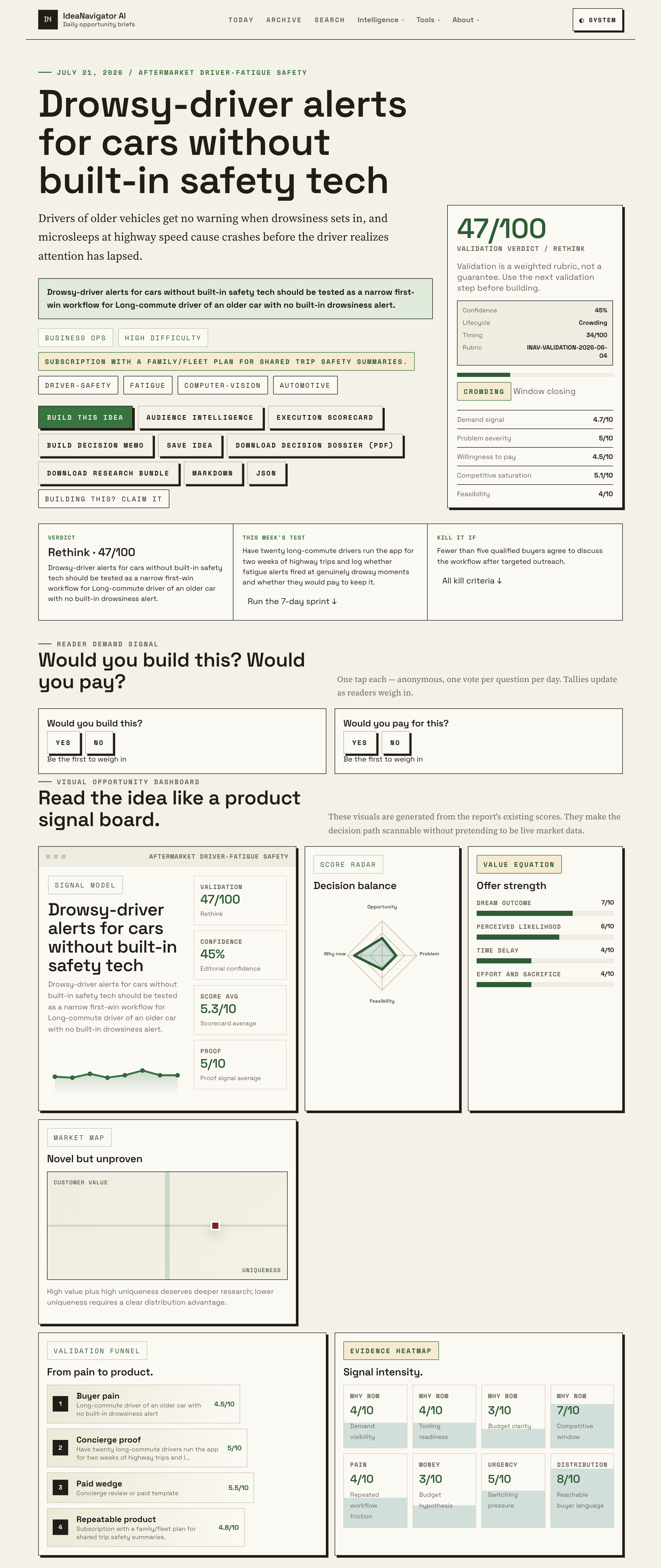
According to an anonymous researcher involved in the project, the app is designed as a minimum viable product (MVP) that can be tested by long-commute drivers over a two-week period. The goal is to validate whether alerts correspond accurately to moments of genuine drowsiness and if drivers would be willing to pay for ongoing use.
Funding and business models include a subscription plan, which offers shared safety summaries for families or fleet managers, aiming to generate revenue from aftermarket driver fatigue safety solutions.
Potential Impact on Highway Safety for Older Vehicles
This innovation could significantly reduce accidents caused by driver microsleeps, especially among drivers of older vehicles without built-in safety features. By providing a low-cost, easy-to-install alert system, it addresses a critical safety gap and could influence future aftermarket safety regulations. If validated, widespread adoption might lower highway crash rates linked to drowsiness, saving lives and reducing injuries.
smartphone car drowsiness alert app
As an affiliate, we earn on qualifying purchases.
As an affiliate, we earn on qualifying purchases.
Growing Need for Aftermarket Driver Fatigue Solutions
As vehicle manufacturers increasingly embed drowsiness detection in new models, older cars remain vulnerable to fatigue-related crashes. With the proliferation of affordable smartphone mounts and face-tracking AI, developers are exploring retrofit solutions. Previous research highlights that driver fatigue is a leading cause of highway accidents, yet no universal, low-cost aftermarket alert system currently exists. This project builds on recent technological advances to fill that gap, aiming for practical deployment within the next year.
“Using face-landmark detection on a smartphone, we can reliably identify signs of drowsiness, such as eye closure and head nods, and trigger alerts before the driver becomes dangerously sleepy.”
— an anonymous researcher
As an affiliate, we earn on qualifying purchases.
Validation and Adoption Challenges for the App
It is not yet clear how accurately the app will detect drowsiness in diverse driving conditions or how drivers will respond to alerts. The effectiveness of facial cues as indicators of fatigue in real-world settings remains to be fully validated. Additionally, questions about user acceptance, privacy concerns, and long-term engagement are still unresolved as testing phases are just beginning.
As an affiliate, we earn on qualifying purchases.
Upcoming Driver Testing and Market Rollout Plans
The project plans to conduct pilot tests with approximately twenty long-commute drivers over the next two months. Data collected will determine the app’s accuracy and user receptiveness. If successful, developers aim to refine the technology and prepare for broader commercial deployment, including marketing to individual consumers and fleet operators.
As an affiliate, we earn on qualifying purchases.
Key Questions
How does the app detect drowsiness?
The app uses the smartphone’s camera to track facial landmarks, focusing on signs such as eye closure and head nodding, which are associated with drowsiness.
Will this work in all lighting conditions?
While face-tracking technology generally performs well in various lighting conditions, its accuracy may vary in extremely low or bright lighting. Further testing is planned to assess performance across different scenarios.
Is this a replacement for built-in vehicle safety tech?
No, it is designed as an aftermarket solution for older cars lacking integrated fatigue detection systems, providing an additional safety layer.
How much will the service cost?
The developers plan to offer a subscription model, but specific pricing details have not yet been finalized. The goal is to keep it affordable for individual drivers and fleets.
When will the app be available for general use?
Following pilot testing and validation, a commercial rollout could occur within the next year, depending on results and market demand.
Source: IdeaNavigator AI
Halloween Picks
halloween
As an affiliate, we earn on qualifying purchases.