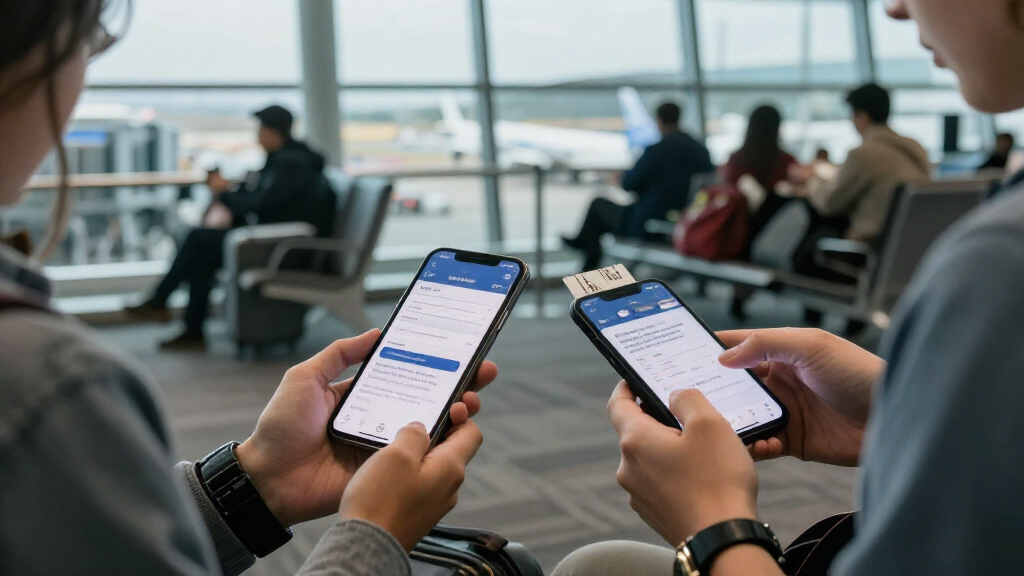
🔍 Read the full analysis: United’s Flight Booking Policy Excludes AI Agents on ThorstenMeyerAI.com

Get hardware and tech essentials delivered free with Prime
- Fast, free delivery on millions of items
- Prime Video, Amazon Music and more included
- Member-only deals all year
TL;DR
United Airlines revised its contract of carriage on November 11, 2026, to prohibit unauthorized third-party AI agents from booking, changing or servicing tickets and other products. The policy applies even when a person supervises the agent; customers can still use AI to search for flights, but must complete purchases themselves, according to reporting cited in the source material.
United Airlines has barred unauthorized third-party AI agents from making, changing or servicing tickets through its website, app and travel intermediaries, according to a company statement and revised contract text reported on November 11, 2026. The prohibition applies even when a passenger supervises or approves the agent, drawing a clear boundary around automated purchases as travel companies and technology firms explore AI-assisted booking.
United’s statement says it is restricting access to its digital platforms, as well as access indirectly through travel agencies and aggregators, to prohibit use by unauthorized personal AI agents or assistants. The airline said the work includes updates to its booking, ticketing and distribution policies. The contract text, reproduced by travel publications, adds “the use of AI Agents to make, modify or service a Ticket” to a list of prohibited practices. It also covers purchases of other services or products offered by or through United.
The reported definition includes software that takes autonomous or semi-autonomous action to search for, book, purchase, ticket or manage United products. It encompasses AI-enabled browsers, standalone agents and assistants accessed through consumer platforms or intermediaries. The text does not name specific products. The source material says AI tools may still search for flights and display fares, according to The Wall Street Journal as cited by View from the Wing; the customer must handle the purchase.
The revised terms also set out possible consequences. Under provisions quoted by PPC Land, United may cancel reservations made, changed or serviced by AI agents without notice. The contract’s remedies clause includes invalidating tickets, charging their full value, deleting miles and ending MileagePlus membership. The text does not establish how often, or whether, United plans to apply those remedies to agent-assisted bookings.
United draws a line at AI flight purchases
United’s revised policy lets AI tools help travelers search, but reserves booking and ticket management for people. The rule also applies when a person supervises the agent.
Where the boundary falls
The policy distinguishes finding a flight from completing or managing a transaction.
- Search for flights
- Display fares
- Book and purchase tickets
- Change or service tickets
Who the rule covers
United’s contract applies to unauthorized third-party agents acting on its platforms and through intermediaries.
United’s platforms
The restriction covers the airline’s website and app.
Agencies and aggregators
The policy also addresses indirect access through travel partners.
A broad definition
It includes AI-enabled browsers, standalone agents and assistants, even with human supervision.
Possible contract consequences
The terms list remedies for reservations made, changed or serviced by AI agents.
United may cancel it without notice.
The contract lists invalidation and charging the ticket’s full value.
Remedies also include deleting miles or ending MileagePlus membership.
What remains unclear
The available reporting leaves practical questions for travelers and AI travel services.
| Question | What the reporting says |
|---|---|
| How will United identify agent activity? | Not specified |
| How often will remedies be used? | Not specified |
| What about tickets issued before the revision? | A published interpretation says earlier terms may apply; United’s position on specific bookings is not given |
| Are any agent integrations approved? | None identified |
Who Controls the Booking
The policy gives United direct control over whether outside software can complete transactions on its platforms, rather than allowing an AI agent to act as a customer’s purchasing intermediary. For travelers, the immediate practical distinction is between using AI to find an itinerary and letting it purchase or manage the ticket. People who use an agent to book could face cancellation or other consequences under the contract, although United has not described enforcement practices in the cited material.
The decision also matters for companies building AI travel assistants. A tool that can search and compare options may still be useful, but United’s terms restrict the transaction itself, including when a human is monitoring the software. That creates a potential obstacle for services designed to handle an entire trip without handing the customer back to an airline checkout page. The broader commercial question is whether airlines and AI companies will build approved connections or keep their booking systems separate.
The scale of current demand is uncertain. The source material cites Uber as having counted four agent-booked rides in one week, out of about 320 million trips and orders in that period. That is a company-reported figure about Uber activity, not a measure of airline bookings or a baseline for estimating future demand. It suggests that agent-led transactions remain limited in that example, while the policy may still shape how travel platforms develop.
Products Worth Considering

Ledger Flex Cryptocurrency Wallet with 2.8-Inch Touchscreen

Apple MacBook Pro 14.2-Inch Laptop, M2 Pro 12-Core CPU, 16GB Memory, 1TB SSD, 19-Core GPU, Space Gray

Apple MacBook Air 13-inch Laptop with M5 Chip, 16GB Memory, 512GB SSD, Liquid Retina Display, and 12MP Center Stage Camera (2026, Silver)
As an affiliate, we earn on qualifying purchases.
United’s Contract and Travel Agents
United placed the new rule in its contract of carriage, the terms passengers accept when buying a ticket. According to the source material, the revised contract is dated November 11, 2026, and adds AI agents to existing prohibited practices such as hidden-city and throwaway ticketing. The contract wording is reported by View from the Wing, One Mile at a Time and PPC Land; the source author said they could not access United’s site directly and relied on those published reproductions.
The change arrives as technology companies promote agents that can act on a user’s instructions, including searching, booking and managing travel. Skift reported that Meta chief executive Mark Zuckerberg called travel a “top use case” for the company’s Muse agent. United’s move was described by Skift as the first explicit prohibition of this kind by a U.S. airline. The source also points to different approaches elsewhere: Amazon and JPMorgan Chase have restricted outside agents, while Southwest and Expedia are working with ChatGPT. These examples indicate varied company responses, not a uniform policy across industries or airlines.
““United is taking steps to restrict access — directly within our digital platforms and indirectly via travel agencies and aggregators — to prohibit use by unauthorized, third-party personal AI agents or assistants.””
— United Airlines
Enforcement and Legal Questions
Several practical details remain unsettled in the available reporting. United has not said how it will identify AI-assisted transactions, what steps it will take against customers who use an agent, or whether it plans to apply every remedy listed in the contract. The text does not name particular AI products, and the term covers a broad range of software and intermediary connections.
United cited Federal Aviation Administration and Department of Transportation rules, including passenger acknowledgment of information about hazardous materials at check-in. The source material says a federal regulation requires airlines to provide information about forbidden hazardous materials at purchase and check-in, with passengers acknowledging receipt when completing those steps without another person’s involvement. Leff disputed the strength of United’s safety rationale. The cited material does not include a regulator’s interpretation of whether, or how, that rule applies to AI agents.
It is also not clear how the change affects tickets issued before the revision. PPC Land reported that the contract applies according to the terms in effect when a ticket is issued and interpreted that to mean tickets issued before November 11 remain under the earlier text. That is a reported reading of the contract, not a statement in the supplied material from United about specific existing bookings.
How United Applies the Ban
United’s next steps will be visible in how its booking systems and distribution partners handle agent traffic. The airline has said the policy covers access both on its own platforms and through travel agencies or aggregators, but the supplied material does not give a technical rollout schedule or identify approved agent integrations.
Travelers who want help comparing itineraries can use an AI assistant to search, according to the reporting cited in the source, but should complete the purchase themselves rather than authorize an agent to transact. Customers with existing reservations or questions about a specific booking may need to consult United’s current contract and contact the airline; the material does not describe a separate process for resolving disputes over agent use.
Further clarification from United, its distribution partners or relevant regulators could address enforcement, treatment of prior tickets and the regulatory basis for the rule. Until then, the confirmed policy is the contract prohibition; the company’s enforcement plans and the eventual effect on AI-powered travel services remain open.
Key Questions
What does United’s AI-agent policy prohibit?
The revised contract prohibits unauthorized AI agents from making, modifying or servicing tickets, and from purchasing products or services offered by or through United. Its reported definition includes autonomous and semi-autonomous software, including AI-enabled browsers.
Can an AI assistant still search for United flights?
According to The Wall Street Journal as cited by View from the Wing, an assistant may search for flights and show fares. The customer must make the purchase rather than letting the agent complete the transaction.
Does human supervision make an AI booking permissible?
No. The contract wording reported by travel publications says the restriction applies whether or not a passenger or another person supervises or approves the software’s actions.
What could happen if an agent makes a reservation?
The contract provisions cited in reporting allow United to cancel reservations made, modified or serviced by AI agents without notice. Other listed remedies include invalidating a ticket and removing miles, but United has not said how it intends to enforce those measures.
Why did United say it adopted the restriction?
United cited account security, unintended purchases or account changes, use of MileagePlus miles, and possible conflicts with FAA and DOT requirements. Chief executive Scott Kirby also reportedly raised a commercial concern, saying he did not want to create another middleman.
Source: ThorstenMeyerAI.com