📊 Full opportunity report: Why AI Is Shaping The Future Of Studio Condenser Microphones In 2026 on ThorstenMeyerAI.com — validation score, market gap, and execution plan.
TL;DR
In 2026, AI-driven innovations are significantly shaping studio condenser microphones, improving sound quality, automation, and user experience. This development impacts both professionals and hobbyists.
Artificial intelligence is now being integrated into studio condenser microphones in 2026, leading to advancements in sound quality, automation, and user control. This shift is driven by the need for more precise, adaptable, and efficient recording tools, affecting both professional studios and home setups.
Recent developments indicate that leading microphone manufacturers are incorporating AI algorithms into their models to enhance features such as noise reduction, automatic gain adjustment, and real-time sound shaping. Companies like RØDE, Audio-Technica, and Shure have announced new AI-enabled models or firmware updates that leverage machine learning to optimize recording parameters based on environment and source characteristics.
According to industry sources, these AI features allow microphones to automatically adapt to different recording conditions, reducing the need for manual adjustments and improving overall sound fidelity. Thorsten Meyer of ThorstenMeyerAI.com notes that AI can assist in identifying and compensating for room acoustics, background noise, and vocal nuances, making professional-grade recordings more accessible.
While these innovations are promising, the integration of AI also raises questions about data privacy, user control, and the potential for over-reliance on automated features. It is not yet clear how widespread or standardized these AI functionalities will become across different brands and models.
Why AI-Enhanced Microphones Matter in 2026
The integration of AI into studio condenser microphones in 2026 represents a significant shift in audio technology, offering users enhanced sound quality, greater ease of use, and adaptive features that can streamline recording workflows. For professionals, this means more consistent results and reduced setup time; for hobbyists and content creators, it lowers barriers to achieving studio-quality sound.
Moreover, AI-driven microphones could influence the future of recording equipment, pushing manufacturers to innovate rapidly and potentially reshape the standards of audio fidelity and user control in studio environments. However, the reliance on AI also introduces concerns about data security and the transparency of automated processes, which industry experts are actively discussing.
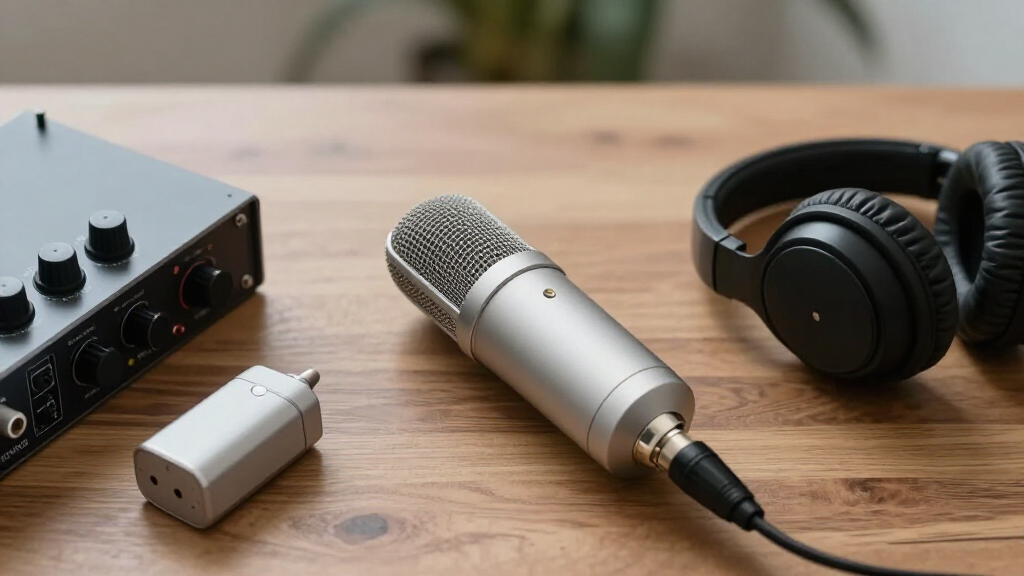
AI-enabled studio condenser microphone
As an affiliate, we earn on qualifying purchases.
As an affiliate, we earn on qualifying purchases.
Evolution of Microphones and the Rise of AI in 2026
Microphone technology has continually evolved from simple analog devices to sophisticated digital tools. Over the past decade, the focus has shifted toward improving noise floors, sensitivity, and ease of use, especially for home studios and semi-professional setups. In 2026, AI implementation marks the latest milestone, building on previous innovations like digital signal processing and automatic gain control.
Early AI features appeared in software plugins and audio interfaces, but recent models now embed AI directly into the microphone hardware. This progression is driven by advances in machine learning, miniaturization of processing chips, and the demand for smarter, more adaptable recording tools.
While some manufacturers have announced AI-enabled microphones, the technology is still in early adoption stages, with ongoing debates about standardization and user control over AI functions.
“Our new AI-enabled microphone models are designed to adapt automatically to different environments, providing users with professional-grade results with minimal setup.”
— RØDE spokesperson
noise reduction condenser microphone
As an affiliate, we earn on qualifying purchases.
As an affiliate, we earn on qualifying purchases.
Unresolved Questions About AI Microphone Adoption
It remains unclear how quickly AI features will become standard across all models and brands, or how much control users will retain over AI-driven adjustments. There are also questions about data privacy, as AI systems may need to analyze audio data in real-time, raising concerns about security and proprietary information. Additionally, the long-term reliability and potential for AI to introduce artifacts or distortions are still under evaluation.
As an affiliate, we earn on qualifying purchases.
Future Developments in AI Microphone Technology
Manufacturers are expected to release more AI-integrated microphones throughout 2026, with ongoing research into improving AI algorithms for better sound accuracy and user customization. Industry events and product launches in the upcoming months will likely showcase new models and firmware updates that expand AI functionalities. Experts anticipate that AI will become a standard feature, but the extent of its automation and user control will vary by brand and model.
real-time sound shaping microphone
As an affiliate, we earn on qualifying purchases.
As an affiliate, we earn on qualifying purchases.
Key Questions
Will AI make microphones easier for beginners to use?
Yes, AI features aim to simplify setup and improve sound quality automatically, which can help beginners achieve professional results without extensive technical knowledge.
Are AI-enabled microphones more expensive?
Typically, AI features add to the cost of microphones, but prices are expected to decrease as technology matures and adoption increases.
Can AI features be turned off or adjusted manually?
Most manufacturers are designing AI systems with user controls, allowing adjustments or disabling of automated functions to suit individual preferences.
Does AI compromise data security or privacy?
There are concerns about data privacy, especially if audio data is analyzed in the cloud or stored. Users should review manufacturer policies and choose models with transparent data handling practices.
Will AI replace traditional manual controls entirely?
While AI aims to enhance ease of use, manual controls will likely remain important for professional users who require precise adjustments and customization.
Source: ThorstenMeyerAI.com