
For 3D and simulation, I’d choose the 16-inch MacBook Pro with M5 Max, 128GB memory, and 4TB SSD as the strongest all-around option here: it pairs a high GPU core count with room for large scenes and projects. The Mac Studio with M5 Max is a better fit for a fixed workstation, while the 16-inch M5 Pro MacBook Pro offers a more portable starting point for lighter workloads. The main tradeoffs are GPU performance, unified memory capacity, portability, and whether your software runs well on Apple silicon. A powerful Mac cannot make every renderer or simulation package compatible, so software support matters as much as the hardware. Read on for the full comparison and guidance on which configuration fits your workload.

Get hardware and tech essentials delivered free with Prime
- Fast, free delivery on millions of items
- Prime Video, Amazon Music and more included
- Member-only deals all year
Key Takeaways
- The 16-inch M5 Max MacBook Pro with 128GB memory and 4TB storage has the broadest headroom in this lineup for demanding scenes, larger datasets, and mobile workstation use.
- The Mac Studio M5 Max is the clearest desktop alternative: it trades built-in display and portability for a stationary setup that can suit long sessions at a dedicated desk.
- M5 Pro configurations suit lighter 3D work better than GPU-heavy rendering. They offer a lower entry point, but buyers should match their GPU workload to the Max options rather than treating CPU core count as the whole story.
- Memory capacity separates the most ambitious choices. The 128GB MacBook Pro configurations are better suited to large scenes and memory-intensive simulation than models with 24GB, 36GB, or 48GB.
- The renewed 2013 Mac Pro is the most specialized gamble. Its older Intel platform and quad-core Xeon make it a poor default for current 3D workflows, even if legacy software or existing peripherals give it a narrow use case.


| mac pro for 3d and simulation | Memory | Storage | Ports | Display |
|---|---|---|---|---|
| Apple 16.2-Inch MacBook Pro wi | 48GB unified memory | 1TB SSD | Three Thunderbolt 5, MagSafe 3, SDXC, HDMI, headphone jack | 16.2-inch Liquid Retina XDR |
| Apple Mac Studio with M5 Max | 36GB unified memory | 1TB SSD | — | — |
| Apple Mac Pro | 64GB 1866 MHz DDR3 ECC SDRAM | 512GB SSD | Six Thunderbolt 2, four USB 3.0, one HDMI 1.4 | — |
| Apple 2024 MacBook Pro with M4 | 36GB | 1TB SSD | Three Thunderbolt 5, MagSafe 3, SDXC, HDMI, headphone jack | 14.2-inch Liquid Retina XDR |
| Apple Mac Studio Desktop Compu | — | — | Four Thunderbolt 5, two USB-C, two USB-A, HDMI, SDXC, headphone jack | — |
| Apple MacBook Pro 14.2-inch wi | 48GB unified memory | 1TB SSD | Three Thunderbolt 5, MagSafe 3, SDXC, HDMI, headphone jack | 14.2-inch Liquid Retina XDR, 3456 × 2234, up to 120Hz |
| Apple MacBook Pro 16.2-inch wi | 48GB unified memory | 1TB SSD in title; product information lists conflicting capacities | Three Thunderbolt 5, MagSafe 3, SDXC, HDMI, headphone jack | 16.2-inch Liquid Retina XDR, 3456 × 2234, up to 120Hz |
| Apple 2026 MacBook Pro Laptop | 36GB unified memory | 2TB SSD | Three Thunderbolt 5, MagSafe 3, SDXC, HDMI, headphone jack | 16.2-inch Liquid Retina XDR |
| Apple 2024 MacBook Pro with M4 | 36GB | 1TB SSD | Three Thunderbolt 5, MagSafe 3, SDXC, HDMI, headphone jack | 16.2-inch Liquid Retina XDR |
| Apple 2023 MacBook Pro 16-inch | 18GB unified memory | 512GB SSD | — | 16.2-inch Liquid Retina XDR, 3456 × 2234 |
| Apple MacBook Pro 14.2-inch wi | 36GB unified memory | 2TB SSD | Three Thunderbolt 5, MagSafe 3, SDXC, HDMI, headphone jack | 14.2-inch Liquid Retina XDR |
| Apple MacBook Pro Laptop with | 128GB unified memory | 2TB SSD | Three Thunderbolt 5, MagSafe 3, SDXC, HDMI, headphone jack | 16.2-inch Liquid Retina XDR |
| Apple 2026 MacBook Pro Laptop | 24GB unified memory | 1TB SSD | Three Thunderbolt 5, MagSafe 3, SDXC, HDMI, headphone jack | 14.2-inch Liquid Retina XDR |
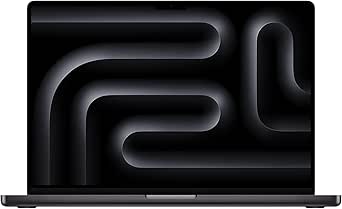
| Apple MacBook Pro 16.2-inch wi | 128GB unified memory | 4TB SSD | Three Thunderbolt 5, MagSafe 3, SDXC, HDMI, headphone jack | 16.2-inch Liquid Retina XDR |
More Details on Our Top Picks
Apple 16.2-Inch MacBook Pro with M5 Pro, 18-Core CPU, 20-Core GPU, 48GB Memory, and 1TB SSD (Space Black)
The 16-inch MacBook Pro with M5 Pro is the most balanced choice here for 3D artists who need workstation-class memory and a screen they can take between locations. Its 48GB unified memory gives complex scenes and simulation projects more room than the 36GB Mac Studio configuration, while the 20-core GPU targets demanding viewport and rendering work. The Liquid Retina XDR display and broad port selection also make it easier to work without carrying a dock. Compared with the M5 Max Mac Studio, this laptop gives up GPU cores and desktop cooling headroom, so sustained heavy rendering is less its specialty. The tradeoff is portability: at 4.71 pounds, it is a substantial laptop, and 1TB can fill quickly with simulation assets.
Pros:- 48GB unified memory suits larger scenes and multitasking
- 20-core GPU supports demanding graphics and compute workloads
- 16.2-inch Liquid Retina XDR display provides a spacious, high-contrast work surface
- Thunderbolt 5, HDMI, SDXC, and MagSafe 3 reduce reliance on adapters
Cons:- 4.71-pound weight makes it less convenient for frequent travel
- 1TB SSD may be restrictive for large project files and asset libraries
- M5 Pro has fewer GPU cores than the M5 Max desktop options
Best for: 3D generalists and simulation artists who need 48GB of memory, a large high-quality display, and the freedom to work away from a fixed desk.
Not ideal for: Artists who render continuously at full load or need a desktop workstation with more GPU headroom; the Mac Studio with M5 Max is a better fit for a stationary setup.
- Chip:Apple M5 Pro
- CPU:18-core
- GPU:20-core
- Memory:48GB unified memory
- Storage:1TB SSD
- Display:16.2-inch Liquid Retina XDR
- Ports:Three Thunderbolt 5, MagSafe 3, SDXC, HDMI, headphone jack
- Weight:4.71 pounds
Our verdict“Choose this MacBook Pro if you need a capable 3D and simulation machine that can leave the studio, and favor the M5 Max Mac Studio for sustained desktop rendering.”
Apple Mac Studio with M5 Max, 18-Core CPU, 32-Core GPU, 36GB Memory, 1TB SSD
This Mac Studio with M5 Max prioritizes desktop GPU throughput in a compact enclosure. Its 32-core integrated GPU and third-generation ray tracing make it a stronger fit for GPU-heavy rendering than the 20-core GPU in the M5 Pro MacBook Pro. The 18-core CPU and 36GB unified memory also suit substantial creative projects, though the memory ceiling is the main constraint for very large scenes or data-heavy simulations. Unlike the MacBook Pro, this is a fixed workstation: you supply the display and cannot take the system to another workspace. The 1TB SSD offers a practical starting point, but project archives may call for external storage. I’d choose it over the higher-capacity Mac Studio configuration only when 36GB is enough for the work.
Pros:- 32-core M5 Max GPU with integrated third-generation ray tracing
- Compact desktop footprint for a performance-focused workstation
- 36GB unified memory supports demanding creative projects
- Includes Ethernet, HDMI, and Thunderbolt connectivity
Cons:- 36GB memory limit may restrict large scenes and memory-intensive simulations
- Requires a separate display and peripherals
- 1TB internal storage may not hold extensive project libraries
Best for: 3D artists with a dedicated desk who want a compact M5 Max system for GPU rendering and can work within 36GB of unified memory.
Not ideal for: Simulation specialists whose scenes routinely exceed 36GB, or mobile creators who need a built-in display and battery.
- Chip:Apple M5 Max
- CPU:18-core
- GPU:32-core integrated
- Memory:36GB unified memory
- Storage:1TB SSD
- Connectivity:Thunderbolt, HDMI, Ethernet, Wi-Fi, Bluetooth
- Dimensions:7.7 x 7.7 x 3.7 inches
- Warranty:1-year limited manufacturer coverage
Our verdict“Pick this Mac Studio for compact, GPU-forward desktop work when 36GB of memory is sufficient; choose the higher-memory M5 Max Mac Studio for larger scenes.”
Apple Mac Pro (Late 2013), 3.7 GHz Quad-Core Xeon, 64GB RAM, 512GB SSD (Renewed)
This renewed 2013 Mac Pro is a niche pick for buyers who need an older Intel Mac for established software or hardware workflows, not a modern performance recommendation for 3D and simulation. Its 64GB ECC memory is more capacity than the 36GB M5 Max Mac Studio configuration, which can help when keeping older workloads in memory. But the quad-core Xeon and dual FirePro D300 graphics are from a much earlier workstation generation, and the 2GB of graphics memory per card is a serious limit for contemporary scenes. Compared with the M5 Pro MacBook Pro, it also lacks current-generation processing, ray tracing, and modern Thunderbolt connections. The cylinder is compact, but internal expansion is limited, while refurbished condition and macOS Sierra compatibility narrow its role.
Pros:- 64GB ECC memory for compatible legacy workloads
- Dual AMD FirePro D300 graphics processors
- 512GB SSD included
- Six Thunderbolt 2 ports and dual Gigabit Ethernet
Cons:- Quad-core Xeon and 2GB-per-GPU graphics are dated for current 3D workloads
- Thunderbolt 2 and USB 3.0 lag behind the newer systems in this roundup
- Renewed condition and macOS Sierra may limit reliability and software compatibility
Best for: Owners of legacy Intel Mac software or peripherals who need a refurbished Mac Pro with ECC memory for older, established production tasks.
Not ideal for: Buyers starting a modern 3D or simulation workflow, especially those relying on current GPU rendering, recent macOS features, or large graphics workloads.
- Model:Mac Pro Late 2013, ME253LL/A
- Processor:3.7 GHz quad-core Intel Xeon E5-1620 v2
- Memory:64GB 1866 MHz DDR3 ECC SDRAM
- Storage:512GB SSD
- Graphics:Dual AMD FirePro D300, 2GB GDDR5 each
- Ports:Six Thunderbolt 2, four USB 3.0, one HDMI 1.4
- Operating system:macOS Sierra
- Condition:Certified refurbished; at least 90-day warranty
Our verdict“Buy this renewed Mac Pro only when Intel-era compatibility matters more than modern rendering speed or current platform support.”
Apple 2024 MacBook Pro with M4 Max Chip 14-inch, 36GB RAM, 1TB SSD – Silver (Renewed)
The 14-inch MacBook Pro with M4 Max brings a higher-tier chip to a smaller mobile workstation, making it a better match than the M5 Pro MacBook Pro for GPU-focused work that needs to travel. Its 36GB of memory and 1TB SSD provide a capable base for many professional projects, while the XDR screen and Thunderbolt 5, HDMI, and SDXC ports support a portable editing and rendering setup. The compact display is less roomy for dense timelines and detailed scene work than the 16.2-inch M5 Pro model, and the listed external-display support is generous for a laptop. This unit is renewed, so condition and warranty specifics deserve attention; unlike the new Mac Studio options, it also combines that purchase uncertainty with a smaller memory capacity.
Pros:- M4 Max chip is suited to demanding creative and graphics workflows
- 36GB RAM and 1TB SSD provide a capable mobile workstation base
- Liquid Retina XDR display in a 14.2-inch format
- Three Thunderbolt 5 ports plus HDMI, SDXC, and MagSafe 3
Cons:- 36GB memory may constrain larger scenes and simulations
- Renewed condition and warranty coverage may vary
- Smaller screen gives less room for complex 3D interfaces than the 16.2-inch M5 Pro model
Best for: Mobile 3D professionals who value an M4 Max-class chip and a smaller laptop footprint more than a large built-in display or maximum memory.
Not ideal for: Artists who need 48GB or more for large simulations, want a new unit, or prefer a roomy screen for detailed work at the desk.
- Chip:Apple M4 Max
- Display:14.2-inch Liquid Retina XDR
- Memory:36GB
- Storage:1TB SSD
- Ports:Three Thunderbolt 5, MagSafe 3, SDXC, HDMI, headphone jack
- External displays:Up to four with M4 Max
- Color:Silver
- Condition:Renewed
Our verdict“Choose this renewed MacBook Pro if mobile GPU-focused work calls for M4 Max performance, but prefer the 16.2-inch M5 Pro model for more memory and workspace.”
Apple Mac Studio Desktop Computer with M5 Max
For 3D and simulation workloads where scene size can outgrow a standard desktop configuration, this M5 Max Mac Studio stands out for its support for up to 128GB unified memory and memory bandwidth up to 614GB/s. That ceiling gives it a clearer path to larger assets and data-heavy projects than the fixed 36GB Mac Studio configuration. It also supports up to five external displays and offers a broad selection of Thunderbolt 5, USB, HDMI, and SDXC connections. The listed memory is a maximum, not the confirmed configuration of this particular unit, so I would verify the installed capacity before buying. Compared with the 16.2-inch M5 Pro MacBook Pro, this desktop trades built-in portability for higher potential memory capacity and a quiet thermal design.
Pros:- M5 Max platform is designed for demanding creative and professional workflows
- Supports up to 128GB unified memory and up to 614GB/s memory bandwidth
- Up to five external displays for multi-screen workstation setups
- Four Thunderbolt 5 ports plus USB-A, USB-C, HDMI, and SDXC
Cons:- Listed memory is a maximum, not a confirmed installed configuration
- Desktop-only design requires a separate display and peripherals
- No storage capacity is specified in the provided product data
Best for: Studio-based 3D artists and simulation teams who need the option to configure up to 128GB unified memory and connect several displays.
Not ideal for: Buyers who need a built-in screen, battery-powered mobility, or certainty about installed memory without confirming the exact configuration.
- Chip:Apple M5 Max
- Maximum unified memory:Up to 128GB
- Memory bandwidth:Up to 614GB/s
- Ports:Four Thunderbolt 5, two USB-C, two USB-A, HDMI, SDXC, headphone jack
- External displays:Up to five
- Wireless:Wi-Fi 7, Bluetooth 6
- Dimensions:7.76 x 7.76 x 3.74 inches
- Weight:5.94 pounds
Our verdict“Choose this Mac Studio when large scenes and high memory capacity matter more than mobility, after confirming the installed memory configuration.”
Apple MacBook Pro 14.2-inch with M5 Pro, 48GB Memory, 1TB SSD, Space Black
For 3D artists who need a capable Mac on the move, this 14.2-inch MacBook Pro combines 48GB of unified memory with a 1TB SSD in a smaller chassis than the 16-inch M4 Max model. That memory capacity gives complex scenes and multitasking more room than the 18GB M3 Pro option, while the XDR display’s 120Hz refresh rate makes viewport motion feel fluid. Its Thunderbolt 5, HDMI, and SDXC ports also make it practical to connect displays and move project files without relying entirely on adapters.
The tradeoff is graphics headroom: the M5 Pro is a less obvious fit for sustained GPU-heavy rendering than the M4 Max or M5 Max systems here. Product details also conflict on CPU and GPU core counts, so confirm the exact configuration before buying. Choose it for portability and memory; skip it if maximum rendering throughput is the priority.
Pros:- 48GB unified memory supports substantial scenes and demanding multitasking
- 14.2-inch Liquid Retina XDR display with 120Hz refresh rate
- Thunderbolt 5, HDMI, and SDXC provide useful studio connectivity
- 1TB SSD offers room for active project files
Cons:- M5 Pro is a less suitable choice than the Max models for sustained GPU-heavy rendering
- Supplied CPU and GPU core counts conflict, making the exact configuration unclear
- The smaller display offers less workspace than the 16.2-inch models
Best for: Mobile 3D artists and simulation students who need 48GB of memory, a strong built-in display, and a smaller laptop for working between studio and campus.
Not ideal for: Artists running long, GPU-heavy renders or large simulations who can use a larger M4 Max or M5 Max machine for more graphics capacity.
- Chip:Apple M5 Pro
- CPU:15-core listed in title; 18-core listed in product information
- GPU:16-core listed in title; 20-core listed in product information
- Memory:48GB unified memory
- Storage:1TB SSD
- Display:14.2-inch Liquid Retina XDR, 3456 × 2234, up to 120Hz
- Ports:Three Thunderbolt 5, MagSafe 3, SDXC, HDMI, headphone jack
- Weight:2.14 kg
Our verdict“Choose this M5 Pro for a portable 3D workstation with generous memory, but favor a Max model for graphics-intensive rendering.”
Apple MacBook Pro 16.2-inch with M4 Max, 16-Core CPU, 40-Core GPU, 48GB RAM, 1TB SSD (Late 2024, Space Black)
The 40-core GPU is the reason to choose this MacBook for 3D rendering and GPU-accelerated creative work. Its M4 Max pairs that graphics capacity with 48GB of unified memory, giving it a stronger on-paper fit for demanding viewport work than the M5 Pro 14.2-inch model. The 16.2-inch XDR display also provides more room for timelines, node editors, and reference panels, while its 120Hz refresh rate keeps motion smooth.
Compared with the newer M5 Max 16.2-inch model, this configuration supplies more listed GPU cores but less SSD capacity than that model’s 2TB drive. Its 1TB storage can fill quickly with caches, textures, and simulation outputs, so external storage may become part of the setup. This is the more graphics-focused pick for buyers who value GPU resources over a larger internal project drive.
Pros:- 40-core GPU is the highest listed GPU core count among these five products
- 48GB unified memory suits demanding scenes and professional applications
- 16.2-inch Liquid Retina XDR display provides generous workspace
- Three Thunderbolt 5 ports, HDMI, and SDXC support a flexible studio setup
Cons:- 1TB SSD may be restrictive for large assets, caches, and simulation output
- The 16.2-inch chassis is less convenient to carry than the 14.2-inch M5 Pro
- Product information conflicts on storage capacity
Best for: 3D professionals who prioritize a high-core-count GPU and a large built-in display for rendering, scene work, and studio multitasking.
Not ideal for: Travel-focused artists or users who need ample internal space for large asset libraries and simulation caches without external storage.
- Chip:Apple M4 Max
- CPU:16-core
- GPU:40-core
- Memory:48GB unified memory
- Storage:1TB SSD in title; product information lists conflicting capacities
- Display:16.2-inch Liquid Retina XDR, 3456 × 2234, up to 120Hz
- Ports:Three Thunderbolt 5, MagSafe 3, SDXC, HDMI, headphone jack
- Weight:2.15 kg
Our verdict“Pick this M4 Max when GPU capacity and a roomy display matter more than extra internal storage or smaller-laptop portability.”
Apple 2026 MacBook Pro Laptop with M5 Max Chip, 16.2-inch Liquid Retina XDR Display, 36GB RAM, 2TB SSD, Wi-Fi 7, Space Black
Choose this M5 Max configuration for its newer chip and 2TB SSD, especially if active 3D projects, textures, and caches regularly consume laptop storage. Its 18-core CPU and 32-core GPU give it a strong workstation profile, and the 16.2-inch XDR display offers more working area than the compact M5 Pro. Compared with the M4 Max MacBook Pro listed here, it has a larger internal drive and newer M5 Max silicon, but fewer stated GPU cores and 12GB less memory.
That memory difference matters when scenes grow or several heavy applications must stay open: the M4 Max’s 48GB configuration gives more headroom. The 2TB SSD is its clearest advantage, while the 36GB unified memory is a ceiling buyers should weigh against their typical scene sizes. It suits artists who want a current, portable Max laptop and value local project capacity over maximum listed GPU cores.
Pros:- M5 Max chip combines an 18-core CPU with a 32-core GPU
- 2TB SSD provides more local space than the 1TB M4 Max configurations
- 16.2-inch Liquid Retina XDR display suits detailed workspace layouts
- Thunderbolt 5, HDMI, and SDXC support common studio connections
Cons:- 36GB memory is lower than the 48GB offered by the M4 Max and M5 Pro options
- 32-core GPU count is below the 40-core M4 Max configuration listed here
- Its large 16.2-inch form is less convenient for frequent travel than the 14.2-inch model
Best for: 3D artists who keep sizable project libraries, textures, and caches on their laptop and want an M5 Max system with a 16.2-inch display.
Not ideal for: Simulation professionals whose workloads routinely exceed 36GB of memory or who prioritize the highest listed GPU core count over storage capacity.
- Chip:Apple M5 Max
- CPU:18-core
- GPU:32-core
- Memory:36GB unified memory
- Storage:2TB SSD
- Display:16.2-inch Liquid Retina XDR
- Connectivity:Wi-Fi 7, Bluetooth 6
- Ports:Three Thunderbolt 5, MagSafe 3, SDXC, HDMI, headphone jack
Our verdict“Choose this M5 Max if a 2TB internal drive and newer chip matter more than 48GB memory or the M4 Max’s higher listed GPU core count.”
Apple 2024 MacBook Pro with M4 Max Chip, 16-inch, 36GB RAM, 1TB SSD, Silver (Renewed)
This renewed M4 Max is the route to Max-class graphics for buyers who do not need the 48GB memory configuration of the other M4 Max model. It has a 36GB unified memory allocation, a 1TB SSD, and a 16.2-inch XDR display, making it better suited to substantial 3D work than the M3 Pro MacBook Pro’s 18GB of memory. The broad port selection also helps when connecting external displays and project storage.
Against the 48GB M4 Max configuration, the main compromise is less memory; against the M5 Max, it also has a smaller internal drive than that model’s 2TB. The renewed condition adds uncertainty about the individual unit’s prior use, so buyers should check the seller’s condition and return details. It makes sense when M4 Max capability is the goal, but not for buyers who want the newest chip or maximum memory headroom.
Pros:- M4 Max chip is suited to demanding professional and creative workloads
- 36GB unified memory exceeds the M3 Pro option’s 18GB
- 16.2-inch Liquid Retina XDR display provides ample workspace
- Thunderbolt 5, HDMI, SDXC, and MagSafe 3 support varied peripherals
Cons:- Renewed condition can vary by individual unit
- 36GB memory is below the 48GB M4 Max configuration
- 1TB SSD is half the capacity of the M5 Max option listed here
Best for: 3D artists seeking an M4 Max laptop with a large display and ports for a studio setup, who are comfortable buying a renewed device.
Not ideal for: Buyers who need a new machine, 48GB or more of memory, or the larger internal SSD offered by the M5 Max configuration.
- Chip:Apple M4 Max
- Display:16.2-inch Liquid Retina XDR
- Memory:36GB
- Storage:1TB SSD
- Battery:All-day battery life listed
- Camera:12MP Center Stage
- Audio:Six speakers with Spatial Audio and Dolby Atmos
- Ports:Three Thunderbolt 5, MagSafe 3, SDXC, HDMI, headphone jack
Our verdict“Consider this renewed M4 Max if you want a large-screen Max laptop and can accept 36GB memory, 1TB storage, and renewed-device condition.”
Apple 2023 MacBook Pro 16-inch with M3 Pro, 18GB Memory, 512GB SSD, Space Black
The M3 Pro model is the entry-level choice here for learning 3D or handling moderate projects, rather than a match for the Max systems’ heavier graphics workloads. Its 18-core GPU and 18GB of unified memory can support many professional applications, while the 16.2-inch XDR display gives beginners room for a viewport alongside tool panels. The listed battery life of up to 22 hours also suits students moving between classes or workspaces.
Compared with the 48GB M5 Pro 14.2-inch model, this MacBook has substantially less memory and storage, despite its larger screen. That makes it a weaker fit as scenes, simulation data, and caches grow. The 512GB SSD may also require external storage sooner. It is a sensible starting configuration for lighter workloads, but buyers planning frequent GPU-heavy rendering should step up to an M4 Max or M5 Max system.
Pros:- M3 Pro chip with a listed 12-core CPU and 18-core GPU supports professional applications
- 16.2-inch Liquid Retina XDR display offers a broad workspace
- Listed battery life of up to 22 hours suits mobile study and work
- Six-speaker audio system with Spatial Audio
Cons:- 18GB unified memory offers less headroom than the 36GB and 48GB options
- 512GB SSD can constrain project files, assets, and simulation caches
- M3 Pro is less suited to GPU-heavy rendering than the M4 Max and M5 Max models
Best for: Students and new 3D artists learning professional software, working on moderate scenes, and prioritizing a large display over high memory capacity.
Not ideal for: Experienced 3D artists and simulation users handling large scenes, high-resolution assets, or sustained GPU-heavy rendering.
- Chip:Apple M3 Pro
- CPU:12-core
- GPU:18-core integrated GPU
- Memory:18GB unified memory
- Storage:512GB SSD
- Display:16.2-inch Liquid Retina XDR, 3456 × 2234
- Battery life:Up to 22 hours listed
- Camera:1080p FaceTime HD
Our verdict“Choose this M3 Pro for learning and moderate 3D projects, but move to a Max model if heavy rendering or large simulations are part of the plan.”
Apple MacBook Pro 14.2-inch with M5 Max, 18-core CPU, 32-core GPU, 36GB Memory, and 2TB SSD
I’d choose this 14.2-inch model for 3D artists who need a powerful workstation they can carry between studios, classrooms, or locations. Its M5 Max chip and 32-core GPU give it a stronger graphics focus than the M5 Pro 14-inch model, while 36GB of unified memory and a 2TB SSD provide room for substantial projects and assets. The smaller Liquid Retina XDR display is easier to travel with than the 16.2-inch M5 Max options, though it offers less working area for timelines, node graphs, and simulation controls. Compared with the 128GB M5 Max models, it has much less memory headroom for unusually large scenes or memory-heavy simulations. I’d shortlist it for mobile work, but not for the largest production files.
Pros:- M5 Max with a 32-core GPU for demanding graphics workloads
- 36GB unified memory supports substantial creative projects
- 2TB SSD gives more room for project files and assets
- Three Thunderbolt 5 ports, HDMI, and SDXC simplify peripheral connections
Cons:- 36GB memory leaves less headroom than the 128GB M5 Max models for large scenes
- The 14.2-inch screen provides less workspace than the 16.2-inch alternatives
- At 3.59 pounds, it is less convenient to carry than lighter laptops
Best for: 3D generalists and simulation students who need M5 Max graphics performance, a roomy SSD, and a laptop that is easier to carry than a 16-inch model.
Not ideal for: Artists running very large scenes or memory-hungry simulations, who should look at the 128GB M5 Max configurations instead.
- Chip:Apple M5 Max
- CPU:18-core
- GPU:32-core
- Display:14.2-inch Liquid Retina XDR
- Memory:36GB unified memory
- Storage:2TB SSD
- Ports:Three Thunderbolt 5, MagSafe 3, SDXC, HDMI, headphone jack
- Weight:3.59 pounds
Our verdict“Choose this when you want M5 Max graphics in a comparatively portable 14-inch package and your scenes do not demand 128GB of memory.”
Apple MacBook Pro Laptop with M5 Max, 16.2-inch Display, 128GB Memory, 2TB SSD, Space Black
For 3D and simulation work where scene size and memory headroom matter more than portability, this is the most balanced of the two 128GB M5 Max laptops here. The combination of an 18-core CPU, 40-core GPU, and 128GB unified memory suits complex assets and demanding multitasking better than the 14-inch M5 Max with 36GB. Its 16.2-inch XDR display also gives more room for modeling tools and simulation panels, while the 2TB SSD keeps active files close at hand. Compared with the other 16-inch M5 Max, this version has half the listed storage, so users with large local asset libraries may prefer that 4TB configuration. The tradeoff is a larger laptop and a commitment to Apple’s software and hardware ecosystem.
Pros:- 128GB unified memory provides substantial capacity for complex scenes
- 40-core GPU targets demanding graphics workloads
- 16.2-inch Liquid Retina XDR display offers more workspace
- Three Thunderbolt 5 ports, HDMI, and SDXC support a broad peripheral setup
Cons:- Larger 16.2-inch design is less portable than the 14-inch M5 Max
- 2TB SSD provides less local storage than the 4TB M5 Max alternative
- Apple ecosystem limits flexibility for buyers whose workflows depend on other platforms
Best for: 3D professionals and simulation developers who work with large scenes, need 128GB of unified memory, and want a full-size display in a mobile workstation.
Not ideal for: Frequent travelers or artists who need 4TB of built-in storage; the 14-inch M5 Max is easier to carry, and the 4TB 16-inch model offers more local capacity.
- Processor:Apple M5 Max, 18-core CPU
- GPU:40-core
- Display:16.2-inch Liquid Retina XDR
- Memory:128GB unified memory
- Storage:2TB SSD
- Ports:Three Thunderbolt 5, MagSafe 3, SDXC, HDMI, headphone jack
- Wireless:Wi-Fi 7 and Bluetooth 6
- Camera:12MP Center Stage
Our verdict“Pick this 16-inch M5 Max when large-scene memory capacity and screen space matter more than maximum built-in storage or easy portability.”
Apple 2026 MacBook Pro Laptop with M5 Pro Chip, 14.2-inch Liquid Retina XDR Display, 24GB RAM, 1TB SSD, Wi-Fi 7, Silver
This is the sensible entry in this group for buyers whose 3D work is real but not consistently at the scale that calls for an M5 Max. Its M5 Pro with a 16-core GPU and 24GB of unified memory is a step down from the 32-core and 40-core GPUs in the M5 Max laptops, which makes it a less convincing choice for heavy GPU-driven simulation or large, detailed scenes. In return, it gives you a 14.2-inch Liquid Retina XDR display, Thunderbolt 5 connectivity, and a 1TB SSD in a more modest configuration. Compared with the 14-inch M5 Max, it has less memory and graphics capacity, but it may be a better fit for modeling, coursework, and lighter rendering without paying for unused headroom. Its ceiling is the main tradeoff.
Pros:- M5 Pro offers a capable platform for moderate creative workloads
- 14.2-inch Liquid Retina XDR display suits mobile work
- 24GB unified memory supports multitasking and smaller projects
- Thunderbolt 5, HDMI, and SDXC provide useful connection options
Cons:- 16-core GPU is a weaker fit for demanding simulation than the M5 Max models
- 24GB memory offers less room for large scenes than the M5 Max configurations
- 1TB SSD may require external storage for sizeable asset libraries
Best for: Students, independent artists, and CAD users who handle moderate models, learn 3D tools, or render smaller projects on a portable Mac.
Not ideal for: Simulation specialists and artists working with large scenes or sustained, GPU-heavy rendering, who should favor an M5 Max configuration with more graphics and memory capacity.
- Processor:Apple M5 Pro, 15-core CPU
- GPU:16-core
- Display:14.2-inch Liquid Retina XDR
- Memory:24GB unified memory
- Storage:1TB SSD
- Connectivity:Wi-Fi 7 and Bluetooth 6
- Ports:Three Thunderbolt 5, MagSafe 3, SDXC, HDMI, headphone jack
- Battery:All-day battery life
Our verdict“Choose this M5 Pro for portable modeling and moderate projects, but step up to an M5 Max if heavy simulation or large scenes are regular work.”
Apple MacBook Pro 16.2-inch with M5 Max, 18-core CPU, 40-core GPU, 128GB Memory, 4TB SSD, Space Black
This is the pick for buyers who want the most local workspace and storage in this batch without giving up a laptop form factor. It pairs the same 18-core CPU, 40-core GPU, and 128GB unified memory as the 16-inch M5 Max with 2TB, then doubles the SSD capacity to 4TB. That extra room can keep large project files and assets on the machine, reducing reliance on external drives. Compared with the 14-inch M5 Max, its 16.2-inch display and 128GB memory are better suited to broad timelines and complex scenes, but its size makes it less convenient to move around. The listed 8.2-pound weight reinforces that tradeoff. I’d reserve this configuration for demanding mobile production, not occasional modeling or a desk-bound setup.
Pros:- 128GB unified memory supports memory-intensive scene work
- 40-core GPU and M5 Max target demanding creative workloads
- 4TB SSD provides more local project and asset capacity than the 2TB alternative
- 16.2-inch Liquid Retina XDR display offers generous working space
Cons:- Listed weight of 8.2 pounds makes frequent travel burdensome
- Large 16.2-inch chassis is less portable than the 14-inch option
- May be excessive for lighter modeling and simulation workloads
Best for: Production artists and simulation teams who need 128GB memory, a 40-core GPU, and 4TB of local storage for large projects while still requiring a laptop.
Not ideal for: Artists prioritizing a light travel setup or people who mostly work at one desk; the 14-inch M5 Max is easier to carry, while a desktop may suit a fixed workstation better.
- Processor:Apple M5 Max, 18-core CPU
- GPU:40-core
- Display:16.2-inch Liquid Retina XDR
- Memory:128GB unified memory
- Storage:4TB SSD
- Operating system:macOS
- Ports:Three Thunderbolt 5, MagSafe 3, SDXC, HDMI, headphone jack
- Weight:8.2 pounds
Our verdict“Choose this premium configuration when you need a high-capacity mobile workstation with 128GB memory and 4TB storage, and can accept its substantial weight.”

How We Picked
I ranked these systems around the demands that most often shape 3D and simulation work: GPU capability, unified memory capacity, storage space, sustained workstation suitability, and the freedom to work away from a desk. For scenes and simulations that exceed available memory, a higher-capacity configuration can matter more than a modest CPU difference; for GPU rendering, the Max models are a stronger fit than the Pro models. I also weighed whether the computer is a complete mobile setup or a desktop that needs a separate display and peripherals.
The ranking favors current Apple-silicon configurations with stronger GPU options and enough memory for demanding projects. Within that group, high-memory and high-storage models rise for complex scenes, while portable or lower-spec configurations make more sense for students and moderate workloads. The Mac Studio ranks as a dedicated desktop pick rather than a universal winner, and the renewed 2013 Mac Pro ranks last because its older architecture and limited CPU configuration create substantial performance and software-compatibility caveats. Buyers should check their specific renderer, simulation package, plugins, and device support before choosing any Mac.
| mac pro for 3d and simulation | Chip | Ports |
|---|---|---|
| Apple 16.2-Inch MacBook Pro wi | Apple M5 Pro | Three Thunderbolt 5, MagSafe 3, SDXC, HDMI, headphone jack |
| Apple Mac Studio with M5 Max | Apple M5 Max | — |
| Apple Mac Pro | — | Six Thunderbolt 2, four USB 3.0, one HDMI 1.4 |
| Apple 2024 MacBook Pro with M4 | Apple M4 Max | Three Thunderbolt 5, MagSafe 3, SDXC, HDMI, headphone jack |
| Apple Mac Studio Desktop Compu | Apple M5 Max | Four Thunderbolt 5, two USB-C, two USB-A, HDMI, SDXC, headphone jack |
| Apple MacBook Pro 14.2-inch wi | Apple M5 Pro | Three Thunderbolt 5, MagSafe 3, SDXC, HDMI, headphone jack |
| Apple MacBook Pro 16.2-inch wi | Apple M4 Max | Three Thunderbolt 5, MagSafe 3, SDXC, HDMI, headphone jack |
| Apple 2026 MacBook Pro Laptop | Apple M5 Max | Three Thunderbolt 5, MagSafe 3, SDXC, HDMI, headphone jack |
| Apple 2024 MacBook Pro with M4 | Apple M4 Max | Three Thunderbolt 5, MagSafe 3, SDXC, HDMI, headphone jack |
| Apple 2023 MacBook Pro 16-inch | Apple M3 Pro | — |
| Apple MacBook Pro 14.2-inch wi | Apple M5 Max | Three Thunderbolt 5, MagSafe 3, SDXC, HDMI, headphone jack |
| Apple MacBook Pro Laptop with | — | Three Thunderbolt 5, MagSafe 3, SDXC, HDMI, headphone jack |
| Apple 2026 MacBook Pro Laptop | — | Three Thunderbolt 5, MagSafe 3, SDXC, HDMI, headphone jack |
| Apple MacBook Pro 16.2-inch wi | — | Three Thunderbolt 5, MagSafe 3, SDXC, HDMI, headphone jack |
Factors to Consider When Choosing Mac Pro For 3d And Simulation
Choosing a Mac for 3D or simulation starts with the work itself, not the product name. I’d identify the applications and renderers you rely on, then estimate the size of the scenes, assets, and datasets you need open at once. These factors help avoid paying for capacity you will not use—or buying a machine that runs out of memory during a typical project.
Match the GPU to Your Renderer
Find out whether your renderer uses Apple silicon’s GPU, relies on CPU rendering, or supports both well. A higher GPU core count can shorten work in a supported GPU renderer, but it may add little if your chosen software runs its main workload on the CPU or lacks native support. Check the developer’s current compatibility notes for your exact application version, renderer, and plugins. Also verify that your workflow does not depend on CUDA, which is associated with NVIDIA GPUs and is not available on these Macs. A common mistake is buying the strongest GPU configuration before confirming the software can use it. If your workload is mostly viewport work and modeling, a different balance may make more sense than a machine chosen for final-frame rendering.
Size Unified Memory for the Whole Project
Unified memory is shared across the CPU and GPU, so scene geometry, textures, simulation data, and active applications all compete for the same pool. That makes capacity especially relevant when you work with large assets or keep multiple production tools open. Do not estimate from the file size on disk alone: an open project can use far more memory than its saved files suggest. Review memory use during your normal workflow, or ask your studio for typical scene and cache requirements, before choosing a configuration. Buying too little can force you to simplify scenes or close tools; buying a high-capacity model you rarely use can divert resources from storage or other equipment. Since memory is not a routine user upgrade on these systems, it is worth settling this choice before purchase.
Plan for Simulation Behavior, Not Just Render Speed
Simulation workloads vary: some are constrained by CPU throughput, some by GPU support, and others by memory capacity or data movement. Identify the stages that consume the most time in your actual pipeline instead of assuming every simulation benefits from a high GPU core count. If a solver depends on a specific architecture or software feature, confirm Mac support before choosing hardware. For lengthy jobs, compare sustained performance and thermal design across laptop and desktop systems rather than relying only on peak specifications. A laptop offers flexibility, but a desktop setup can be more practical for a workstation that runs long jobs at one location. If production deadlines depend on these tasks, validate with a representative project before committing a whole team to a platform.
Choose Portability Only If You Will Use It
A MacBook Pro includes its display, keyboard, and battery, which is useful for moving between home, studio, classroom, or set. That convenience has a tradeoff: a desktop workstation may fit a permanent desk and multi-display setup better, while a laptop puts its screen and keyboard into the same purchase. Think about where you will work most days and whether you already own displays and peripherals. If the Mac will rarely leave a desk, a Mac Studio may be a cleaner workstation choice; if you need to review or adjust scenes away from your main setup, a laptop can justify its all-in-one design. Do not choose a heavier, more capable mobile model solely for occasional travel if a compact secondary device would handle that need. Account for external storage, docks, and display connections when planning a mobile setup.
Budget for Project Storage and Backups
Large textures, caches, simulation output, and render sequences can consume internal storage quickly. A 1TB drive may be workable for active projects with disciplined offloading, while larger libraries or several current jobs can make 2TB or 4TB more comfortable. External SSDs can expand working space, but they add cables and another device to manage, and not every cache-heavy workflow benefits from moving data to slower storage. Keep active projects separate from backups; an external drive used as the only copy does not protect against loss or failure. Check whether your application expects caches on the internal drive, and plan storage around the files that need fast access. Storage capacity is usually easier to supplement than memory, so I would prioritize memory first when both are tight—unless your workflow depends on keeping large working datasets local.
Verify Software, Plugins, and Team Compatibility
Before buying, check support for the operating system, Apple silicon, render engine, plugins, and any required hardware interfaces. Some applications run through translation or offer partial support, which can affect speed, stability, or access to particular features. A project file that opens is not proof that every plugin or production step will work as expected. Ask collaborators whether they exchange files with Windows workstations, use platform-specific tools, or expect a particular version of an application. For a studio purchase, test a representative scene and a full export or simulation path before standardizing on a configuration. This check can matter more than choosing between two nearby chip configurations, since incompatible software cannot benefit from extra GPU cores or memory.
Frequently Asked Questions
Is a MacBook Pro with M5 Max a better 3D workstation than a Mac Studio with M5 Max?
It depends on whether you value portability or a permanent workstation setup more. The MacBook Pro combines the computer with a display and input devices, making it easier to work across locations. The Mac Studio is better suited to a desk where you already have monitors and peripherals, and where the computer will stay put. Compare the exact memory and GPU configurations rather than assuming the chip label makes the systems equivalent. Check your software’s performance on the specific configurations and plan for display, storage, and connectivity needs before deciding.
Is 36GB or 48GB of memory enough for professional 3D scenes and simulation?
It can be enough for modeling, moderate scenes, and projects that do not keep large datasets or several demanding applications open at once. The right amount depends on scene complexity, texture sizes, simulation caches, and how much memory your renderer reserves for GPU work. A smaller project may run comfortably, while a single large scene can exceed the same configuration’s capacity. Check memory use during a representative project rather than relying on project file size. If your work regularly pushes past the available pool, the 128GB configurations in this roundup are the more suitable direction.
Should I choose an M5 Pro MacBook Pro or stretch to an M5 Max for 3D?
I would choose M5 Pro for learning, modeling, viewport work, and moderate projects when GPU rendering is not the main bottleneck. M5 Max is a stronger fit when your supported renderer benefits from more GPU resources or when you regularly handle demanding scenes. The larger chip alone does not solve limited memory, unsupported software, or storage constraints, so compare those factors as well. Look at the time spent waiting on renders and simulations, not only the size of the projects. If GPU work is central to your output, paying for the Max configuration may be easier to justify than it is for occasional rendering.
Is the renewed 2013 Mac Pro a sensible choice for current 3D work?
It is not a strong default for current 3D and simulation workflows because its quad-core Xeon and older platform are far removed from the current Apple-silicon options in this list. It may suit a narrow legacy setup that requires older Intel software or existing hardware, provided every application and connection is confirmed to work. That compatibility may be valuable to a specific buyer, but it does not make the machine a good general-purpose workstation. Check operating-system support, application requirements, and replacement-part availability before relying on it. For new projects, I would favor a current Mac unless a confirmed legacy requirement dictates otherwise.
When should I prioritize 128GB of memory over a larger GPU configuration?
Prioritize memory when scenes, datasets, or simulation caches are too large to fit comfortably in your current working set. More GPU capacity cannot compensate for a project that exceeds available memory, and insufficient capacity can force scene reductions or repeated cache management. If your renderer benefits strongly from GPU performance and your projects fit in memory, a higher-GPU configuration may deliver more value. The best choice follows the bottleneck you encounter most often: memory limits, render time, or solver throughput. For large production scenes, I would check both memory use and renderer support before deciding which specification deserves priority.
Conclusion
For most demanding mobile workflows, I’d pick the 16-inch M5 Max MacBook Pro with 128GB memory and 4TB SSD as the best overall option in this group. The Mac Studio with M5 Max is my best desktop choice for buyers who already have a monitor and want a dedicated workstation. For best value, I’d look at an M5 Pro MacBook Pro if your work is mainly modeling, learning, or moderate scene production; it is not the pick for GPU-heavy rendering. Beginners should start with an M5 Pro configuration after confirming their software requirements, rather than paying for capacity they cannot use yet. For large scenes and memory-intensive work, choose one of the 128GB M5 Max MacBook Pro models; for a legacy Intel-only setup, consider the renewed 2013 Mac Pro only after checking compatibility. The final choice should follow your software support, typical project size, and where you work—not the chip name alone.
Columbus Day / Indigenous Peoples' Day Picks
long weekend sales
As an affiliate, we earn on qualifying purchases.