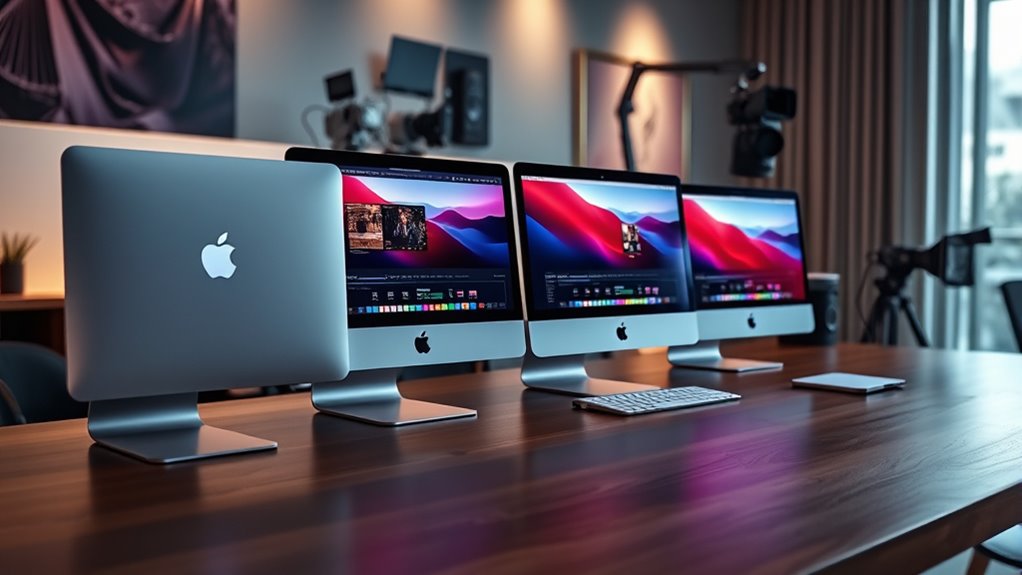

If you want the best Mac Studio models for video editing in 2025, I recommend looking at units powered by the M4 Pro chip for demanding projects, offering top-tier performance, support for multiple 8K displays, and robust hardware-accelerated media engines. The M4 models are ideal for lighter tasks and budget-friendly setups. Choosing between these options depends on your needs and budget, so stay tuned as I’ll share more details to help you decide.
Key Takeaways
- Prioritize Mac Studio models equipped with M4 Pro chips for demanding 8K editing and complex rendering tasks.
- Opt for configurations with 32GB or more RAM to ensure smooth multitasking and handling large video projects.
- Choose models with at least 512GB SSD storage, or plan external solutions, to accommodate high-resolution footage without bottlenecks.
- Select units supporting three high-resolution displays, including 8K, for enhanced multi-monitor workflow and color grading.
- Consider future-proofing by investing in higher-spec models with expanded memory and storage to maintain performance in 2025 workflows.
Apple Mac mini Desktop Computer with M4 Chip (256GB SSD, 16GB RAM)
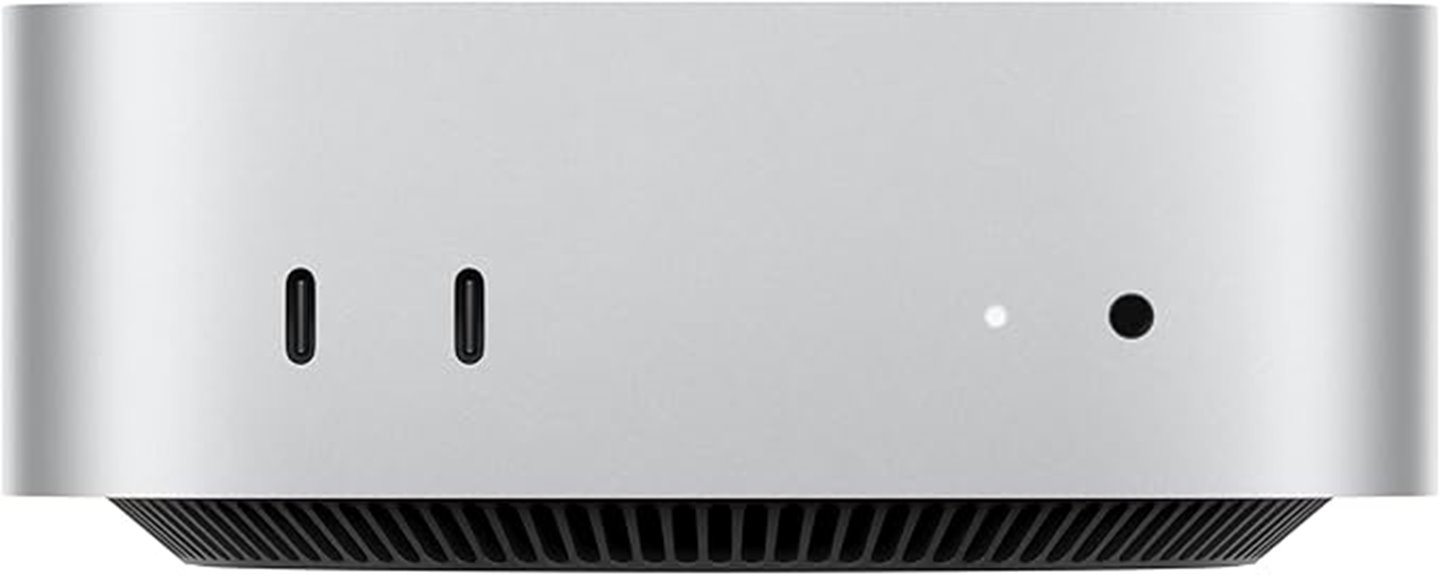
If you’re looking for a compact yet powerful option for light video editing and creative tasks, the Apple Mac mini with the M4 chip is an excellent choice. Its small 5×5-inch design easily fits next to your monitor, making it perfect for space-saving setups. Powered by the M4 chip, it offers a 10-core CPU, 10-core GPU, and 16-core Neural Engine, ensuring smooth performance. With 16GB of unified memory and a 256GB SSD, it handles app launches and multitasking quickly. It supports up to three displays and runs quietly, making it ideal for creative work in minimal spaces. This Mac mini combines power and portability effortlessly.
Best For: users seeking a compact, quiet, and efficient computer for light video editing, creative tasks, and everyday productivity in space-constrained setups.
Pros:
- Extremely small and lightweight, perfect for minimal desk space
- Powerful M4 chip with fast performance and smooth multitasking
- Runs quietly and stays cool under load, ideal for quiet work environments
Cons:
- Limited internal storage; requires external drives or cloud for large files
- Non-upgradable RAM and storage, restricting future upgrades
- Not suitable for high-end gaming or intensive 8K video editing
Apple 2024 Mac mini Desktop Computer with M4 Chip
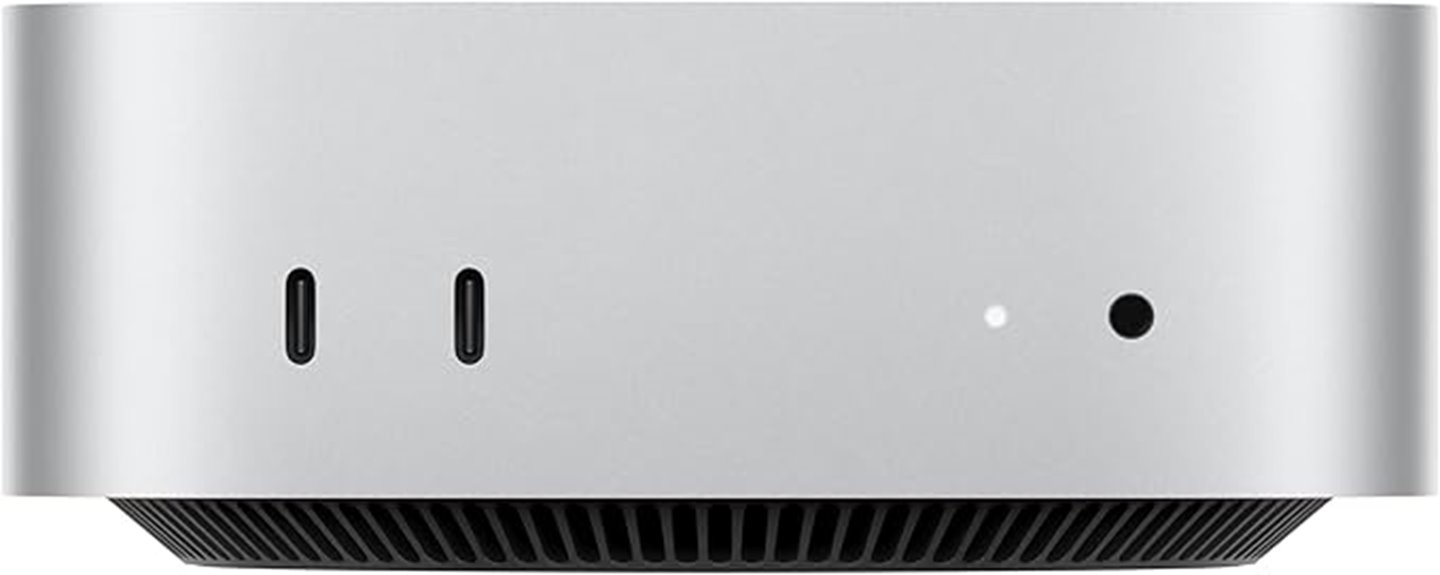
The Apple 2024 Mac mini with M4 chip stands out as an excellent choice for users who need a compact yet powerful desktop for light to moderate video editing. Its small 5×5 inch design fits easily anywhere, while its hardware delivers impressive speed and responsiveness. Equipped with a 10-core CPU, 10-core GPU, and 16GB of unified memory, it handles editing tasks smoothly. Its quiet operation and efficient cooling make it ideal for extended workflows. Plus, the ability to connect to multiple high-resolution displays and external peripherals makes it versatile. Overall, this tiny powerhouse offers great value for users seeking a space-efficient, capable Mac desktop.
Best For: users seeking a compact, powerful Mac desktop ideal for light to moderate video editing, productivity, and creative workflows in small spaces.
Pros:
- Extremely small and space-efficient design that fits seamlessly anywhere
- Powerful M4 chip with fast performance for multitasking and media editing
- Quiet operation and efficient cooling for extended use
Cons:
- Non-upgradable RAM and storage, limiting future expandability
- Limited ports compared to larger desktops, requiring external hubs for some peripherals
- May be underpowered for heavy, professional-grade editing or high-end workflows
Apple 2024 Mac mini Desktop Computer with M4 Chip
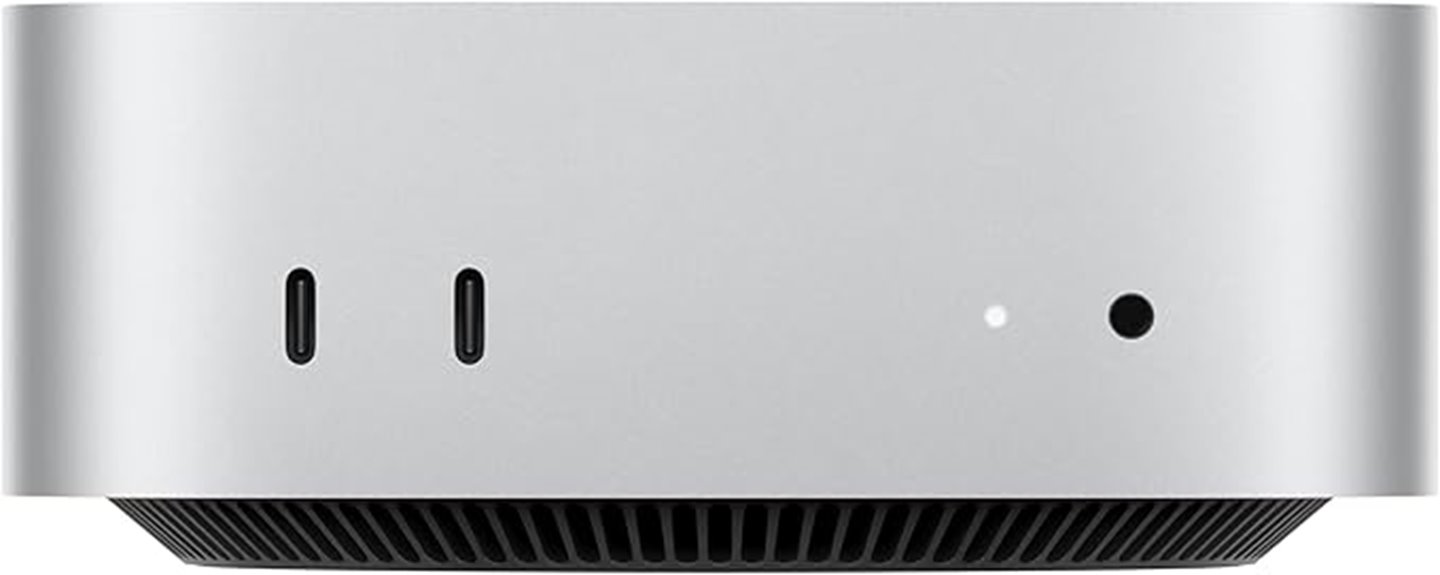
For anyone seeking a compact yet powerful desktop for video editing, the Apple 2024 Mac mini with the M4 chip stands out as an excellent choice. Its sleek design measures just 5×5 inches, making it easy to fit next to monitors or anywhere in your workspace. Powered by the impressive M4 chip with a 10-core CPU and GPU, it delivers snappy, fluid performance ideal for demanding creative tasks. With 24GB of unified memory and a 512GB SSD, it handles high-performance apps effortlessly. Multiple ports, including Thunderbolt, HDMI, and Gigabit Ethernet, ensure seamless connectivity. It integrates perfectly with the Apple ecosystem, boosting productivity and privacy in a compact package.
Best For: creative professionals and power users seeking a compact, high-performance desktop for tasks like video editing, graphic design, and multitasking within the Apple ecosystem.
Pros:
- Compact size fits easily next to monitors or in tight spaces
- Powerful M4 chip with 10-core CPU/GPU delivers fast, fluid performance
- Seamless integration with iPhone and iPad enhances productivity and user experience
Cons:
- Limited upgrade options due to integrated design
- May be costly compared to other compact desktops with similar specs
- No dedicated graphics card, potentially limiting high-end gaming or very intensive tasks
Apple Mac mini Desktop Computer with M4 Pro chip
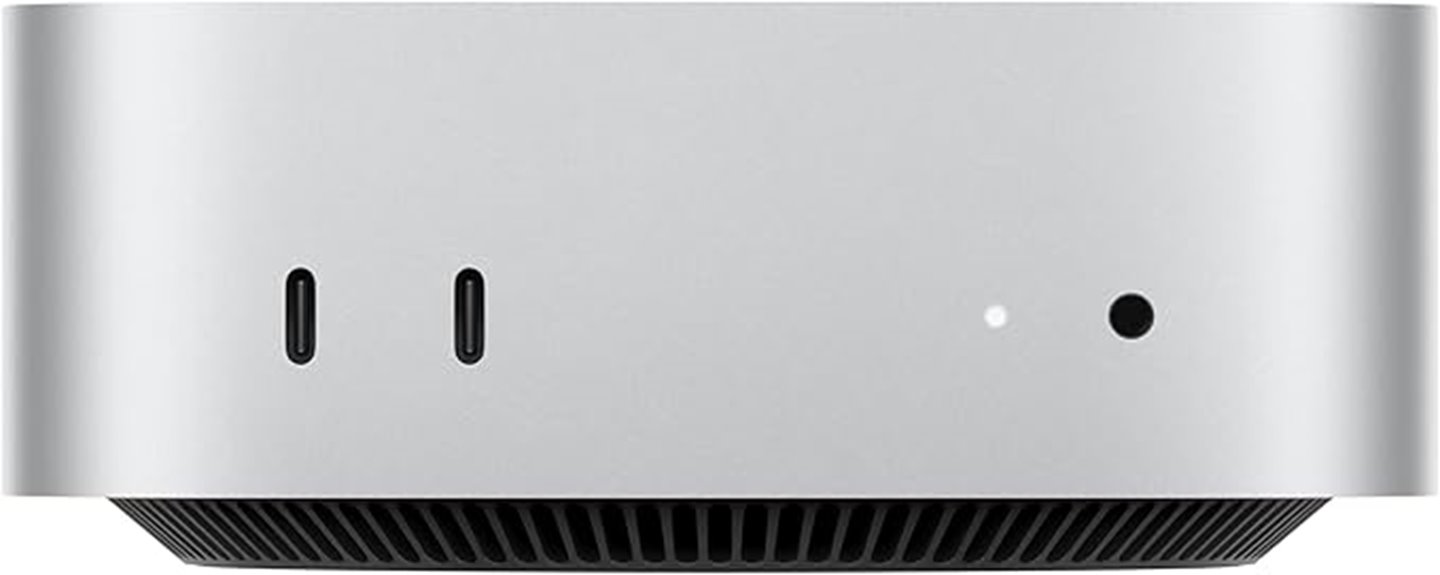
Powerful and compact, the Apple Mac mini with M4 Pro chip stands out as an ideal choice for video editors who need a space-saving yet high-performance desktop. Its small 5×5-inch design fits easily on any desk, while the M4 Pro’s 12-core CPU, 16-core GPU, and Neural Engine deliver fast rendering and smooth editing for demanding projects. Supporting up to three displays, including 8K resolution, and offering up to 64GB of memory, it handles complex scenes effortlessly. With versatile ports, Wi-Fi 6E, and Thunderbolt 5, expandability is seamless. Despite its tiny footprint, this Mac mini packs enough power for professional video editing in a compact, reliable package.
Best For: professionals and enthusiasts who need a compact yet powerful desktop for demanding tasks like video editing, 3D rendering, or software development.
Pros:
- Compact 5×5-inch design fits easily on any desk space
- Powerful M4 Pro chip with a 12-core CPU and 16-core GPU for fast performance
- Supports up to three displays, including 8K resolution, ideal for high-resolution workflows
Cons:
- Non-upgradable RAM and storage may limit future expansion
- Limited internal ports; reliance on external peripherals for expansion
- Higher cost compared to some traditional desktops with similar specifications
Factors to Consider When Choosing a Mac Studio for Video Editing
When choosing a Mac Studio for video editing, I consider several key factors to guarantee it meets my needs. I look at processing power, memory, storage options, display compatibility, and connectivity features to make an informed decision. These points help me find a model that balances performance and versatility for my editing projects.
Processing Power Needs
Choosing the right Mac Studio for video editing hinges on understanding its processing power, which directly impacts workflow efficiency. Higher processing power, with multiple cores and advanced GPUs, considerably cuts down rendering and encoding times, allowing for smoother workflows. When working with 4K and 8K footage, multi-core CPUs and dedicated GPU acceleration become essential for seamless playback and faster exports. Additionally, a robust processor reduces lag during complex effects, color grading, and timeline rendering, enhancing productivity. Hardware-accelerated media engines for formats like ProRes and HEVC enable real-time editing and efficient transcoding of high-resolution files. Overall, investing in a Mac Studio with ample processing power ensures you can handle demanding projects with minimal delays, making your editing process more efficient and less frustrating.
Memory Capacity
Since processing power is vital for handling demanding video projects, paying attention to memory capacity is equally important to keep your workflow smooth. Having enough RAM ensures seamless playback and editing of high-resolution footage, like 4K and 8K videos. I recommend at least 16GB for basic editing, but 32GB or more really benefits multitasking and complex projects. More memory allows you to run multiple applications and manage large media libraries without slowing down. Upgrading to higher RAM improves rendering times and system responsiveness during intensive tasks. Since Mac Studio models often have non-upgradable RAM, choosing a configuration with ample memory upfront is essential. This way, you future-proof your setup, avoiding bottlenecks as your projects grow in complexity.
Storage Options
Selecting the right storage options for your Mac Studio is vital for smooth video editing workflows. With options ranging from 512GB to 8TB SSD, you can choose capacity based on your project size and workflow needs. Larger SSDs offer faster read and write speeds, which are indispensable for handling large files and editing 4K or 8K footage seamlessly. External storage solutions like high-speed Thunderbolt drives can expand your capacity for ongoing projects and backups. Since internal storage isn’t user-upgradable, it’s important to consider future growth when selecting your configuration. Balancing storage capacity with your budget and performance needs ensures your workflow remains efficient. Proper storage planning helps prevent bottlenecks and keeps editing smooth, even with demanding video projects.
Display Compatibility
Ever wonder if your Mac Studio can handle the high-resolution displays needed for professional video editing? It’s vital to verify your chosen model supports your monitor’s resolution and refresh rate, like 6K at 60Hz or 8K at 60Hz, for smooth editing. Check that it has compatible ports, such as Thunderbolt 4 or HDMI 2.1, to connect high-res monitors directly without hassle. Native support for DisplayPort 1.4 or 2.1 over USB-C or Thunderbolt guarantees reliable, high-quality output. Consider how many displays the Mac Studio can support simultaneously, especially if you use multiple monitors for your workflow. In the end, verify compatibility with HDR and color standards like Dolby Vision, HDR10+, or P3 wide color gamut to ensure precise color grading.
Connectivity Features
When choosing a Mac Studio for video editing, it’s critical to pay close attention to its connectivity features. Multiple Thunderbolt 4 ports are indispensable, as they support high-speed data transfer and enable connecting several external displays, which is indispensable for multitasking. HDMI ports that support 4K, 5K, or 6K resolutions ensure you can connect professional monitors with excellent display quality. USB-C and USB-A ports are also significant for compatibility with external drives, peripherals, and accessories used in editing workflows. A Gigabit Ethernet or 10Gb Ethernet port is valuable for fast, reliable file transfers over wired networks, especially when handling large video files. Finally, audio input/output options like dedicated headphone jacks and microphone support help streamline audio editing and monitoring.
Budget Considerations
Choosing the right Mac Studio for video editing involves more than just considering its connectivity features; budget plays a significant role in narrowing down options. The cost varies depending on the configuration, with higher-end models offering more RAM, storage, and processing power at a premium. Budget constraints may limit your ability to upgrade to the latest hardware, which could impact performance for demanding projects. Keep in mind, external accessories like high-quality monitors, external SSDs, and professional software also add to the total cost. However, investing in a more expensive Mac Studio with better specifications can provide longer-lasting performance and reduce future upgrade needs. Balancing initial investment with future-proofing ensures you get a machine that meets your current and upcoming video editing requirements without overspending.
Future Upgradeability
Since most Mac Studio models have non-upgradable internal components, it’s crucial to prioritize your current hardware needs at the time of purchase. RAM and storage are fixed, so choosing higher specs upfront ensures your device remains capable over its lifespan. Upgrading internal hardware later usually requires professional service or replacing the entire unit, which isn’t practical or cost-effective. While external peripherals like additional drives or external GPUs offer some flexibility, they don’t replace internal component upgrades. To future-proof your investment, consider your long-term software demands and workflow requirements. Selecting a configuration with ample RAM, faster storage, and a powerful processor now can save you from limitations down the line. Thoughtful initial choices are essential, as internal upgrades are generally not an option later.
Frequently Asked Questions
How Does GPU Performance Impact Video Editing on Mac Studio Models?
GPU performance greatly impacts my video editing experience on Mac Studio models. A powerful GPU accelerates rendering, effects, and playback, making workflows smoother and faster. It handles high-resolution footage and complex projects without lag, saving me time and reducing frustration. With a strong GPU, I can work more efficiently, especially with 4K or 8K videos, ensuring my edits look polished and professional without compromising speed or quality.
Are There Specific Ports or Connectivity Options Essential for Professional Video Editing?
Think of ports as the highways for your creative traffic. For professional video editing, you’ll want Thunderbolt 4 or USB-C ports—they’re like superhighways for fast data transfer. Multiple Thunderbolt ports let you connect external drives, displays, or audio interfaces seamlessly. SD card slots are also vital for quick media import. Having these ports guarantees your workflow stays smooth, efficient, and never gets bottlenecked by connectivity issues.
What Is the Expected Lifespan of Mac Studio Models for High-End Editing Tasks?
The Mac Studio models I expect to last around 4 to 6 years for high-end editing tasks. Apple’s build quality and hardware longevity are impressive, but technology evolves fast. I recommend investing in the latest model with robust specs now, and planning for upgrades or replacements in a few years to keep up with demanding editing software. Staying current guarantees smooth performance and top-tier editing capabilities over time.
How Does Thermal Management Affect Prolonged Video Editing Sessions?
Thermal management is essential during long video editing sessions because it prevents overheating, ensuring consistent performance. When a Mac Studio manages heat well, it can run intensive tasks smoothly without throttling, which slows down processing. I’ve noticed that good airflow and cooling systems help maintain peak performance, so my edits stay seamless. Poor thermal management, on the other hand, can cause lag, crashes, or slower rendering times, affecting my workflow.
Can Mac Studio Handle Multi-Camera Editing Workflows Efficiently?
Absolutely, the Mac Studio handles multi-camera editing workflows efficiently. I’ve found its powerful processors and ample RAM make switching between multiple camera angles smooth and responsive. The high-speed storage and robust GPU ensure real-time playback without lag, even with complex timelines. Plus, its thermal management keeps performance steady during long editing sessions. Overall, it’s a dependable, high-performance machine that streamlines multi-camera projects effortlessly.
Conclusion
If you’re serious about video editing, choosing the right Mac Studio can make all the difference. I remember a filmmaker who upgraded to the M4 Pro model, and their workflow became seamless, even with 4K projects. Whether you need power or portability, these options guarantee smooth editing and faster render times. Investing in the right model means less waiting and more creating—so pick what fits your needs and watch your projects thrive.