
TL;DR

Get hardware and tech essentials delivered free with Prime
- Fast, free delivery on millions of items
- Prime Video, Amazon Music and more included
- Member-only deals all year
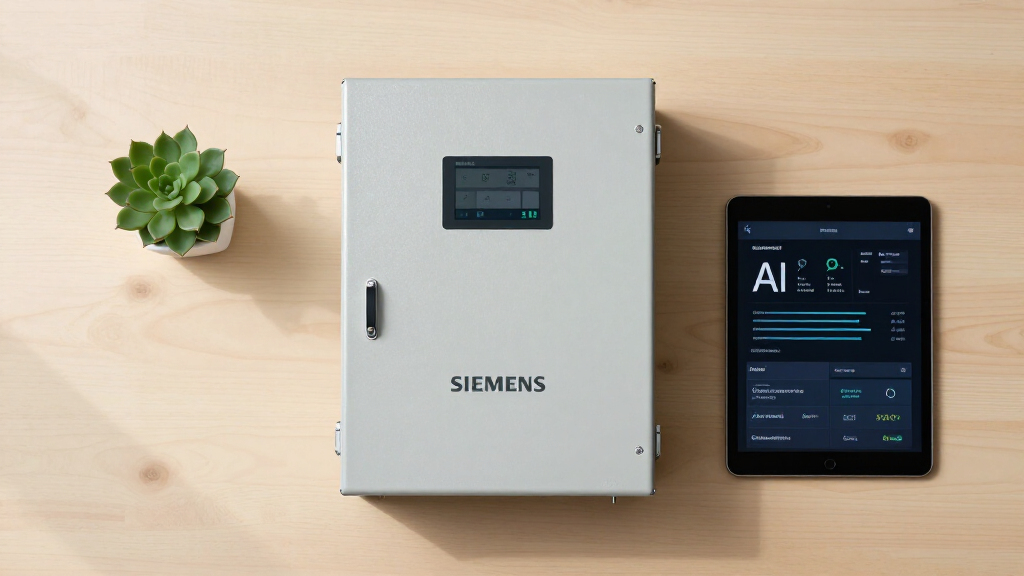
Siemens is making a strategic shift toward AI that focuses on physical manufacturing data rather than language models. The company is developing the Industrial Foundation Model and collaborating with NVIDIA to embed AI across manufacturing processes, aiming to revolutionize industrial automation and digital twins.
Siemens has revealed a major strategic initiative to develop industrial AI that emphasizes physical data processing over language-based models, aiming to transform manufacturing and automation. The company announced its plans at CES 2026 to build the Industrial Foundation Model and expand its partnership with NVIDIA into an ‘Industrial AI Operating System,’ targeting real-time optimization of industrial processes.
Siemens’ approach centers on creating a specialized AI model, called the Industrial Foundation Model (IFM), designed to process 3D models, engineering drawings, sensor telemetry, and automation logic—data types specific to manufacturing environments. This marks a shift from general-purpose language models to domain-specific AI tailored for physical industrial data.
The company’s partnership with NVIDIA is pivotal, aiming to develop an Industrial AI Operating System that integrates AI across the entire industrial lifecycle—covering design, engineering, manufacturing, and supply chains. Key features include GPU-accelerated simulations, generative digital twins, and autonomous factory operations, with the first fully AI-driven factory expected to launch in Erlangen, Germany, in 2026.
Siemens leverages its extensive proprietary industrial data, accumulated over decades, to train these models, giving it a domain expertise advantage. The company also benefits from existing customer relationships with major manufacturers like PepsiCo and Audi, which are already using Siemens automation tools and are now targeted for AI-enhanced upgrades.
Impact of Siemens’ Physical AI Initiatives on Manufacturing
This shift signifies a major potential transformation in manufacturing, where AI-driven automation, real-time optimization, and digital twins could lead to increased efficiency, reduced downtime, and smarter supply chains. Siemens’ focus on proprietary industrial data and domain expertise positions it to lead this new wave of industrial AI, setting a foundation that competitors may find difficult to replicate.
Products Worth Considering

Apple MacBook Pro 16.2-inch with M5 Pro, 18-Core CPU, 20-Core GPU, 48GB Memory, 1TB SSD, Wi-Fi 7, Silver

Apple MacBook Pro with M5 Max 18-core CPU 20-core GPU 14.2-inch Display 48GB Memory 2TB SSD Space Black

Apple MacBook Pro 14.2-inch with M5 Max, 18-core CPU, 32-core GPU, 36GB Memory, 2TB SSD, Wi-Fi 7, Silver
As an affiliate, we earn on qualifying purchases.
Background of Siemens’ Industrial AI Strategy and Partnerships
Siemens has long been a leader in industrial automation and digitalization, with a history spanning over 175 years. Its recent focus on AI is driven by the recognition that the most valuable AI applications in manufacturing involve physical data rather than text or language models. The company’s announcement at Hannover Messe 2025 of the Industrial Foundation Model marked the beginning of this strategic shift. The partnership with NVIDIA, announced at CES 2026, aims to embed AI deeply into manufacturing processes, leveraging GPU acceleration and physics-based simulation technologies.
Prior to this, Siemens had established relationships with major corporations across industries, providing automation solutions that now serve as a foundation for integrating AI-driven enhancements. The company’s approach contrasts with startups and tech giants focusing on chatbots and language models, emphasizing domain-specific, physics-aware AI tailored for industrial environments.
“”Industrial AI is no longer a feature; it’s a force that will reshape the next century.””
— Roland Busch, Siemens CEO
Unconfirmed Aspects of Siemens’ Industrial AI Rollout
While Siemens has announced plans for a fully AI-driven factory in Erlangen in 2026, specific hardware configurations, deployment timelines, and performance metrics remain undisclosed. The effectiveness of the Industrial Foundation Model in real-world applications is still to be validated through operational data. Additionally, the extent to which NVIDIA’s infrastructure will dominate Siemens’ AI ecosystem raises questions about dependency and sovereignty, especially for European clients concerned about reliance on American technology.
Upcoming Milestones in Siemens’ Industrial AI Deployment
In the coming months, Siemens plans to introduce Digital Twin Composer and expand its industrial copilots, with pilot projects like PepsiCo’s facility upgrades providing early indications of AI’s impact. The full-scale launch of the Erlangen factory is scheduled for 2026, alongside further development of GPU-accelerated simulation tools and validation of AI models in operational settings. Monitoring these developments will clarify the practical benefits and challenges of Siemens’ physical AI approach.
Key Questions
How does Siemens’ approach to industrial AI differ from other tech companies?
Siemens focuses on domain-specific, physics-aware AI models trained on proprietary industrial data, unlike general-purpose language models used by many tech firms. Its emphasis is on physical manufacturing data rather than text or chat AI.
What are the main advantages Siemens claims for its physical AI strategy?
Siemens argues that its proprietary data, domain expertise, and existing customer relationships give it a competitive edge in developing effective industrial AI solutions that are deeply integrated into manufacturing processes.
What are the risks or limitations of Siemens’ current AI strategy?
The reliance on NVIDIA’s infrastructure raises dependency concerns, and the lack of validated results or performance metrics means the full impact of these initiatives is still uncertain. Additionally, long sales cycles in industry could slow adoption.
When will we see the first fully AI-driven factory in operation?
The Erlangen factory is scheduled to launch in 2026, marking a significant milestone in Siemens’ industrial AI deployment. Further validation and scaling will follow afterward.
Source: ThorstenMeyerAI.com