
🔍 Read the full analysis: Best Mirrorless Cameras With AI Features: Top 10 Picks For 2026 on ThorstenMeyerAI.com
TL;DR
In 2026, the market offers a diverse range of mirrorless cameras with advanced AI features. This guide highlights the top 10 models, covering performance, usability, and value for different users.
In 2026, the landscape of mirrorless cameras has been transformed by the integration of advanced AI features, enhancing autofocus, scene recognition, and video stabilization. This development reflects ongoing innovation driven by major manufacturers like Canon, Sony, Nikon, and emerging brands. The new top models combine high image quality with intuitive AI-driven controls, making professional-level photography and content creation more accessible than ever.
The Canon EOS R6 Mark II remains the overall top pick, praised for its versatility, fast autofocus, and robust AI-driven scene recognition. The Nikon Z50 II offers a compact, beginner-friendly experience with AI-assisted auto settings, while the Sony ZV-E10 continues to lead for vloggers with its optimized AI video features. Other notable models include the Fujifilm GFX100S II, with its AI-enhanced image processing, and the Panasonic Lumix GH7, which excels in AI-powered stabilization and video.
These cameras are distinguished by their ability to automatically detect and adapt to subjects, optimize focus tracking, and improve image quality in challenging conditions. Many models now feature real-time eye and subject tracking, scene optimization, and AI-based noise reduction, providing users with tools that simplify complex shooting scenarios. Price points vary widely, from affordable beginner options to high-end professional systems, reflecting the broad adoption of AI technology across the market.
The 10 picks
- 1
 Canon EOS R6 Mark II Mirrorless Camera RF24-105mm F4-7.1 IS STM Lens KitView on Amazon →
 - 2
 Nikon Z50 II with Two Lenses – Compact Mirrorless Camera with 20.9MP Sensor,…View on Amazon →
 - 3
 Canon EOS R50 Mirrorless Camera with 18-45mm & 55-210mm Lenses BundleView on Amazon →
 - 4
 Sony ZV-E10 APS-C Mirrorless Camera with 16-50mm LensView on Amazon →
 - 5
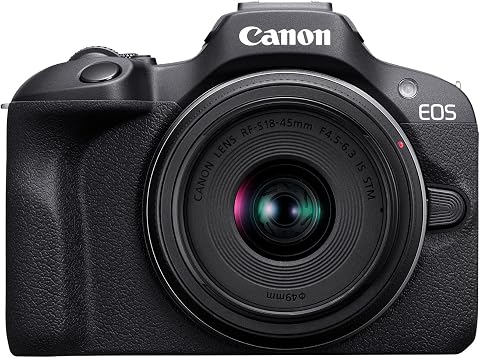 Canon EOS R100 Mirrorless Camera with RF-S18-45mm F4.5-6.3 IS STM Lens KitView on Amazon →
 - 6
 Sony Alpha a6400 Mirrorless Camera with 16-50mm LensView on Amazon →
 - 7
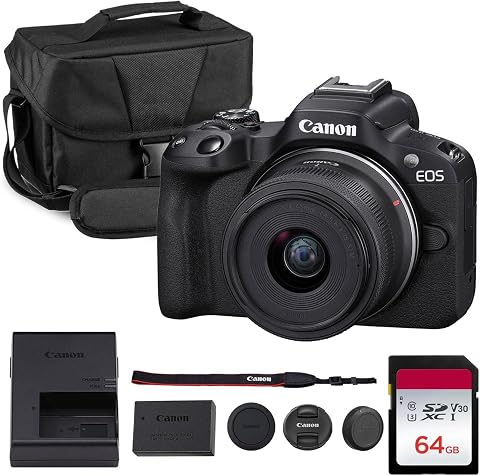 Canon EOS R50 Mirrorless Camera with 18-45mm Lens BundleView on Amazon →
 - 8
 Canon EOS R50 Mirrorless Camera RF-S18-45mm F4.5-6.3 IS STM Lens KitView on Amazon →
 - 9
 Canon EOS R100 Mirrorless Camera Kit with 18-45mm & 55-210mm Lenses, 24MP Sen…View on Amazon →
 - 10
 Canon EOS R100 Mirrorless Camera with RF-S 18-45mm Lens BundleView on Amazon →
Why AI Integration in Cameras Is a Major Shift
The incorporation of AI features into mirrorless cameras marks a significant leap in photography technology, making advanced capabilities accessible to a wider audience. For professionals, AI enhances efficiency and precision, especially in fast-paced environments like sports or wildlife photography. For amateurs and content creators, AI simplifies complex tasks, allowing them to produce high-quality images and videos without extensive technical knowledge. This shift is expected to influence future camera development and user expectations, setting new standards for ease of use and performance.
Evolution of Mirrorless Cameras and AI Features
Over the past decade, mirrorless cameras have steadily gained popularity due to their compact size, lightweight design, and superior electronic viewfinders. The integration of AI technology began around 2022, initially with basic scene recognition and autofocus improvements. By 2024, AI-driven features became more sophisticated, including real-time subject tracking, automatic scene adjustments, and enhanced video stabilization. Manufacturers have increasingly prioritized AI to differentiate their models in a competitive market, leading to the current lineup of highly intelligent, user-friendly cameras in 2026.
Recent releases have seen a convergence of hardware and AI software, with some models employing machine learning to improve image processing over time. This evolution continues to blur the lines between professional and consumer-grade equipment, democratizing high-quality photography and videography.
Remaining Questions About AI-Enhanced Cameras
While AI features are rapidly advancing, it is not yet clear how these technologies will perform over the long term, especially in demanding conditions. Some models may still experience issues with false detections or lag in real-time processing. Additionally, the extent of AI’s impact on battery life and hardware durability remains to be fully tested. Consumer feedback and real-world testing over the coming months will clarify these uncertainties.
Future Developments and Market Trends in AI Cameras
Manufacturers are expected to continue refining AI capabilities, focusing on more accurate subject recognition, smarter scene optimization, and better integration with cloud-based editing tools. Upcoming models may introduce even more autonomous features, such as AI-driven composition suggestions and adaptive lighting adjustments. Market analysts predict a growing adoption of AI in mid-range and entry-level models, making advanced photography tools accessible to a broader audience. Monitoring upcoming releases and software updates will reveal how these innovations evolve over the next year.
Key Questions
How do AI features improve camera performance?
AI features enhance autofocus speed and accuracy, enable real-time subject tracking, optimize scene settings automatically, and improve video stabilization, making photography and videography easier and more precise.
Are AI features reliable for professional work?
Many professional photographers and videographers find AI features reliable for routine tasks, but some still prefer manual control for critical shots. Ongoing improvements are reducing errors and lag in AI systems.
Which brands lead in AI camera technology?
Canon, Sony, Nikon, and Panasonic are among the leaders, each integrating AI features into their latest models to enhance autofocus, scene recognition, and video capabilities.
Is investing in an AI-enabled camera worth it for beginners?
Yes, AI features can simplify complex shooting scenarios, making them beneficial for beginners. They help produce better results with less technical expertise, though initial learning about camera settings remains important.
Will AI features make traditional photography obsolete?
No, AI features are tools that augment traditional techniques. Skilled photographers still rely on manual controls for creative expression, but AI adds convenience and new possibilities.
Source: ThorstenMeyerAI.com