
🔍 Read the full analysis: High-Speed Play In 2026: 10 Gaming Monitors With High Refresh Rates on ThorstenMeyerAI.com

Get hardware and tech essentials delivered free with Prime
- Fast, free delivery on millions of items
- Prime Video, Amazon Music and more included
- Member-only deals all year
TL;DR
A new buyer’s guide for 2026 ranks ten high-refresh gaming monitors, naming the ASUS TUF Gaming VG259QM5A (24.5-inch, 240Hz, Full HD) as the best overall pick and the CRUA 27-inch 540Hz model as the specialist choice for competitive players. The guide stresses that a monitor’s refresh rate only helps when the hardware behind it can deliver matching frame rates.
A new 2026 comparison of ten high-refresh gaming monitors names the ASUS TUF Gaming VG259QM5A — a 24.5-inch Full HD panel with a 240Hz refresh rate — as the best overall pick, while pointing competitive players toward the CRUA 27-inch 540Hz model for extreme speed. The guide, based on listed specifications rather than hands-on testing, concludes that matching a monitor to your games, frame rates and desk setup matters more than chasing the highest Hz number.
The ranking evaluates each display on native refresh rate, resolution at the stated screen size, panel format and how demanding the monitor is likely to be for a typical gaming system. According to the guide’s author, the ordering “favors a strong balance of speed, practical resolution, and focused use over a single headline specification,” with listed specs used as the comparison basis and no assumptions made about unlisted features or firsthand performance.
The 10 picks
- 1
 CRUA 45-Inch DQHD 185Hz Ultrawide Curved Gaming MonitorView on Amazon →
- 2
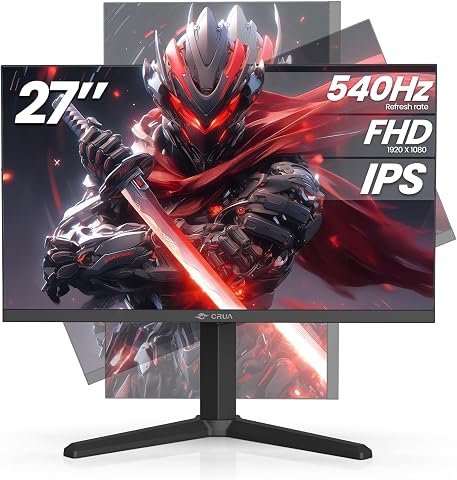 CRUA 27-Inch FHD 540Hz IPS Gaming MonitorView on Amazon →
- 3
 Kado 2-Pack 34-Inch Curved Ultrawide Monitor with 1500R Curvature, 165Hz, 1ms…View on Amazon →
- 4
 SANSUI 34-Inch Curved UWQHD 240Hz Gaming MonitorView on Amazon →
- 5
 KTC 32 Inch 280Hz 240Hz Curved Gaming Monitor, FHD PC Monitor 1080P, H32C5View on Amazon →
- 6
 Samsung 32" Odyssey G55C Series QHD Curved Gaming MonitorView on Amazon →
- 7
 SANSUI 32 Inch Curved Gaming Monitor 240Hz FHD 1080PView on Amazon →
- 8
 ASUS TUF Gaming VG259QM5A 25-Inch 1080p 240Hz G-SYNC Gaming MonitorView on Amazon →
- 9
 SANSUI 27 Inch Curved Gaming Monitor 240Hz FHD 1080PView on Amazon →
- 10
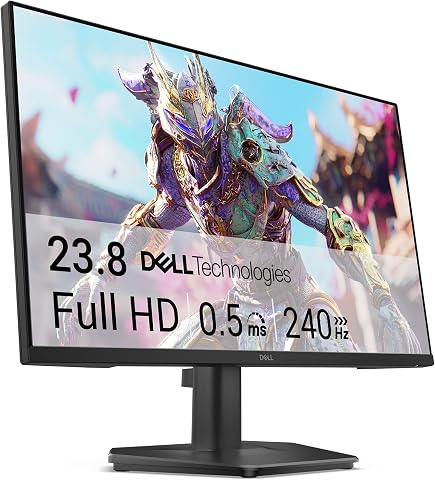 Dell 24 240Hz Gaming Monitor – SE2426HG – 23.8-inch FHD (1920×1080) 240Hz Dis…View on Amazon →
1. ASUS TUF Gaming VG259QM5A — Best Overall
The guide’s top pick pairs a 24.5-inch Full HD screen with a 240Hz refresh rate, described as a focused fit for fast play without the graphics demands of an ultrawide or QHD display.
Products Worth Considering

LG UltraGear 45GX950A-B 45-Inch 5K2K Curved OLED Gaming Monitor

LG UltraGear 32GS60QC-B 32-Inch QHD 180Hz Curved Gaming Monitor

LG UltraGear 24-inch Full HD IPS Gaming Monitor, 120Hz Native (144Hz Overclocked), 1ms MBR, G-SYNC Compatible, FreeSync, HDR10
As an affiliate, we earn on qualifying purchases.
2. CRUA 27-Inch 540Hz — Specialist Speed Pick
Ranked second, this 540Hz panel targets competitive players who prioritize extreme refresh rates. The guide notes its Full HD resolution makes it less suited to buyers who want fine detail or a large, immersive view.
3. SANSUI 34-Inch UWQHD 240Hz — Ultrawide Speed
This ultrawide UWQHD display at 240Hz combines broad screen area with a high refresh rate. The tradeoff, according to the guide, is the added graphics workload from the extra pixels and variable game support for wide aspect ratios.
4. Kado Two-Monitor Bundle — More Total Screen
A dual-screen option running at 165Hz, offering more total display area than a single ultrawide. The guide cautions that a bundle adds bezels between screens and may require more desk space and setup effort.
5. KTC 31.5-Inch — Large Full HD Panel
Offers 240Hz-class play on a roomy 31.5-inch screen. The guide notes that Full HD spread across a panel this size can make text and game detail look less crisp at close desk distances.
6. SANSUI 32-Inch — Big-Screen 240Hz
Another large Full HD panel at 240Hz, ranked lower for buyers who value sharpness. QHD is described as a better match for detail at this screen size.
7. Dell 24-Inch Full HD 240Hz — Compact Setup
Dell’s entry keeps the footprint small with a 24-inch Full HD format at 240Hz, suited to buyers who want a compact, focused competitive setup.
8. Samsung Odyssey G55C 32-Inch QHD — Resolution First
A 32-inch QHD display with a pronounced 1000R curve, prioritizing resolution and immersion over the highest refresh rate in the group. The tight curve wraps around a centered viewer but may not suit shared or off-center viewing.
9. Curved Format Options
The guide treats curvature as a seating decision: a 1000R curve like the Samsung’s differs noticeably from a gentler 1500R design, changing how the panel fits a desk and how immersive it feels from a single centered seat.
10. Balanced Full HD All-Rounders
The remaining compact Full HD 240Hz-class options round out the list, positioned as practical choices when frame rates, budget and desk space matter more than maximum specifications.
Why Frame Rate Matching Matters More Than Hz
The central finding for buyers is that a monitor’s refresh rate only pays off when the system behind it can produce enough frames to use it. As the guide puts it, “A high refresh label cannot compensate for a GPU that regularly falls short of the target.” Moving from 240Hz to 540Hz offers a benefit only for competitive players whose hardware can sustain very high frame rates; for many buyers, a balanced 240Hz setup delivers more practical value.
The ranking also reflects a broader market shift: high refresh rates are no longer confined to small esports panels. With ultrawide, curved and 32-inch options now available at 240Hz or above, the buying decision increasingly depends on resolution, panel size and graphics-headroom tradeoffs rather than the Hz figure alone.
How the Ten Monitors Were Ranked
The selection method weighed each monitor’s native refresh rate, resolution, screen size, panel format and the demands it places on a gaming system. Compact Full HD options were assessed differently from large QHD and ultrawide models, because a very high refresh rate helps only when games and hardware can sustain the corresponding frame rates. The author states that the order favors balanced use over headline specifications — which placed the ASUS VG259QM5A first as a compact all-rounder, the CRUA 540Hz as a specialized speed pick, and the ultrawides via screen area and immersion. Large Full HD screens ranked lower for detail-focused buyers, while the Samsung QHD option stayed appealing for resolution-first play despite a lower refresh rate. No hands-on testing informed the ranking; listed specifications served as the comparison basis.
“The order favors a strong balance of speed, practical resolution, and focused use over a single headline specification.”
— Guide author, ThorstenMeyerAI.com
What the Guide Does Not Test
The ranking is based on listed specifications only — the author explicitly did not assume unlisted features or evaluate firsthand performance. That means real-world factors such as panel response time, color accuracy, HDR behavior, motion clarity and build quality are not covered. Pricing and regional availability for the ten models are also not stated in the comparison, so value-for-money judgments cannot be confirmed from the guide alone. How each monitor performs in specific game genres likewise remains untested.
Before You Buy: Practical Checks
The guide recommends buyers check frame rates in demanding games rather than relying on a single lightweight benchmark, and to keep graphics-headroom in mind if a GPU upgrade is planned later. Before ordering, measure usable desk space including monitor stands, especially for curved and ultrawide panels that need extra depth. Buyers considering an ultrawide should verify that the games they play support the wider aspect ratio, since some titles show side bars or stretch the image. Independent hands-on reviews and current pricing should be checked for any specific model before purchase.
Key Questions
Is a 540Hz monitor better than a 240Hz one?
Only for a narrow group. According to the guide, the benefit of moving from 240Hz to 540Hz depends on whether your games and hardware can sustain very high frame rates. Competitive players with a capable PC may value the headroom; most buyers get more practical benefit from a balanced 240Hz setup.
Why is Full HD a drawback on a 32-inch monitor?
At 31.5 or 32 inches, the same pixel count spreads across more area, which can make text and game detail look less crisp at a close desk distance. The guide suggests QHD is a better match for buyers who value detail at that size.
Is an ultrawide monitor good for gaming?
It depends on the games. Some titles fill the wider aspect ratio naturally, while others show side bars or stretch the image. The extra pixels also increase graphics workload compared with Full HD or standard QHD panels.
Was this ranking based on hands-on testing?
No. The author states that listed specifications were treated as the basis for comparison and that no unlisted features or firsthand performance were assumed.
What does a 1000R curve mean?
It describes how sharply a panel curves — a pronounced 1000R curve, like the Samsung Odyssey G55C’s, wraps more closely around the viewer than a gentler 1500R design. It can feel immersive from a centered seat but is less suited to shared or off-center viewing.
Source: ThorstenMeyerAI.com