
🔍 Read the full analysis: A Practical Guide To 9 Ultrawide Monitors For Gaming And Productivity on ThorstenMeyerAI.com

Get hardware and tech essentials delivered free with Prime
- Fast, free delivery on millions of items
- Prime Video, Amazon Music and more included
- Member-only deals all year
TL;DR
A guide from ThorstenMeyerAI.com compares nine ultrawide monitors for gaming and work, highlighting the Dell 34 Plus USB-C as its best overall pick and the Samsung Odyssey G9 for maximum screen area. The guide also flags tradeoffs involving desk depth, panel type, refresh rate, connectivity and ergonomics; specific prices and independent test results are not provided in the supplied material.
ThorstenMeyerAI.com has published a guide comparing nine ultrawide monitors for gaming and productivity, naming the Dell 34 Plus USB-C Curved Monitor its best overall choice for combining a 120Hz refresh rate with laptop-friendly connectivity. The guide also points to the Samsung 49-Inch Odyssey G9 for users who want a much wider workspace, while warning that its size and curvature call for a deep desk.
The comparison weighs refresh rate, response time and adaptive sync for gaming alongside color, connectivity and ergonomic adjustments for work. The guide says the Dell S3425DW stands out for a USB-C hub with power delivery, which can carry video, data and power through one cable. It describes that setup as useful for laptop users seeking to reduce desk clutter.
For a budget-oriented option, the guide names the CRUA 34-inch WQHD, citing its high refresh rate at a lower entry point. It also includes the Sceptre among lower-cost models offering refresh rates in the 165Hz–180Hz range. The source cautions that budget models may have weaker color uniformity or less adjustable stands than premium alternatives.
The remaining named pick is the LG 34-inch WFHD IPS, described as the only model in the selection with a white chassis and IPS panel. The source frames it as an option for users who prioritize wide viewing angles. It does not provide the names or full specifications of all nine models in the supplied material, so a complete model-by-model comparison cannot be confirmed here.
The 9 picks
- 1
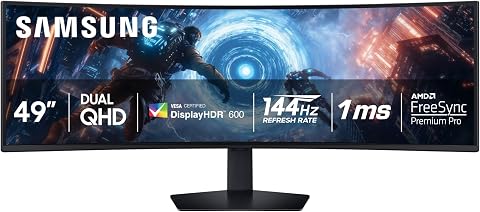 Samsung 49-Inch Odyssey G9 Curved Dual QHD Gaming Monitor, 144Hz, FreeSync Pr…View on Amazon →
- 2
 Z-Edge UG49W 49-Inch Curved Ultrawide Monitor, 5120×1440, 165HzView on Amazon →
- 3
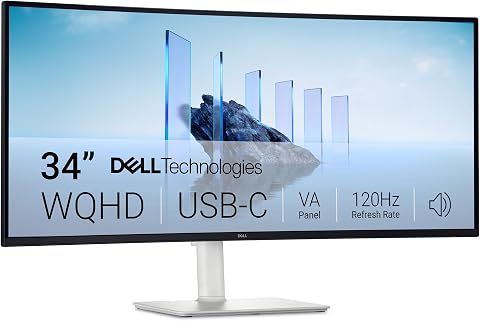 Dell 34 Plus USB-C Curved Monitor (S3425DW) – 34" WQHD, 120Hz, FreeSync PremiumView on Amazon →
- 4
 LG 34WR55QK-B 34-Inch Curved UltraWide WQHD MonitorView on Amazon →
- 5
 Samsung 34-inch ViewFinity S50GC Ultra-WQHD MonitorView on Amazon →
- 6
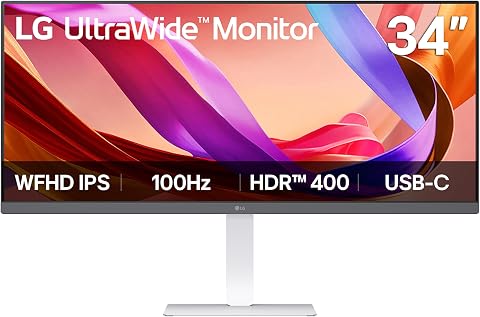 LG 34-inch UltraWide WFHD IPS Monitor, 100Hz, DisplayHDR 400, USB-C, HDMI and…View on Amazon →
- 7
 SANSUI 34-Inch Curved UWQHD Gaming Monitor (3440 x 1440, 200Hz)View on Amazon →
- 8
 CRUA 34-inch WQHD 165Hz Ultrawide Curved Gaming Monitor (1500R, FreeSync)View on Amazon →
- 9
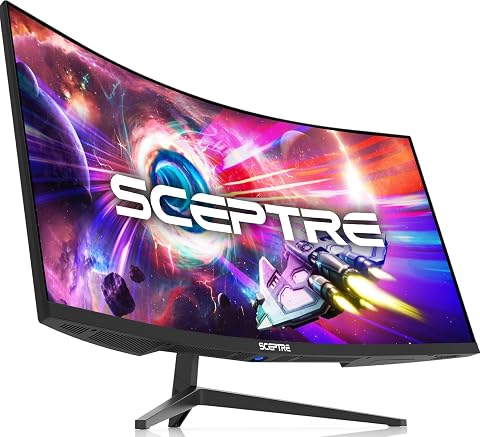 Sceptre 34-inch Curved Ultrawide WQHD Monitor (3440 x 1440), 180Hz, 1ms, Disp…View on Amazon →
Choosing Between Workspace and Immersion
The guide highlights a practical choice facing ultrawide buyers: more screen area and gaming immersion can require more desk space and graphics performance, while productivity features such as USB-C power delivery may matter more than peak refresh rates. A 49-inch Dual QHD display has a much larger pixel workload than a 34-inch WQHD monitor, particularly for games, according to the guide’s comparison of those resolutions.
It also stresses that panel and stand choices affect daily use. VA panels are described as offering stronger contrast, while IPS panels provide wider viewing angles; the source notes that VA screens can show dark-motion smearing. Buyers comparing these models should weigh those tradeoffs against their room lighting, work tasks and available desk depth rather than treating screen size or refresh rate as the only deciding factors.
Products Worth Considering

Logitech MX Keys S Combo Wireless Keyboard and Mouse, Graphite
Apple MacBook Pro 16-inch (2021), M1 Pro, 10-core CPU, 16-core GPU, 16GB RAM, 512GB SSD, Silver

LG UltraGear evo 52-Inch 5K2K 240Hz Curved Gaming Monitor
As an affiliate, we earn on qualifying purchases.
How the Guide Compares Displays
The source says its selection process considered gaming performance, color coverage, connectivity and ergonomics, along with price-to-feature value. It gives particular weight to stands with height, tilt and swivel adjustment and distinguishes USB-C-equipped productivity models from gaming-focused displays that may rely on HDMI and DisplayPort.
As a basic screen-size comparison, the guide discusses 3440 × 1440 WQHD on 34-inch monitors and 5120 × 1440 Dual QHD on 49-inch displays. It characterizes the smaller format as a balance between sharpness and graphics demand, and the larger one as a way to create a broad workspace that can take the place of two displays for some users. These are general selection points from the guide, not results from a disclosed laboratory test.
“The Dell 34 Plus USB-C Curved Monitor stands out as the best overall pick because it balances 120Hz refresh rates with a versatile USB-C hub.”
— ThorstenMeyerAI.com guide
Details Missing From the Selection
The supplied source does not identify all nine monitor models, give a complete specification table, or state the prices used to judge value. It also does not provide test methods, measured color results, response-time data, or a publication date. The recommendations should therefore be understood as the source’s editorial assessments, not independently verified performance findings.
The source mentions power delivery of up to 90W or 100W as a general USB-C consideration, but does not specify the Dell model’s exact output in the provided text. It also advises that aggressive curves may need more viewing distance and desk depth without documenting measurements for every setup. Actual compatibility, available ports and stand adjustments should be checked against each manufacturer’s current specifications.
Check Specifications Before Buying
The next step for readers using the guide is to compare the full product listings for current prices, exact model numbers and specifications, especially the complete set of nine picks not named in the supplied excerpt. Laptop owners should verify USB-C power delivery and video support; gamers should check resolution, refresh rate, adaptive-sync compatibility and whether their graphics hardware can drive the display.
Desk measurements also matter, particularly for a large curved screen. The guide offers selection criteria rather than a reported product launch or announced update, and the supplied material gives no schedule for further testing or revisions.
Key Questions
Which monitor does the guide rank as its best overall pick?
The guide names the Dell 34 Plus USB-C Curved Monitor (also referred to as the Dell S3425DW in the source) as its best overall choice, citing its 120Hz refresh rate and USB-C hub. The supplied material does not include a full specification sheet.
Which model is the guide’s largest-screen option?
It highlights the Samsung 49-Inch Odyssey G9, with a 5120 × 1440 Dual QHD format. The source says its 1000R curvature and size make desk depth a key consideration.
Are the CRUA and Sceptre models suitable for gaming?
The guide lists the CRUA 34-inch WQHD as a budget option and says lower-cost models such as CRUA and Sceptre offer refresh rates from 165Hz to 180Hz. It also warns that budget choices may compromise on color uniformity and stand adjustment. Those are the guide’s claims, not independent test results.
What remains unknown about the nine picks?
The supplied source does not name every model or provide current prices, complete specifications, test data or a publication date. Readers should confirm details with current manufacturer listings before making a purchase.
Source: ThorstenMeyerAI.com