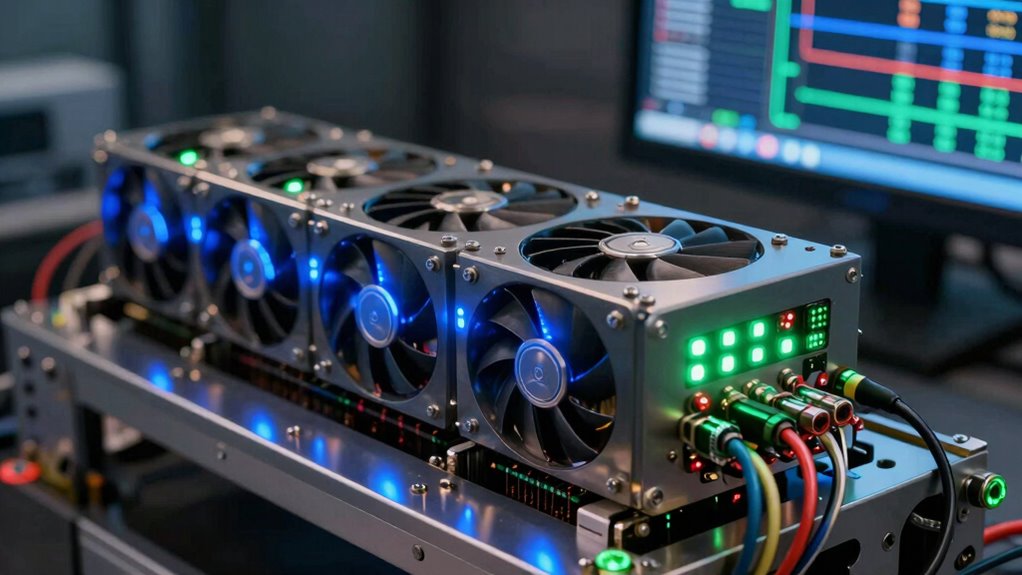
In a crypto mining pool, your rewards are shared based on your contribution of hashing power. The pool uses different payout methods, like proportional, Pay-Per-Share (PPS), or score-based systems, to divide rewards fairly. These methods guarantee everyone gets compensated according to their effort, making the process transparent and reliable. If you want to understand how these systems keep fairness and efficiency in check, there’s more to explore next.
Key Takeaways
- Rewards are distributed based on each miner’s contribution to solving cryptographic puzzles.
- Common payout schemes include proportional, Pay-Per-Share (PPS), and score-based methods.
- Transparent rules govern how rewards are divided among pool members.
- Proper pool management ensures fair distribution and minimizes latency issues.
- Sharing rewards makes mining more predictable and accessible for participants.
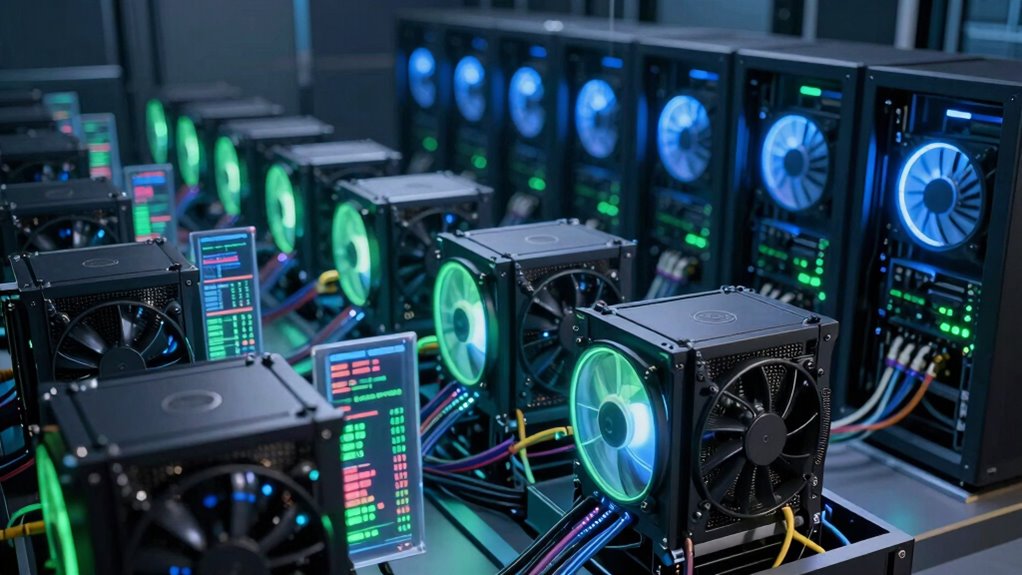
Crypto mining pools have become a popular way for miners to share resources and increase their chances of earning rewards. When you join a mining pool, you’re collaborating with others to solve complex cryptographic puzzles that validate transactions on the blockchain. This collective effort not only boosts your chances of earning rewards but also influences the overall security of the blockchain network. The more miners participate in pools, the more decentralized and secure the blockchain remains, as it reduces the risk of malicious attacks that could compromise blockchain security. However, it’s essential to recognize that pooling resources can also impact energy consumption, which is a crucial concern in the mining community.
In a mining pool, your computational power is combined with that of others, so rewards are distributed based on each participant’s contribution. When the pool successfully mines a block, the reward is shared among all members according to a predetermined payout scheme. This shared approach ensures that even miners with less powerful hardware can earn a steady income, rather than relying solely on sporadic luck. It also means that the energy consumption of the pool as a whole is higher than that of an individual miner, since multiple machines work simultaneously to increase the likelihood of solving puzzles. This collective effort, while efficient with regard to reward distribution, does raise concerns about the environmental impact, especially given the high energy demands of proof-of-work blockchains. Additionally, the technology used in mining pools can influence the color accuracy and overall efficiency of the mining process. A related concern is the mining hardware used, which significantly affects the pool’s performance and energy efficiency.
The way rewards are shared in pools is typically transparent and rules-based, often using methods like proportional, Pay-Per-Share (PPS), or Score-based systems. These methods determine how the rewards from each successful block are divided among members. It’s important to understand that while pooling increases your chances of earning, it also means you’re relying on the pool’s integrity and its ability to accurately and fairly distribute rewards. Additionally, larger pools tend to have a more significant impact on blockchain security because they reduce the risk of a 51% attack, but they also concentrate mining power, which can be a double-edged sword. The concentration of mining power in large pools can sometimes lead to centralization concerns, impacting the overall decentralization of the network. Furthermore, the efficiency of pools can be affected by how well they manage their network infrastructure, which influences overall profitability and reliability. A well-maintained infrastructure can also help mitigate latency issues, ensuring smoother operation and quicker reward distribution.
Ultimately, sharing rewards through mining pools makes the process more predictable and accessible, but it’s crucial to be aware of how this collective effort influences blockchain security and energy consumption. When you participate, you contribute to the network’s resilience, yet you also share in the environmental footprint created by increased computational activity. Balancing these factors is key to understanding the broader implications of mining pools and their role in the cryptocurrency ecosystem.
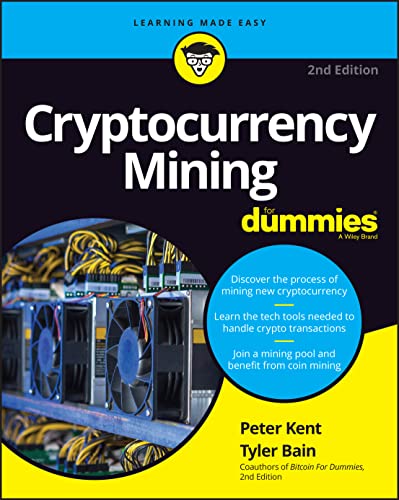
Cryptocurrency Mining For Dummies
As an affiliate, we earn on qualifying purchases.
As an affiliate, we earn on qualifying purchases.
Frequently Asked Questions
How Are Fees Distributed Among Pool Members?
You receive your share of the pool’s rewards based on your contributed hashing power. The pool combines block rewards and transaction fees from mined blocks, then distributes them proportionally. When a block is successfully mined, the pool’s total reward — including the block reward and accumulated transaction fees — gets split among members. So, your payout reflects your contribution to solving blocks, ensuring fair compensation for your mining effort.
What Happens if a Miner Leaves the Pool Early?
If you leave a mining pool early, your rewards might be affected depending on the pool’s payout structure. Unlike solo mining, where you keep all rewards, pool hopping can lead to losing out if you don’t stay long enough for a payout cycle. Leaving prematurely can also disrupt your earnings and reputation within the community, so it’s best to understand the pool’s rules before quitting unexpectedly.
Can Pool Rewards Be Taxed Differently?
Did you know that in many countries, pool rewards are taxed as income or capital gains? You can face different tax rates depending on how you report your earnings. Pool rewards can be taxed differently based on local tax laws, so it’s vital to take into account legal considerations and proper tax reporting. Always consult a tax professional to make sure you’re complying with regulations and accurately reporting your crypto mining income.
How Do Payout Thresholds Affect Reward Sharing?
Payout thresholds directly impact reward sharing by setting a minimum amount you must earn before receiving payouts, influencing your reward distribution methods. If thresholds are high, payouts are delayed until you reach that limit, which might lead to payout delay policies. Conversely, lower thresholds enable more frequent payouts, helping you access rewards sooner. Understanding these thresholds helps you manage your earnings and plan your withdrawals effectively within the pool’s payout system.
Are There Risks of Pool Centralization?
Yes, there are decentralization risks with mining pools, especially if one pool becomes dominant. Pool dominance can lead to centralization, making the network vulnerable to control by a few entities. This concentration of power threatens the blockchain’s decentralization principles, potentially enabling malicious activities or censorship. To mitigate these risks, miners should join multiple pools or support decentralized mining initiatives, ensuring no single pool gains too much influence.

Basic Ethereum Mining Guide: The Beginner Guide to Ethereum with Insights into Its History, Mining Pool, 2.0, Techniques, Using VPN, and Future of this Enterprise
As an affiliate, we earn on qualifying purchases.
As an affiliate, we earn on qualifying purchases.
Conclusion
Now that you understand how crypto mining pools share rewards, you see how collective effort maximizes your chances of earning. It’s a smart way to reduce individual risk and increase consistency in rewards. But have you considered how pooling resources might change your approach to mining altogether? When you join a pool, you’re not just sharing rewards—you’re becoming part of a community working toward a common goal. Isn’t that the real power behind crypto mining pools?

Bitaxe Gamma 601 Bitcoin Miner, Open Source Solo BTC Mining Machine, BM1370 ASIC Chip, 1TH/s – 1.2TH/s SHA-256, 2.4G WiFi, Home Crypto Miner, incl. 5V Power Supply & Stand, AxeOS, Black
1-1.2TH/s Efficient Mining with BM1370 ASIC Chip: Powered by a single high-performance BM1370 ASIC chip—optimized for SHA-256 Bitcoin…
As an affiliate, we earn on qualifying purchases.
As an affiliate, we earn on qualifying purchases.

Mining Rig Frame for 12GPU, Steel Open Air Miner Mining Frame Rig Case, Support to Dual Power Supply for Crypto Coin Currency Bitcoin ETH ETC ZEC Mining Tools – Frame Only, Fans & GPU is not Included
SLOT – 6/8/12 GPU slots, support 2 ATX power supplies.
As an affiliate, we earn on qualifying purchases.
As an affiliate, we earn on qualifying purchases.