

During market panics, your country’s exchange reserves act as a crucial buffer to prevent currency collapse and economic chaos. They give the government tools to intervene in currency markets, boost investor confidence, and reassure both domestic and international stakeholders. Properly managed reserves help respond swiftly to external shocks and sustain market stability. If you want to understand how these reserves can protect your economy during crises and influence market perceptions, there’s more to uncover.
Key Takeaways
- Exchange reserves act as a financial buffer to stabilize markets during panic and prevent currency collapse.
- They enable quick government interventions to defend the currency amid volatility.
- Large reserves boost investor confidence, reducing panic and speculative attacks.
- Proper management of reserves helps mitigate the impact of external shocks and capital flight.
- Transparent communication of reserve policies reassures markets and supports economic stability.
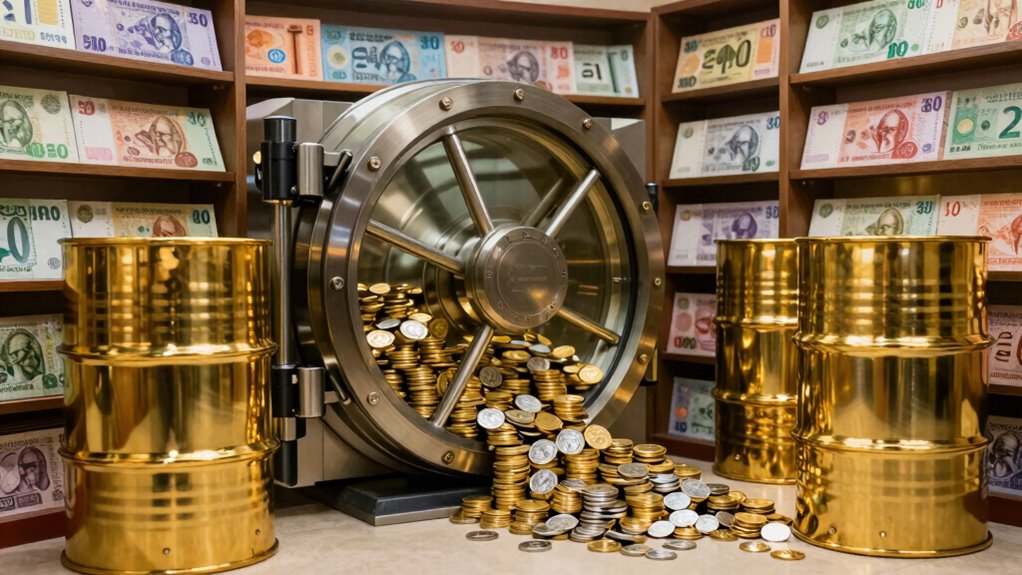
Have you ever wondered how countries stabilize their economies during sudden market panics? When financial turmoil hits, the stability of a nation’s economy often hinges on its ability to manage currency fluctuations and maintain confidence in its financial system. Exchange reserves play a pivotal role here, acting as a financial buffer that helps countries navigate turbulent times. These reserves, comprising foreign currencies, gold, and other liquid assets, enable governments to intervene in currency markets, preventing sharp devaluations that could spiral into economic chaos. By doing so, they support currency stabilization, which is essential for maintaining imports, controlling inflation, and upholding investor trust. When markets become volatile, a strong reserve buffer reassures both domestic and international stakeholders that the country can meet its financial obligations and manage its currency effectively.
Your country’s economic resilience during a crisis often depends on the size and management of its exchange reserves. Reserves give governments the tools to respond swiftly to capital flight, sudden withdrawal of foreign investment, or speculative attacks that threaten the stability of the currency. When panic spreads, and investors lose confidence, a well-funded reserve acts as a safety net, allowing policymakers to step in and stabilize the market before problems escalate. This capacity to act decisively can prevent the economy from spiraling into recession or hyperinflation. It’s not just about having reserves but also about managing them wisely—knowing when and how to deploy these assets to support the currency and reassure markets.
Your country’s ability to sustain economic resilience during a crisis also depends on how well it communicates its commitment to financial stability and how effectively it uses its reserves. When markets panic, the perception of a country’s strength and readiness can make all the difference. Having substantial exchange reserves signals that the government is prepared to defend its currency and stabilize the economy, which can calm investor fears and restore order to the markets. Fundamentally, exchange reserves serve as a key tool, empowering countries to weather the storm, restore confidence, and bounce back faster. Without sufficient reserves, a country is more vulnerable to external shocks and less capable of maintaining economic stability during turbulent times.

100PCS Currency Sleeves with Storage Box Side-Insert 6.46"x 3.54"
- Premium Material: PVC and acid-free clear sleeves
- Size Compatibility: Fits most banknotes and stamps
- Clear Display: Thin 2 mil thickness for visibility
As an affiliate, we earn on qualifying purchases.
As an affiliate, we earn on qualifying purchases.
Frequently Asked Questions
How Do Exchange Reserves Impact Currency Stability During Crises?
During crises, your country’s exchange reserves help stabilize the currency through currency intervention, which involves buying or selling foreign currency to influence exchange rates. Adequate reserves guarantee you can respond effectively without panic, maintaining reserve adequacy. This confidence helps prevent sharp declines, supports investor trust, and reduces volatility, ultimately protecting your economy from severe impacts of market panics and fostering a more stable financial environment.
What Are the Risks of Holding Large Reserves?
Holding large reserves might seem like a safety net, but it risks reserve depletion if a crisis lasts longer than expected. You could face opportunity costs, as funds stay idle instead of fueling growth. Without proper reserve diversification, you expose yourself to currency risks and economic vulnerabilities. This approach can create emotional stress, knowing your reserves aren’t fully protected or flexible enough to handle unpredictable market shocks.
How Do Reserves Influence Investor Confidence?
Your exchange reserves boost investor confidence by demonstrating economic stability and your ability to manage currency fluctuations. When you diversify reserves, it signals prudent risk management, reassuring investors about your country’s resilience during market turbulence. This positive investor psychology encourages foreign investment and supports a stable financial environment. Ultimately, strong, well-diversified reserves act as a safety net, fostering trust and reducing fears of economic instability during times of global market stress.
Can Excessive Reserves Lead to Economic Imbalances?
Excessive reserves are like a overflowing dam—while they seem protective, they can cause economic imbalances. You might restrict fiscal policies or inflate currency, making inflation control difficult. When reserves pile up, it signals the economy isn’t efficiently using resources, risking stagnation or distortion. This imbalance can hinder growth, complicate policy decisions, and ultimately destabilize your economy, like a dam that’s too full and about to burst.
How Do Central Banks Deploy Reserves in Emergencies?
In emergencies, central banks deploy reserves through currency intervention and reserve depletion. You’ll see them actively sell or buy foreign currency to stabilize the exchange rate, using reserve accumulation strategically. This helps manage market panic, prevent currency crashes, and restore confidence. By deploying reserves swiftly, they can influence exchange rates, ease financial stress, and protect the economy from adverse shocks, ensuring stability during turbulent times.

Prestige Optima Jewelry Casting Investment Powder – Ultra Smooth Surface for 3D Resin Models, Gold, Silver, Brass & Non-Ferrous Metals, 20 lb
- Professional Casting Results: Ultra-smooth surfaces and sharp details
- Compatible with 3D & Resin Models: Ideal for SLA, DLP, wax, and hybrid patterns
- Reduces Porosity and Finishing Time: Minimizes flashing, cracking, and post-cast work
As an affiliate, we earn on qualifying purchases.
As an affiliate, we earn on qualifying purchases.
Conclusion
You now understand how exchange reserves act as a safety net during market panics. They help stabilize your currency, support confidence, and prevent economic collapse. Remember, “A stitch in time saves nine”—addressing issues early with reserves can save a lot of trouble later. Keep a close eye on these reserves; they’re your best defense when markets get turbulent. Stay prepared, stay resilient, and your economy will stand stronger through any storm.

Development and Stabilization in Small Open Economies (Europa Perspectives: Emerging Economies)
As an affiliate, we earn on qualifying purchases.
As an affiliate, we earn on qualifying purchases.
![DeskFX Free Audio Effects & Audio Enhancer Software [PC Download]](https://m.media-amazon.com/images/I/41fXbDohyuS._SL500_.jpg)
DeskFX Free Audio Effects & Audio Enhancer Software [PC Download]
- Audio Transformation: Enhance sound through speakers and headphones
- Sound Quality Improvement: Adjust audio with various effects
- Audio Control: Manage sound output from hardware
As an affiliate, we earn on qualifying purchases.
As an affiliate, we earn on qualifying purchases.