
A Bitcoin halving cuts the rewards miners earn, which can reduce their profits and cause some to exit, temporarily affecting network security and speed. It also increases reliance on transaction fees, leading to higher costs for users and potential congestion. However, it doesn’t change the core protocol or technology. The event mainly influences economic incentives and market sentiment. If you’re curious about how these effects unfold, there’s more to explore.
Key Takeaways
- Bitcoin halving reduces miners’ rewards but does not change the underlying protocol or technology.
- It can temporarily lower network security if fewer miners remain profitable.
- Transaction fees become more important for miners as block rewards decrease.
- Market sentiment and price movements are influenced but not directly caused by halving.
- The halving is an economic event, not a change in Bitcoin’s core protocol or security mechanisms.
Bitcoin halving events are often seen as pivotal moments that can influence the cryptocurrency’s price and network dynamics. When the halving occurs, the reward for mining a block drops by half, which directly impacts miners and the broader network. As a miner, you’ll notice that this reduces your immediate earnings, but it also sparks changes within the system. One key aspect affected is mining difficulty. While it doesn’t automatically adjust right after a halving, over time, the network recalibrates to maintain a roughly 10-minute block time. If miners find it less profitable to mine due to the reduced rewards, some may exit the network, leading to a potential decrease in mining power. This can cause the network to temporarily become less secure or slower until the difficulty adjusts upward again.
Simultaneously, transaction fees become increasingly important. Since miners earn less from block rewards post-halving, they rely more heavily on transaction fees to stay profitable. This shift incentivizes users to include higher fees in their transactions, especially during times of high network congestion. As a user, you may notice that fees fluctuate based on demand, and during halving events, the competition for block space intensifies. Higher fees can make transactions more expensive, but they also motivate miners to prioritize certain transactions, which can influence how quickly your transactions are confirmed. market sentiment surrounding halving events can often amplify or diminish their perceived significance. Additionally, the economic incentives created by halving are fundamental to understanding the network’s long-term sustainability. Furthermore, the network’s difficulty adjustment mechanism ensures that the block time remains stable despite fluctuations in mining activity.
A thorough understanding of the halving process also highlights how block reward reductions are part of Bitcoin’s fixed supply schedule, which distinguishes it from traditional fiat currencies. What a halving does not do is directly impact the overall security of the network beyond the immediate economic incentives. While lower rewards might tempt some miners to leave, the network’s design ensures that as long as mining remains profitable at some level, the network stays secure. The halving itself doesn’t change the underlying technology or the protocol; it’s primarily an economic event that influences incentives. Additionally, the market response to halving events can vary widely, making it difficult to predict exact price movements.
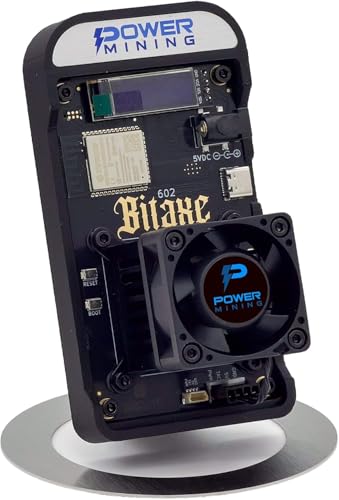
POWER MINING Bitaxe Gamma 602 ASIC Bitcoin Miner | 1.1 TH/s @ 18W | BM1370 Chip (Antminer S21 Pro) | Wi-Fi | USB-C | AxeOS | Open Source | Made in Europe | Incl. Power Supply & Stand
- Hashrate: 1.1 TH/s at 18W power
- Made in Europe: European design and manufacturing
- ASIC Chip: BM1370 chip from Antminer S21 Pro
As an affiliate, we earn on qualifying purchases.
As an affiliate, we earn on qualifying purchases.
Frequently Asked Questions
How Often Does a Bitcoin Halving Occur?
You can expect a Bitcoin halving roughly every four years, or every 210,000 blocks mined. This event impacts mining algorithms by reducing the block reward, which influences miners’ incentives. It also affects blockchain scalability, as halving limits new Bitcoin creation, potentially increasing scarcity. While the timing is predictable, its effects on the network’s economics and scalability can vary, making halving a key event for miners and investors alike.
Does Halving Affect Bitcoin Transaction Speed?
No, halving doesn’t directly affect Bitcoin transaction speed. It impacts the rate of new Bitcoin creation, which can influence network congestion and transaction confirmation times. During halving, miners might take longer to confirm transactions if network congestion increases due to higher demand. However, the core transaction speed remains unchanged, as it depends on the network’s capacity and block size, not the halving event itself.
Who Benefits Most From a Bitcoin Halving?
You benefit most from a Bitcoin halving because it increases mining incentives by making mined bitcoins more scarce, which can boost their value. Miners, in turn, maintain network security as they continue to validate transactions, ensuring the network remains robust. While your gains depend on market factors, the halving tends to strengthen the network’s overall security and scarcity, ultimately benefiting long-term holders like you.
Can Halving Lead to Bitcoin Price Crashes?
Coincidences happen, but a Bitcoin halving can trigger a price crash due to market speculation and perceived supply scarcity. Traders often panic sell, fearing the worst, which amplifies volatility. However, historically, halvings tend to lead to price surges over time as supply diminishes. So, while a crash is possible in the short term, long-term effects often favor increased value, driven by scarcity and investor anticipation.
How Does Halving Impact Bitcoin Miners’ Profitability?
Halving directly reduces miners’ rewards, which can squeeze profitability if the Bitcoin price doesn’t rise enough. As a result, some miners might struggle to cover costs, especially with increasing mining difficulty and energy prices. However, halving can also strengthen network security by incentivizing miners to stay active, ensuring the network remains robust. If Bitcoin’s price increases post-halving, miners can maintain profits despite reduced rewards.
Bitcoin transaction fee calculator
As an affiliate, we earn on qualifying purchases.
As an affiliate, we earn on qualifying purchases.
Conclusion
Think of a Bitcoin halving as a lighthouse guiding a ship through foggy waters. It sharpens your focus on scarcity, illuminating the path to value, but it doesn’t control the stormy seas of market sentiment. While it signals a change, it’s not a guarantee of smooth sailing. Stay alert, understand the waves, and navigate wisely—because in this voyage, knowledge is your safest anchor amid the shifting tides.

Qirssyn High cfm Computer Fan 120mm x 38mm 110V 220V AC Powered Variable Speed Fan Cooling Components for Receiver Xbox DVR PlayStation Mining Rig Case Server Cabinet Grow Tent GPU Workstations
- Fan Size: 120mm x 38mm
- High Speed: 4100 RPM at full blast
- Airflow: 169 CFM
As an affiliate, we earn on qualifying purchases.
As an affiliate, we earn on qualifying purchases.

Bitkey Bitcoin Hardware Wallet – The Most Secure Way to Buy, Store and Manage Bitcoin
- Bitcoin Exclusive Design: Dedicated hardware wallet for Bitcoin
- All-in-One Management: Compare prices, send, receive, and track
- Enhanced Security: Three-key self-custody system
As an affiliate, we earn on qualifying purchases.
As an affiliate, we earn on qualifying purchases.