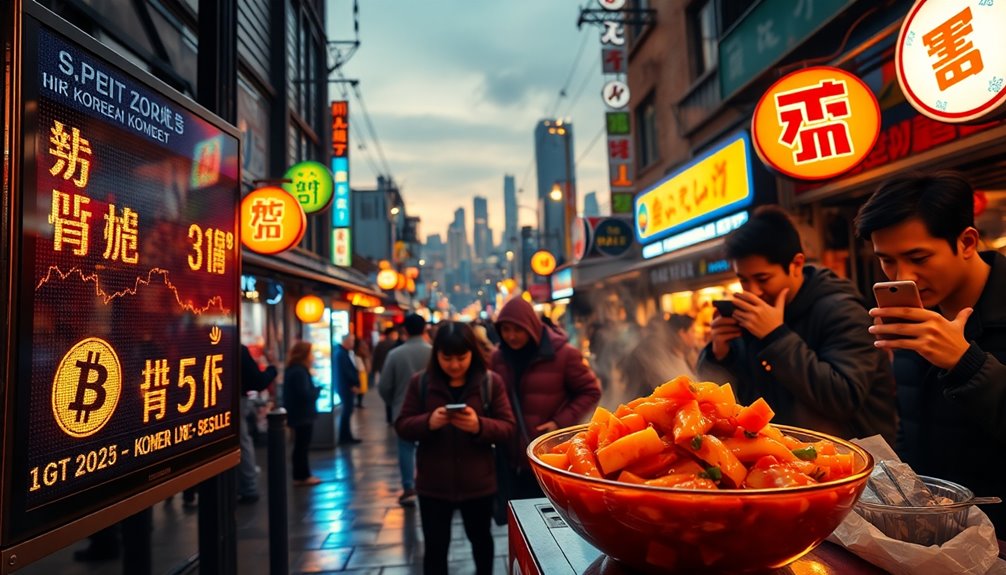
In South Korea, Bitcoin's Kimchi Premium has surged to a three-year high of 12%, highlighting a significant price gap with international exchanges. This premium results from the country's strict capital controls and lack of a futures market, which limits arbitrage opportunities. Local investors dominate the crypto space, cushioning against large sell-offs. With economic uncertainty and trade tensions influencing trends, you'll discover more about how these factors shape the market dynamics if you stick around.

Get hardware and tech essentials delivered free — and shop member deals
- Fast, free delivery on millions of items
- Access to Prime Big Deal Days deals on October 6–7
- Prime Video, Amazon Music and more included
Key Takeaways
- The Kimchi Premium represents a 12% price difference for Bitcoin on South Korean exchanges compared to international markets, a three-year high.
- This premium is not driven by local demand but by Bitcoin's conversion to USD amid a strong US dollar.
- South Korea's strict capital controls and lack of a crypto futures market limit arbitrage opportunities and influence market dynamics.
- Retail investors dominate the South Korean crypto market, preventing large-scale sell-offs during global downturns.
- Future regulatory changes and global economic conditions may impact the Kimchi Premium and its relationship with international Bitcoin markets.
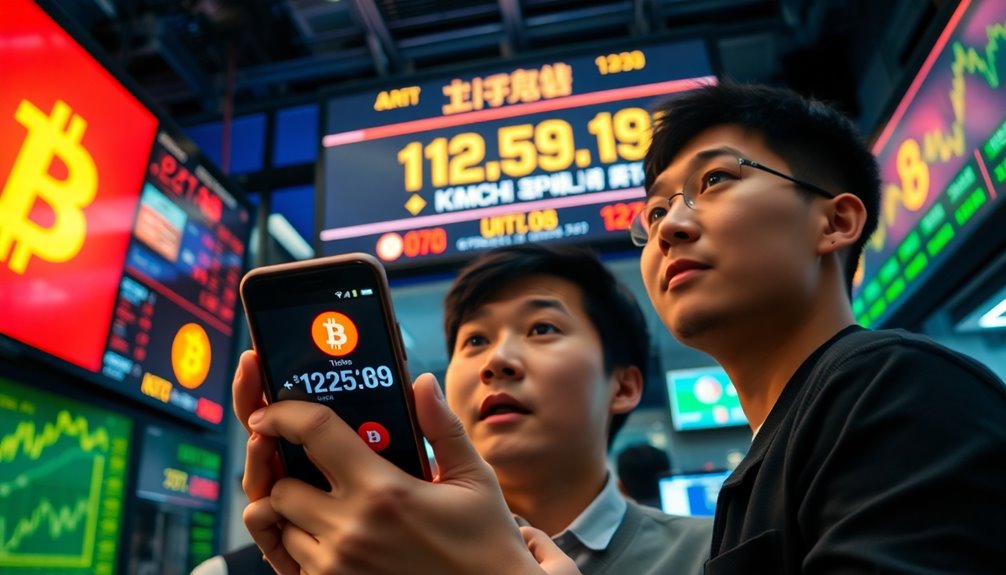
When you glance at Bitcoin prices in South Korea, you might notice something unusual: the Kimchi Premium. This term refers to the price difference between Bitcoin on South Korean exchanges and international ones. Named after the popular Korean dish, the phenomenon first appeared in early 2016 and has since become a noteworthy aspect of the crypto landscape.
Right now, the Kimchi Premium has surged to a three-year high of 12%, despite Bitcoin's sharp decline to around $95,000.
Interestingly, this premium isn't fueled by a spike in demand from local traders. Instead, it's largely driven by Bitcoin being converted to USD. The strong US dollar valuation index (DXY) contributes to this trend, creating a unique market dynamic. Recent trends indicate that the Kimchi Premium often reflects strong demand in South Korea's crypto market.
Structural constraints, like strict capital controls and the lack of a crypto futures market in South Korea, also play a significant role in maintaining the premium. These factors limit arbitrage opportunities, making it challenging to capitalize on price differences.
South Korea's crypto market primarily consists of retail investors, which means large-scale sell-offs are rare. Without a crypto futures market, global downturns don't trigger cascading liquidations in the country.
The Kimchi Premium reflects underlying market forces that extend beyond simple demand. Economic uncertainty and trade tensions, particularly related to ongoing US trade tariffs, may cause investors to convert Bitcoin to USD instead of KRW.
Historically, the Kimchi Premium reached its highest point of 54.48% in January 2018. By early 2017, there was no noticeable price difference between South Korea and other markets, but the landscape has changed.
The premium allows traders to profit from price discrepancies, showcasing the unique dynamics of South Korea's crypto market. Its fluctuations can significantly impact Bitcoin's global price movements and overall market sentiment.
Top picks for "south korea bitcoin"
As an affiliate, we earn on qualifying purchases.
Conclusion
As the Kimchi Premium reaches a three-year high, South Korean investors are feeling the thrill of potential profits. Picture a tech-savvy young professional, who bought Bitcoin at a low price, now watching the market soar higher than ever. With this premium, they could sell their holdings for a significant gain, turning dreams of financial freedom into reality. In this volatile landscape, the allure of Bitcoin continues to captivate those ready to seize the opportunity.
Fall Picks
fall essentials
As an affiliate, we earn on qualifying purchases.