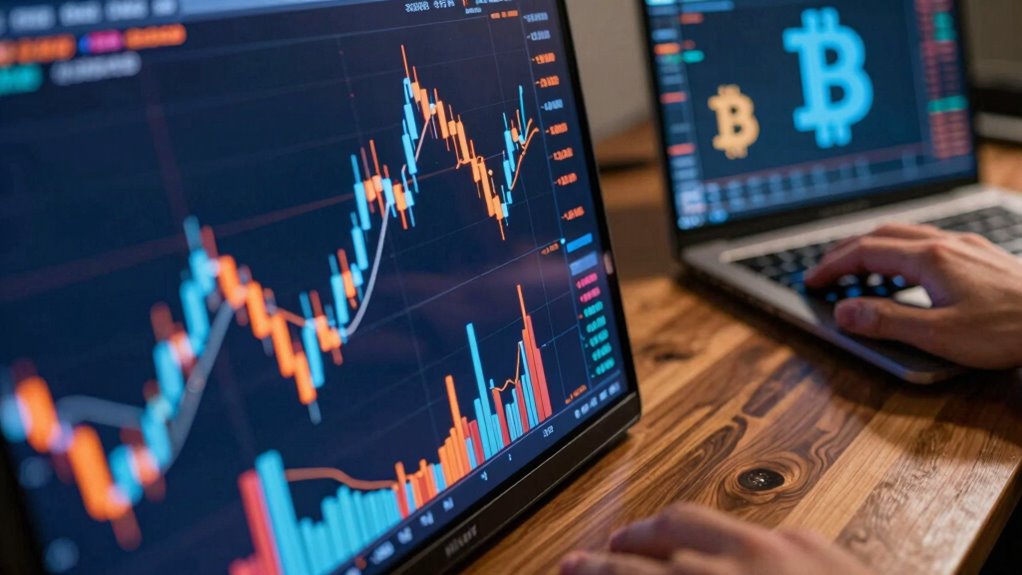
Bitcoin’s rapid price swings attract traders looking for quick profits by buying low and selling high within short time frames. At the same time, long-term holders see the volatility as part of the process, viewing dips as buying opportunities for future growth. Both groups are drawn in by the market’s lively nature driven by news, social media, and sentiment shifts. If you want to understand how these dynamics keep Bitcoin appealing, keep exploring these factors further.

Get hardware and tech essentials delivered free with Prime
- Fast, free delivery on millions of items
- Prime Video, Amazon Music and more included
- Member-only deals all year
Key Takeaways
- Traders seek quick profits by exploiting rapid price swings in Bitcoin’s volatile market.
- Long-term holders view volatility as buying opportunities during dips, expecting future growth.
- Both are influenced by market sentiment shifts driven by news, social media, and regulatory developments.
- Volatility offers the potential for high returns, attracting traders, while long-term believers tolerate swings for long-term gains.
- External factors like regulations and news cause rapid price movements, appealing to traders and long-term investors alike.

Bitcoin’s notorious volatility continues to draw both traders seeking quick gains and long-term holders confident in its potential. You might notice that its price swings can be dramatic in a short period, creating opportunities for profit but also posing risks. For traders, this constant fluctuation keeps the market lively, offering chances to buy low and sell high within a single day or even hours. They thrive on market sentiment shifts, which can be driven by news, social media, or sudden market movements. These rapid changes in sentiment often lead to quick price spikes or drops, fueling their strategies for short-term gains. On the other hand, long-term holders see volatility differently. They believe that Bitcoin’s fundamental value will grow over time, despite the wild swings. For them, the price volatility is simply part of the process, not a deterrent. They often view dips as buying opportunities, confident that Bitcoin’s overall trajectory is upward. This dual perspective is what keeps the market dynamic, with both groups reacting to the same price movements but for different reasons. Additionally, understanding the market sentiment shifts and their impact on price fluctuations can help both traders and holders make more informed decisions. Recognizing how yarn weight and stitch type influence the perception of value and risk can also provide insights into market behavior beyond cryptocurrencies. Moreover, awareness of credit scores and interest rates can be useful when considering opportunities to leverage or finance investments in this volatile space. Regulatory impact plays an essential role in shaping Bitcoin’s volatility. When governments or financial authorities announce new regulations or crackdowns, you’ll likely see sharp price reactions. Positive regulatory news, such as acceptance by a major country or clearer legal frameworks, can boost confidence and drive prices higher. Conversely, restrictions or bans tend to trigger panic selling, rapidly driving prices down. These regulatory impacts contribute to the unpredictable nature of Bitcoin’s market, adding another layer of volatility that traders capitalize on. They often react swiftly to news, adjusting their positions to minimize losses or maximize gains. Long-term holders, meanwhile, may see regulatory developments as signals of mainstream acceptance or potential hurdles, influencing their confidence in Bitcoin’s future. Despite the uncertainty caused by regulatory impacts, many believe that Bitcoin’s decentralized nature will help it withstand government interference over time, which adds to the overall resilience seen in its price movements.
As an affiliate, we earn on qualifying purchases.
Frequently Asked Questions
How Does Bitcoin’s Volatility Compare to Traditional Assets?
Bitcoin’s volatility is much higher than traditional assets like stocks or gold. This means your investments can swing wildly in value, driven by market sentiment and regulatory impacts. When regulations tighten, prices often drop sharply, but positive news can lead to rapid increases. This unpredictability attracts traders seeking quick gains, while long-term holders see potential in its growth despite the risks. Overall, Bitcoin’s volatility makes it a dynamic but risky asset.
What Are the Risks of Holding Bitcoin Long-Term?
Holding Bitcoin long-term involves risks like market sentiment swings and regulatory impacts. You might face sharp price drops if investor confidence wanes or new regulations tighten, making your investment less secure. While Bitcoin’s potential for growth remains, these factors can cause significant volatility, so you should stay informed on market trends and regulatory changes to better manage your risk and protect your long-term investment.
How Do Traders Capitalize on Bitcoin’s Price Swings?
Imagine riding a roller coaster—traders do the same with Bitcoin’s price swings. You capitalize on these movements by analyzing market sentiment and using leverage strategies to amplify gains. When prices surge, you sell high; during dips, you buy low. Sharp volatility creates opportunities for quick profits, making it essential to stay alert and act swiftly. By mastering these tactics, you turn Bitcoin’s wild swings into a profitable adventure.
Does High Volatility Affect Bitcoin’s Adoption as a Currency?
High volatility can hinder Bitcoin’s adoption as a currency because merchants might hesitate to accept it due to unpredictable value swings. You may find that some businesses avoid integrating Bitcoin because of regulatory impact concerns, fearing sudden legal changes. While volatility attracts traders seeking quick profits, it creates uncertainty for long-term users, making widespread merchant acceptance more challenging. This instability can slow down Bitcoin’s goal of becoming a stable, reliable currency.
What Tools Do Traders Use to Predict Bitcoin’s Volatility?
Imagine riding a roller coaster—traders use tools like technical analysis and monitor market sentiment to anticipate Bitcoin’s wild swings. They analyze charts, candlestick patterns, and moving averages to spot potential shifts. Market sentiment gauges investor mood, helping predict sudden price jumps or drops. By combining these tools, traders stay alert to volatility, making smarter decisions amid Bitcoin’s unpredictable ride.
As an affiliate, we earn on qualifying purchases.
Conclusion
So, you see, Bitcoin’s wild swings are like a roaring tide—sometimes intimidating, sometimes full of opportunity. Whether you’re riding the waves as a trader or anchoring yourself as a long-term holder, its volatility keeps the game exciting and unpredictable. Embrace the storm, because in this unpredictable sea, those who navigate wisely can find treasures hidden within the chaos. After all, in Bitcoin’s dance of volatility, every step is a chance to strike gold.
As an affiliate, we earn on qualifying purchases.
As an affiliate, we earn on qualifying purchases.
Halloween Picks
halloween
As an affiliate, we earn on qualifying purchases.