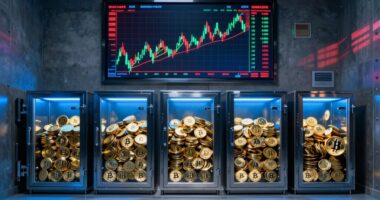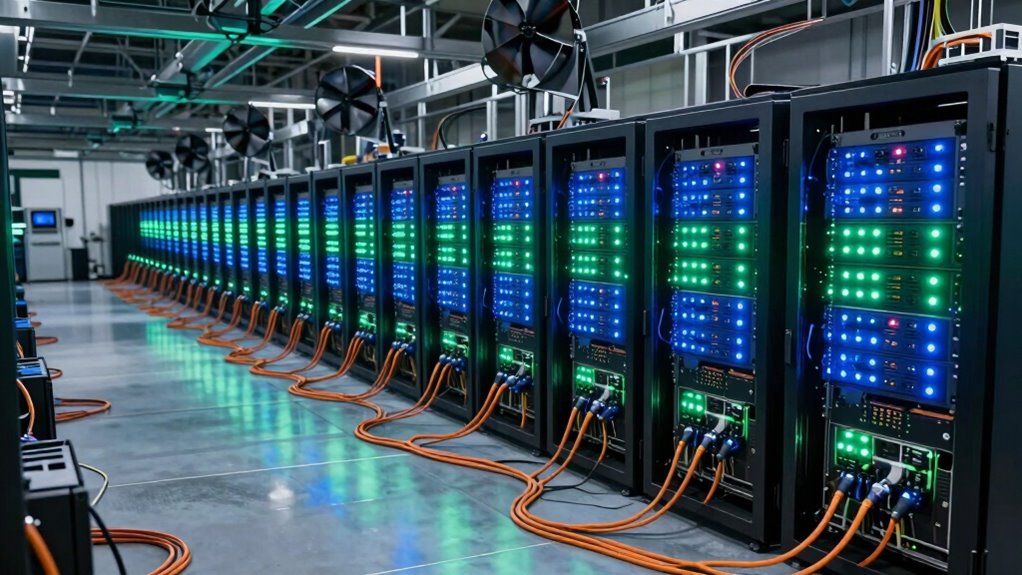

Bitcoin mining economics depend on solving cryptographic puzzles, with miners vying for rewards like new bitcoins and transaction fees. As demand and bitcoin prices rise, miners invest in advanced hardware and more electricity to stay competitive. Efficient hardware reduces costs and environmental impact, but high energy use remains a concern. Market fluctuations and technological progress shape profitability and sustainability. To understand how all these factors work together, explore further to see how they influence the industry’s future.

Get hardware and tech essentials delivered free with Prime
- Fast, free delivery on millions of items
- Prime Video, Amazon Music and more included
- Member-only deals all year
Key Takeaways
- Miners compete to solve cryptographic puzzles, earning rewards in bitcoins and transaction fees, incentivizing participation.
- The fixed supply cap of 21 million bitcoins influences scarcity, market value, and mining incentives.
- Hardware advancements, especially ASICs, improve efficiency, profitability, and reduce energy consumption over time.
- Market demand and bitcoin price fluctuations determine mining profitability and activity levels.
- Environmental impact persists due to high energy use, prompting industry shifts toward renewable energy sources and efficiency.
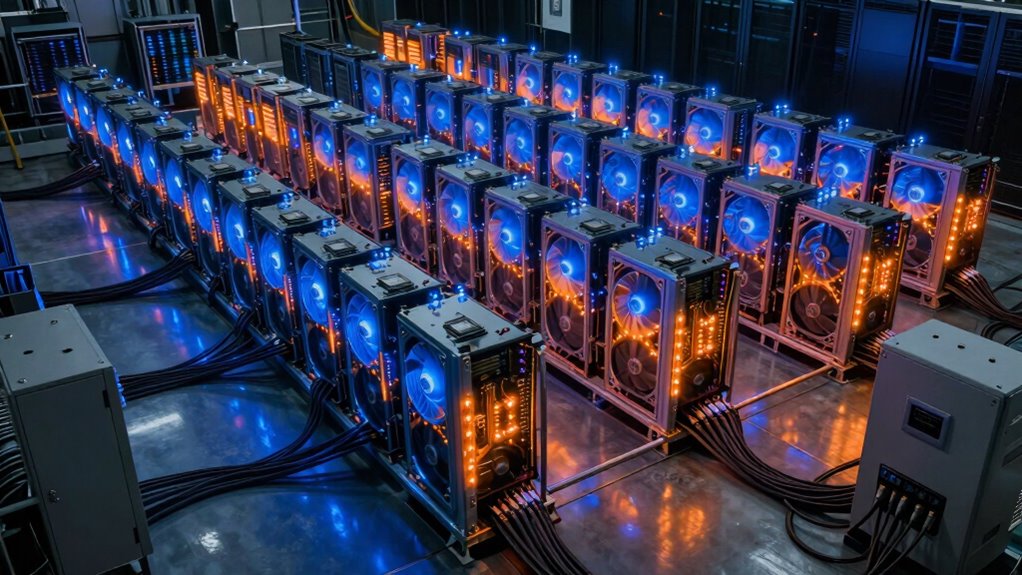
Bitcoin mining economics might seem complex at first, but understanding the core principles reveals a straightforward system driven by supply, demand, and technological efficiency. At its heart, mining involves solving complex cryptographic puzzles to verify transactions and add new blocks to the blockchain. Miners compete to complete these puzzles first, and the reward they receive is newly minted bitcoins plus transaction fees. This process creates a predictable supply schedule, with the total bitcoin supply capped at 21 million, which influences its value and market dynamics.
Bitcoin mining relies on supply, demand, and technological efficiency, with rewards capped at 21 million bitcoins.
As demand for bitcoin rises, so does the incentive to mine. Higher prices mean that even expensive electricity and advanced hardware can generate profits, encouraging more miners to participate. Conversely, when bitcoin’s price drops, some miners may find it unprofitable to continue, especially if their operational costs are high. This ebb and flow of mining activity help balance supply with market demand, reinforcing the economic model’s responsiveness.
Technological advancements play an essential role in shaping this landscape. Over time, miners have adopted more efficient hardware—moving from general-purpose computers to specialized ASICs (Application-Specific Integrated Circuits). These advancements drastically reduce energy consumption per unit of computational power, making mining more environmentally sustainable and economically viable. As newer, more efficient hardware emerges, miners can produce more bitcoins for less energy, which influences the overall environmental impact of mining operations. Hardware efficiency is a critical factor in determining the sustainability and profitability of mining. Additionally, innovations in energy consumption reduction techniques are vital for addressing environmental concerns associated with mining. Incorporating renewable energy sources into mining farms is increasingly seen as a strategic move to enhance sustainability and reduce ecological impact. Moreover, understanding the cost structure of mining operations helps in assessing long-term viability amid fluctuating bitcoin prices.
However, the environmental impact remains a contentious issue. Because mining requires significant computational power, it consumes large amounts of electricity, often derived from non-renewable sources. This consumption contributes to carbon emissions and environmental degradation in regions where electricity production relies heavily on fossil fuels. Technological advancements, while improving efficiency, don’t eliminate the environmental footprint entirely. They can, however, make mining more sustainable if the industry shifts toward cleaner energy sources. Some miners are already investing in renewable energy to reduce their carbon footprint, recognizing that long-term profitability depends on sustainable practices. Moreover, ongoing research into hardware design aims to further optimize mining equipment for energy efficiency.
In essence, the economics of bitcoin mining are a balancing act between the supply schedule, market demand, hardware efficiency, and environmental considerations. As technology progresses and energy sources become greener, the system adapts, but the core principles—driven by supply, demand, and technological efficiency—remain central to understanding how bitcoin mining really works.
As an affiliate, we earn on qualifying purchases.
Frequently Asked Questions
How Does Bitcoin’s Halving Event Impact Mining Profitability?
When Bitcoin’s halving occurs, your mining profitability drops because the block reward halves, meaning you earn fewer bitcoins per block. This often causes market volatility, which can further impact your earnings. To stay profitable, you need efficient hardware and low electricity costs. The reduced rewards may push some miners out of the market, but if the price rises, your potential profits could recover or even grow over time.
What Are the Environmental Implications of Bitcoin Mining?
You should know that Bitcoin mining has significant environmental implications. It consumes a lot of energy, increasing its carbon footprint, especially when powered by fossil fuels. However, using renewable energy sources like wind or solar can reduce this impact considerably. By choosing greener energy options, you can help lower the environmental toll of mining and promote sustainability within the crypto community.
How Do Mining Pools Influence Individual Miners’ Earnings?
Imagine a vast, shimmering pond where individual drops merge to create ripples—mining pools act similarly, pooling your resources with others. This collaboration boosts your chances of earning pool rewards, but it also means your share of the rewards is smaller, depending on your contribution. By joining a pool, you align with miner collaboration, increasing your odds of success while sharing gains, making the process more consistent yet less individually rewarding.
What Technological Advancements Are Shaping Bitcoin Mining Efficiency?
You’re seeing technological advancements like more energy-efficient hardware, which boost mining efficiency by reducing costs and increasing output. Upgraded hardware durability means miners can operate longer without failure, saving money. Cryptocurrency regulations influence your choices, as they can limit hardware imports or impose restrictions, affecting your ability to upgrade. These innovations and policies together shape your mining success, making it more sustainable and profitable in the evolving landscape.
How Do Geopolitical Factors Affect Bitcoin Mining Operations?
Geopolitical factors profoundly impact your Bitcoin mining operations. Regulatory challenges in different countries can lead to sudden bans or restrictions, making it risky to operate. Geopolitical instability, like conflicts or economic sanctions, can disrupt supply chains or cause power shortages, increasing operational costs. Staying adaptable and monitoring international political climates helps you mitigate these risks, ensuring your mining activities remain sustainable despite global uncertainties.
energy-efficient Bitcoin mining rig
As an affiliate, we earn on qualifying purchases.
As an affiliate, we earn on qualifying purchases.
Conclusion
Now that you understand the ins and outs of Bitcoin mining economics, you see it’s like tending a vintage garden—constant effort, careful resource management, and patience yield the bloom of profit. Just as a miner keeps their pickaxe sharp, you stay alert to market shifts and technological upgrades. Remember, in this game, the landscape shifts faster than a wizard’s spell, so keep your strategies flexible, and you’ll navigate the ever-changing terrain successfully.
renewable energy Bitcoin mining equipment
As an affiliate, we earn on qualifying purchases.
As an affiliate, we earn on qualifying purchases.
As an affiliate, we earn on qualifying purchases.
Halloween Picks
halloween
As an affiliate, we earn on qualifying purchases.