You've likely heard about Bitcoin's rise and fall in El Salvador, especially after the recent IMF deal. The government's shift from making Bitcoin mandatory legal tender to offering it as a voluntary option has stirred conversations about the future of digital currency in the country. With ongoing volatility and a reevaluation of strategies, you might wonder what this means for businesses and the economy. What comes next could redefine Bitcoin's role in El Salvador.

Get hardware and tech essentials delivered free with Prime
- Fast, free delivery on millions of items
- Prime Video, Amazon Music and more included
- Member-only deals all year
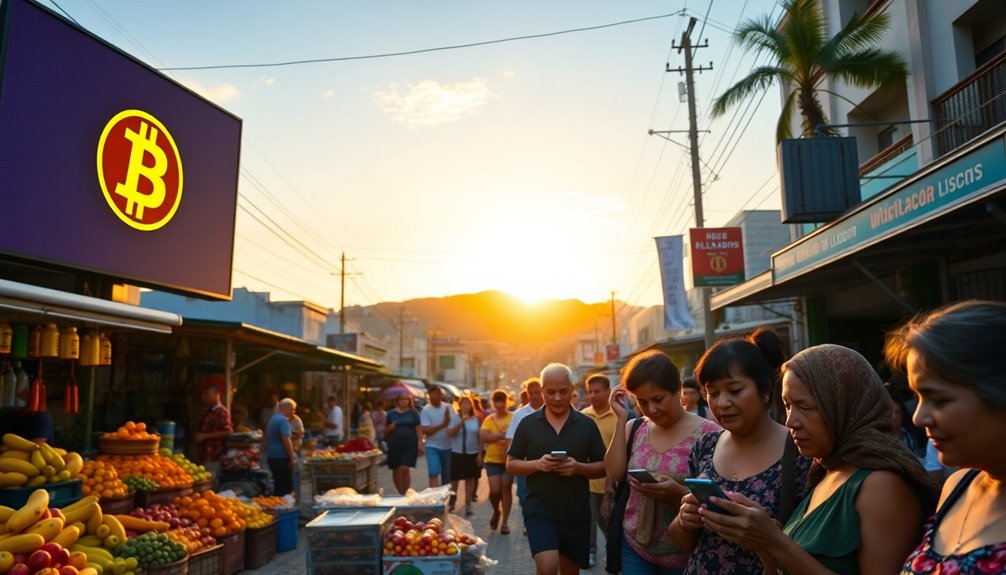
Since the IMF deal, Bitcoin's status in El Salvador has shifted significantly, transitioning from mandatory legal tender to a voluntary option for businesses. This change means that while Bitcoin remains legal tender, businesses now have the choice to accept it or not, easing some of the pressure that came with the previous law. The IMF's $1.4 billion loan necessitated these amendments to reduce the country's exposure to Bitcoin and ensure a more stable economic environment.
The government of El Salvador continues to express its commitment to Bitcoin, acquiring it for national reserves even after the mandatory acceptance was rescinded. This shows that while the landscape has changed, the government still sees value in holding Bitcoin as part of its financial strategy. You might notice Bitcoin being used in daily transactions, but the shift to voluntary acceptance has led to a more cautious approach among businesses. El Salvador's Bitcoin adoption has become a key focus for many other nations considering similar strategies.
The IMF's conditions aimed at economic stabilization are crucial to understanding this shift. The loan seeks to secure additional funds from other international institutions while addressing concerns about Bitcoin's volatility and its potential risks to macroeconomic stability. Initially, the government hoped Bitcoin would reduce remittance costs and enhance financial inclusion, but these goals have only been partially achieved.
Changes have also impacted the Chivo wallet, a key element in El Salvador's Bitcoin initiative. Plans are underway to sell or shut it down, which indicates a reevaluation of the country's digital currency strategy. You'll find that taxes must now be paid in U.S. dollars instead of Bitcoin, aligning with the IMF's requirements and signaling a more traditional fiscal approach.
Despite these challenges, El Salvador continues to invest in Bitcoin for its Strategic Bitcoin Reserve. This ongoing investment reflects a belief in the cryptocurrency's long-term potential, even amidst the volatility. The lessons learned from this experiment are invaluable, particularly for other countries considering the adoption of cryptocurrencies as national currencies.
Market optimism, fueled in part by favorable U.S. crypto policies, might also influence Bitcoin's future in El Salvador. As you look ahead, it's clear that while the legal framework has evolved, the nation's journey with Bitcoin is far from over. The path forward will be closely watched, both domestically and internationally, as it unfolds in a rapidly changing financial landscape.
Products Worth Considering

Trezor Safe 7 Crypto Hardware Wallet with Bluetooth and Color Touchscreen

Trezor Safe 5 Crypto Hardware Wallet with Color Touchscreen

Ledger Flex + Folio Crypto Hardware Wallet
As an affiliate, we earn on qualifying purchases.