

When crypto traders talk about “chop” and “consolidation,” they mean a sideways price movement where the market isn’t trending up or down. Prices stay within a narrow range, and technical indicators often give conflicting signals, making it hard to predict the next move. It’s a period of indecision, where bulls and bears struggle for control. Recognizing these phases can help you spot potential breakouts—if you keep exploring, you’ll get better at steering through them.

Get hardware and tech essentials delivered free with Prime
- Fast, free delivery on millions of items
- Prime Video, Amazon Music and more included
- Member-only deals all year
Key Takeaways
- “Chop” refers to sideways price movement with no clear trend, often featuring rapid, unpredictable swings.
- “Consolidation” is a market phase where prices trade within a narrow range after a significant move.
- Both indicate market indecision, making trend prediction challenging for traders.
- Recognizing these patterns helps traders anticipate potential breakouts or breakdowns.
- These phases are natural parts of market cycles, requiring careful analysis for effective trading.
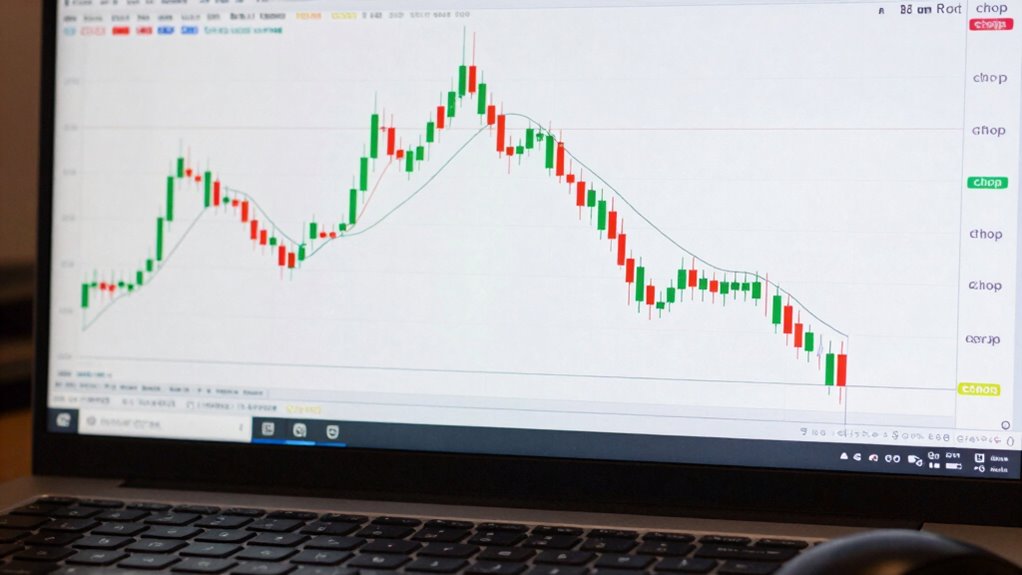
Understanding crypto trading terms is essential if you want to navigate the cryptocurrency market confidently. When traders talk about “chop” and “consolidation,” they’re describing specific price behaviors that can influence your trading decisions. These terms are often used to explain periods of uncertainty where market volatility seems to slow down, and prices hover within a narrow range. Recognizing these patterns can help you avoid false signals and make better-informed trades.
Chop refers to a sideways price movement where the market doesn’t show a clear trend. Instead, prices fluctuate within a relatively tight range, bouncing between support and resistance levels. During chop, technical indicators may give conflicting signals, making it tricky to determine the market’s next move. This period is characterized by high market volatility in terms of rapid, unpredictable price swings, but overall, the trend remains unclear. Traders often see chop as a time of indecision, where neither bulls nor bears have a clear upper hand. It’s important to approach these periods with caution because attempting to trade during chop can lead to false breakouts or whipsaws, where you get stopped out before the trend resumes. Additionally, understanding market volatility can help you better gauge the risk involved during these phases. Recognizing the potential for sudden price shifts is key during such periods. Moreover, observing the natural ebb and flow of market activity can help traders develop patience and adaptive strategies. A good grasp of market cycles can assist in identifying when the market is likely to shift from chop to a clearer trend.
Chop is sideways trading with conflicting signals, making it risky and tricky to predict the next move.
Consolidation, on the other hand, is a phase where the market stabilizes after a significant move, with prices trading within a confined range. This phase often occurs after sharp price movements as traders digest the previous trend. Technical indicators like Bollinger Bands or RSI may show a flattening or narrowing during consolidation, signaling that the market is taking a breather. While consolidation might seem dull, it’s a *vital* phase because it often precedes a breakout or breakdown. When the price finally moves out of the consolidation zone, it can trigger a strong trend in either direction. Recognizing consolidation helps you prepare for these potential breakouts, which can be highly profitable if timed correctly. Being aware of market patterns can improve your ability to anticipate these movements and act accordingly.
In both chop and consolidation, understanding how market volatility behaves is *fundamental*. These periods can feel frustrating because they lack clear direction, but they’re part of the natural ebb and flow of market activity. By paying attention to technical indicators and price action, you can identify when the market is simply resting before the next move. Whether you’re trading during chop or consolidation, awareness of these patterns allows you to manage risk more effectively and avoid impulsive trades. Ultimately, mastering these terms helps you read the market better and stay ahead of the unpredictable nature of crypto trading.
cryptocurrency trading indicator tools
As an affiliate, we earn on qualifying purchases.
As an affiliate, we earn on qualifying purchases.
Frequently Asked Questions
How Can Traders Identify True Consolidation Zones?
You can identify true consolidation zones by observing clear range boundaries, where price fluctuates within a defined area without breaking out or down. Look for periods with low market noise, indicating reduced volatility and indecision. When the price consistently stays between support and resistance levels, and volume remains steady, you’re likely in a genuine consolidation zone. This signals a potential breakout or trend continuation once the range is eventually broken.
What Are Common Mistakes When Trading in Chop Markets?
You often make the mistake of forcing trades in chop markets, ignoring market sentiment and trading psychology. Instead of waiting for clear signals, you jump in prematurely, risking losses when price action is unpredictable. To avoid this, stay patient, recognize when the market is in consolidation, and focus on the psychological aspect—controlling emotions helps you resist impulsive trades, keeping you aligned with the true market trend.
How Does Volatility Affect Chop and Consolidation Phases?
Volatility acts like a rollercoaster in chop and consolidation phases, shaking up market sentiment and causing liquidity fluctuations. When prices swing wildly, it’s harder to identify clear trends, making the market feel like a swirling storm. You might find yourself caught in unpredictable moves, with liquidity drying up or surging unexpectedly. This constant flux amplifies uncertainty, challenging your ability to make confident trades during these choppy periods.
Can Chop Patterns Predict Future Breakout Points?
Chop patterns alone can’t reliably predict future breakout points because market momentum often shifts unexpectedly within a tight price range. While these patterns indicate indecision and prolonged consolidation, they don’t guarantee a breakout. You should watch for increased volatility and volume, which signal potential shifts in momentum. Combining chop analysis with other indicators helps you better anticipate when the market might break out of its current range.
What Tools Are Best for Analyzing Consolidation Periods?
You should use tools like volume analysis and market sentiment indicators to analyze consolidation periods effectively. Volume spikes often signal potential breakouts, while a decrease suggests indecision. Market sentiment tools, like social media trends or sentiment indexes, help gauge trader confidence during these phases. Combining these tools gives you a clearer picture of whether the market is preparing for a move or remaining in a sideways pattern, aiding your trading decisions.
Bitcoin Bollinger Bands indicator
As an affiliate, we earn on qualifying purchases.
As an affiliate, we earn on qualifying purchases.
Conclusion
So, when crypto traders talk about chop and consolidation, they’re describing the wildest rollercoaster ride your trading life has ever seen—an intense, nerve-wracking dance where prices bounce like crazy and momentum stalls in its tracks. It’s like trying to tame a wild beast that can flip from calm to chaos in seconds. Mastering this chaos isn’t just important; it’s the secret to surviving and thriving in the unpredictable world of crypto trading!
crypto market volatility monitor
As an affiliate, we earn on qualifying purchases.
As an affiliate, we earn on qualifying purchases.
As an affiliate, we earn on qualifying purchases.
Halloween Picks
halloween
As an affiliate, we earn on qualifying purchases.