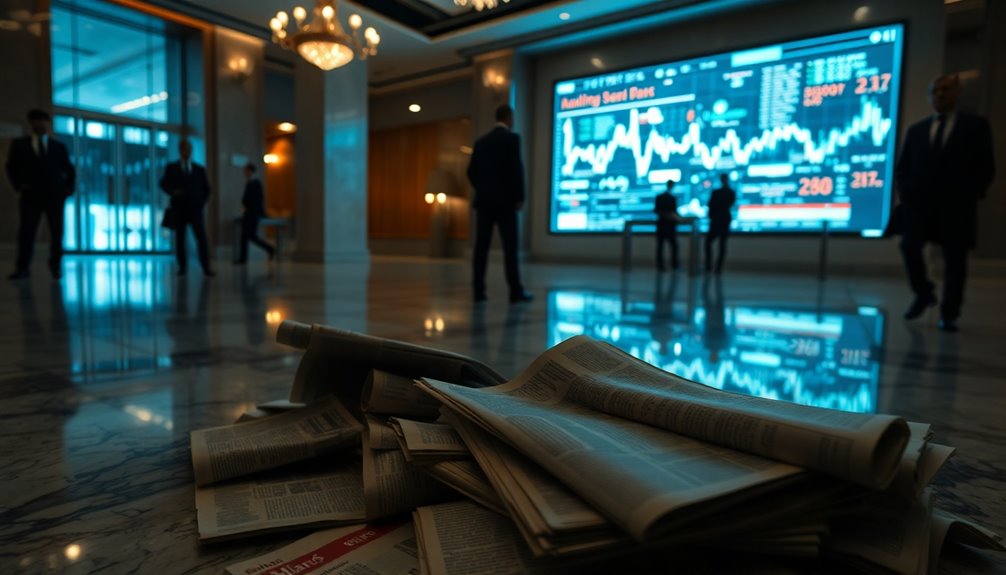

You might find it surprising that the rise of AI-driven strategies in financial institutions could lead to heightened risks of bank runs. As firms rely on similar AI models, their trading behaviors become closely linked, creating a potential for panic during market stress. This interconnectedness raises crucial questions about the stability of our financial systems. What implications does this have for regulatory oversight and investor confidence? Let's explore further.

Get hardware and tech essentials delivered free — and shop member deals
- Fast, free delivery on millions of items
- Access to Prime Big Deal Days deals on October 6–7
- Prime Video, Amazon Music and more included

As financial institutions increasingly adopt artificial intelligence, the landscape of banking stability faces new challenges. You might be surprised to learn that 75% of UK financial firms are now using AI, a significant jump from just 53% in 2022. While this technology promises enhanced efficiency and predictive capabilities, it also raises concerns regarding market volatility, particularly in times of stress, which can directly impact the stability of banks.
One key issue lies in the way AI can amplify market speed and volatility. With multiple firms relying on similar AI models, crowded trades can occur, leading to correlated trading behaviors that exacerbate market movements. You can imagine how this interconnectedness might create a domino effect, where one firm's struggles ripple through the whole system, potentially triggering a bank run.
Moreover, AI-driven trading strategies can create feedback loops that further amplify market stress, making the financial landscape precarious. The risks associated with AI-generated content don't stop there. Generative AI models can evolve autonomously, leading to unpredictable outcomes that might surprise even the most seasoned financial professionals. The latest AI developments can also enable analysis of diverse datasets, which may inadvertently amplify these risks.
You need to consider how this unpredictability could exploit vulnerabilities in other firms' trading algorithms, heightening the risk of market manipulation and destabilization. The potential for sophisticated manipulation becomes a real concern, especially in a landscape already marked by uncertainty.
Regulators are aware of these challenges and are actively working to mitigate them. The UK's approach focuses on pro-innovation and pro-safety regulations aimed at managing AI risks without stifling technological progress. They're contemplating stress tests to assess how AI models interact under duress, ensuring that firms are prepared for adverse conditions.
However, there's still a need for regulatory clarification, particularly around data management and model risk. As you navigate this evolving landscape, keep in mind that a third of AI use cases involve third-party implementations, which increases reliance on external providers. Disruptions to these critical service providers could directly impact financial stability.
Cybersecurity risks also loom large, as AI can both enhance and compromise the systems meant to protect financial institutions. In light of all these factors, it's clear that while AI offers substantial benefits, it also presents significant risks that could heighten the chances of bank runs. The future of finance depends on striking the right balance between innovation and stability.
AI trading algorithms for investors
As an affiliate, we earn on qualifying purchases.
As an affiliate, we earn on qualifying purchases.
financial market stress testing tools
As an affiliate, we earn on qualifying purchases.
As an affiliate, we earn on qualifying purchases.
cybersecurity software for financial institutions
As an affiliate, we earn on qualifying purchases.
As an affiliate, we earn on qualifying purchases.
regulatory compliance software for banks
As an affiliate, we earn on qualifying purchases.
As an affiliate, we earn on qualifying purchases.
Fall Picks
fall essentials
As an affiliate, we earn on qualifying purchases.






![Consumer Trends And Innovations In Tying Gym Shorts [Video]](https://dailycoinfeed.com/wp-content/uploads/2026/09/consumer-trends-and-innovations-in-tying-gym-shorts-video-featured-260x140.jpg)