To avoid feeling overwhelmed, focus on the basics: the body shows opening and closing prices, while wicks mark high and low points. Recognize whether candles are bullish (green/white) or bearish (red/black), reflecting market sentiment. Keep it simple by watching key patterns and using common indicators like moving averages or RSI to confirm signals. As you practice, you’ll start understanding the story each candle tells—if you keep exploring, you’ll uncover even more insights.

Get hardware and tech essentials delivered free — and shop member deals
- Fast, free delivery on millions of items
- Access to Prime Big Deal Days deals on October 6–7
- Prime Video, Amazon Music and more included
Key Takeaways
- Focus on basic candlestick components: body, wicks, and their colors to understand market sentiment easily.
- Start with simple patterns and gradually learn their meanings without trying to memorize everything.
- Use common technical indicators like moving averages to confirm candlestick signals.
- Recognize that candles reflect trader emotions, helping you interpret market psychology without overcomplicating.
- Practice consistently and be patient; understanding comes with experience, not immediate mastery.
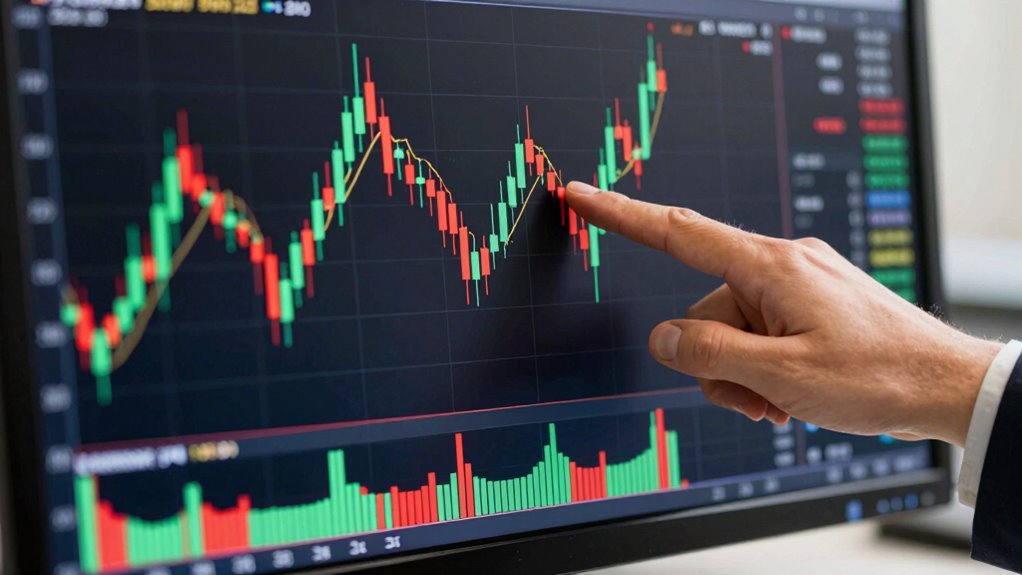
Learning to read a candlestick chart can seem intimidating at first, but with the right approach, you’ll find it becomes much simpler. These charts are powerful tools that reveal market psychology—how traders feel and react at any given moment—through visual cues. As you start, focus on understanding the basic components: the body, wicks, and color. The body shows the opening and closing prices, while the wicks or shadows indicate the high and low points within a specific period. A green or white candle generally signals a bullish move, meaning buyers are in control, while a red or black candle indicates bearishness, with sellers leading the charge. Recognizing these simple signals helps you grasp the current market sentiment without feeling overwhelmed.
Once you’re comfortable with the basics, you can begin to incorporate technical indicators to add context to what you see on the chart. Moving averages, RSI (Relative Strength Index), and MACD (Moving Average Convergence Divergence) are common tools that help you identify trends and potential reversals. These indicators complement candlestick patterns by confirming whether the market is gaining momentum or losing strength. For example, a bullish engulfing pattern combined with an upward-trending moving average can reinforce your confidence in a buying decision. Instead of trying to memorize every pattern or indicator at once, learn to interpret them in combination. This way, you avoid confusion and build a clearer picture of market dynamics.
Market psychology plays a crucial role in candlestick analysis. It’s about understanding that each candlestick reflects the collective behavior of traders—fear, greed, hope, and panic. When you see a series of small-bodied candles with long wicks, it might suggest indecision or a battle between bulls and bears. Conversely, long-bodied candles indicate strong conviction. By paying attention to these cues, you develop intuition about whether traders are likely to continue the current trend or prepare for a reversal. Remember, no single candle or indicator guarantees a move, but together they form a narrative that guides your trading decisions. Recognizing market psychology as a fundamental aspect helps you interpret the signals more effectively. Additionally, understanding the traditional principles of candlestick formations rooted in cultural symbolism can deepen your insights into trader behavior. Developing an awareness of these psychological cues can also help you anticipate potential market movements before they become apparent through technical signals.
Ultimately, the key to reading candlestick charts without feeling overwhelmed is practice and patience. Focus on the most common patterns and how they relate to market psychology and technical indicators. Over time, you’ll start to see the story behind each price move and gain confidence in your analysis. Keep your approach simple, learn gradually, and don’t rush the process. With consistent effort, reading candlestick charts will become an intuitive part of your trading toolkit.
As an affiliate, we earn on qualifying purchases.
Frequently Asked Questions
What Are the Common Candlestick Patterns to Look For?
You should look for common candlestick patterns like the hammer and engulfing pattern, which indicate bullish signals, suggesting a potential price rise. Conversely, doji and shooting star patterns signal bearish signals, hinting at a possible decline. Recognizing these patterns helps you quickly interpret market sentiment. Focus on these key formations, and over time, you’ll feel more confident reading candlestick charts without feeling overwhelmed.
How Do I Identify Trend Reversals Using Candlestick Charts?
To identify trend reversals, look for candlestick patterns that signal a shift in market psychology, like doji or hammer formations, especially after a strong trend. Confirm these signals with reversal confirmation, such as volume spikes or a change in momentum. Be patient and wait for multiple signals to align before acting, ensuring you accurately spot a reversal rather than a temporary pullback.
Can Candlestick Charts Be Used for All Types of Trading?
Yes, candlestick charts can be used for all types of trading, from stocks to forex and cryptocurrencies. You’ll find that understanding market psychology helps interpret candlestick patterns effectively, regardless of trading style. Customizing your charts, like adjusting timeframes or adding indicators, makes it easier to focus on relevant signals and reduces overwhelm. This flexibility allows you to adapt candlestick analysis to your specific trading goals and strategies.
How Do Volume and Candlestick Patterns Work Together?
Think of volume and candlestick patterns as a dance between market psychology and price momentum. When you see a strong candlestick pattern paired with high volume, it signals traders are passionate, fueling a potential trend. Low volume with ambiguous patterns suggests uncertainty. By observing how volume confirms or contradicts candlestick signals, you get a clearer picture of market sentiment and the likely direction, making your trading decisions more confident.
What Software or Tools Are Best for Reading Candlestick Charts?
You should consider using user-friendly software like TradingView or MetaTrader, which offer clear candlestick visuals and customizable indicators. These tools help you interpret market psychology and trading psychology effectively, making it easier to spot patterns and trends. They also include tutorials and alerts, reducing overwhelm. By choosing intuitive platforms, you can build confidence, understand market movements better, and develop disciplined trading strategies without feeling swamped by data.
technical analysis tools for traders
As an affiliate, we earn on qualifying purchases.
As an affiliate, we earn on qualifying purchases.
Conclusion
Think of a candlestick chart as a lighthouse guiding your trading journey. Each candle is a flickering light, revealing the hidden currents of market sentiment. When you learn to interpret these signals, you gain clarity amidst the stormy seas of trading. With patience, you’ll navigate confidently, turning overwhelming chaos into a steady beacon of insight. Trust the symbols, and soon you’ll find yourself sailing smoothly toward your financial goals.
moving average indicator for stock trading
As an affiliate, we earn on qualifying purchases.
As an affiliate, we earn on qualifying purchases.
As an affiliate, we earn on qualifying purchases.
Fall Picks
fall essentials
As an affiliate, we earn on qualifying purchases.