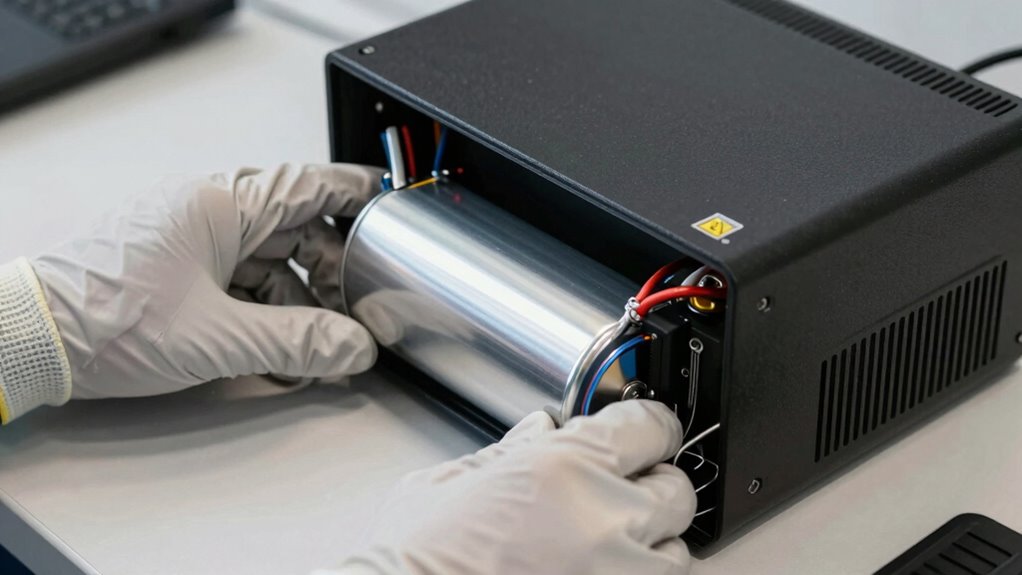

Before replacing your UPS batteries, make certain to unplug the unit and follow the manufacturer’s instructions carefully. Wear gloves and eye protection to handle heavy, corrosive batteries safely. Use surge protectors to guard against electrical spikes and always dispose of old batteries at designated recycling centers to protect the environment. Proper maintenance and safety precautions prevent damage and ensure your UPS works effectively longer. If you keep going, you’ll discover even more essential tips for a safe battery replacement.
Key Takeaways
- Unplug the UPS and disconnect it from power before opening for safety.
- Wear gloves and eye protection when handling heavy, corrosive batteries.
- Follow manufacturer instructions specific to your UPS model for proper replacement.
- Use surge protectors during replacement to prevent electrical damage to devices.
- Recycle old batteries at designated centers to comply with environmental regulations.

Are you prepared to replace your UPS batteries? Before diving into the process, it’s essential to understand what’s involved and how to do it safely. Your UPS (Uninterruptible Power Supply) plays a critical role in protecting your equipment from power outages and surges, so proper maintenance is vital. When the batteries start to fail, replacing them promptly can save you from data loss or hardware damage. But before you remove the old batteries, consider the importance of battery recycling. Old UPS batteries contain hazardous materials, such as lead and acid, which require proper disposal to prevent environmental harm. Recycling not only keeps the environment safe but also guarantees you’re complying with regulations.
Surge protection is another essential aspect to keep in mind during the replacement process. When handling batteries, accidental electrical surges can occur, especially if your power supply isn’t stable. To avoid damage to your UPS or connected devices, unplug the UPS from the wall outlet before opening it up. Use surge protectors on your work area to shield yourself from unexpected electrical spikes. Once you’ve replaced the batteries, guarantee that your UPS is functioning correctly by performing a self-test. Many models have a built-in test feature, which can confirm that the new batteries are working properly and that the system is ready to provide backup power in case of an outage.
Familiarize yourself with the manufacturer’s instructions before starting the replacement. Different UPS models may have specific procedures, and following them minimizes the risk of damage or injury. When removing the old batteries, be cautious—these can be heavy and contain corrosive acid. Wearing gloves and eye protection is recommended. Properly dispose of the used batteries by taking them to a recycling center, never throwing them in the trash. Additionally, understanding battery maintenance best practices can extend the lifespan of your UPS and prevent frequent replacements. Recognizing the hazardous materials in batteries emphasizes the importance of proper handling and disposal to protect both health and the environment. It’s also helpful to stay informed about local regulations regarding battery recycling to ensure compliance. Proper handling and disposal of batteries are crucial steps in maintaining a safe and environmentally responsible recycling process. Replacing UPS batteries isn’t just about swapping out old cells; it involves safe handling, proper disposal, and maintaining surge protection standards. By understanding these key steps, you safeguard your equipment, protect the environment, and guarantee your UPS continues to provide reliable backup power when you need it most.
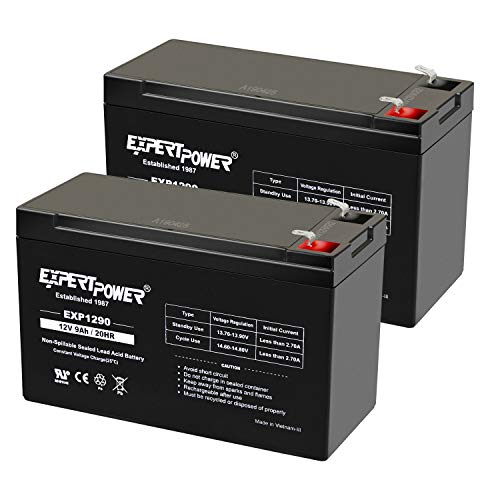
ExpertPower EXP1290, 2 Pack 12V 9AH SLA AGM Rechargeable 12V Battery Backup
- Universal Compatibility: Suitable for various 12V devices
- Long-Lasting Performance: Reliable, maintenance-free, spill-proof
- Easy Installation: F2 terminals, no tools needed
As an affiliate, we earn on qualifying purchases.
As an affiliate, we earn on qualifying purchases.
Frequently Asked Questions
How Often Should UPS Batteries Be Checked for Health?
You should check your UPS batteries for health at least once every three to six months. Regular battery maintenance helps identify issues early, preventing unexpected failures. During these checks, inspect for corrosion, swelling, or leaks, and test the voltage. If your batteries show significant wear or fail the tests, it’s time for battery replacement. Consistent monitoring guarantees your UPS stays reliable and protects your equipment during power outages.
Can I Replace UPS Batteries Myself or Hire a Professional?
Replacing UPS batteries is like juggling flames—it’s doable but risky without proper knowledge. If you’re comfortable working with electronics, you can swap them yourself, ensuring proper battery recycling. However, hiring a professional might be wiser to avoid damage or safety hazards. Consider a cost comparison: DIY saves money but risks errors, while professionals charge more but guarantee a safe, efficient replacement. Always prioritize safety and proper disposal.
What Are the Signs of a Failing UPS Battery?
You’ll notice signs of a failing UPS battery through battery degradation, which causes shorter backup times, and voltage fluctuations, leading to unstable power supply. If your UPS beeps frequently or displays warning messages, it’s a clear sign the battery isn’t performing well. Additionally, if the battery feels swollen or leaks, replace it promptly. Regular testing helps catch these issues early, ensuring your system stays protected.
How Does Temperature Affect UPS Battery Lifespan?
Ever wondered how temperature could secretly shorten your UPS battery’s life? It’s essential because high heat accelerates battery aging, while cold temps can hinder performance. Proper thermal management guarantees consistent calibration and prolongs lifespan. Keep your UPS in a cool, ventilated space, and avoid temperature extremes. By controlling the environment, you safeguard your investment, maintain ideal performance, and delay the need for early replacements—secrets that keep your system running smoothly longer.
Are There Specific Safety Precautions When Replacing UPS Batteries?
When replacing UPS batteries, you should wear safety gear like gloves and eye protection to prevent injury from acid leaks or sparks. Always disconnect power before starting, and handle batteries carefully to avoid damage or spills. Proper battery disposal is essential—never throw used batteries in regular trash. Follow local regulations for recycling. These precautions keep you safe and guarantee environmentally responsible disposal of old batteries.

CyberPower ST425 Standby UPS Battery Backup and Surge Protector
- Power Capacity: 425VA/260W standby UPS
- Output Waveform: Simulated sine wave output
- Outlet Count: 8 NEMA 5-15R outlets
As an affiliate, we earn on qualifying purchases.
As an affiliate, we earn on qualifying purchases.
Conclusion
Replacing your UPS batteries is essential for ensuring uninterrupted power during outages. Did you know that over 70% of UPS failures are due to battery issues? By understanding proper replacement procedures and choosing the right batteries, you can extend your UPS’s lifespan and safeguard your equipment. Don’t wait until it’s too late—regular maintenance and timely replacements keep your backup power reliable when you need it most. Stay proactive and power up with confidence.

EZ on the Earth – Dry Cell Battery Recycling Container – 3.5 Gallon, Battery Disposal Bin with Lid that Holds up to 41.8 lbs Batteries – Recycling Pail with Cardboard Box
- UN Approved Battery Container: Holds various dry cell batteries safely
- Easy Recycling Process: Drop batteries, attach label, send for recycling
- Environmental Protection: Prevents lithium batteries from landfills
As an affiliate, we earn on qualifying purchases.
As an affiliate, we earn on qualifying purchases.

Gastody™ – Chemical Resistant Gloves, Reusable,Heavy Duty Safety Work Gloves,Resist Acid,Oil,Alkali – S-M-L-XL-XXL Size
- High Chemical Protection: Protects against solvents, paints, oils
- Comfortable Fit: Anatomically shaped for long wear
- Cool and Comfortable: Keeps hands cool during use
As an affiliate, we earn on qualifying purchases.
As an affiliate, we earn on qualifying purchases.