To understand a funding rate without confusion, start by noting whether it’s positive or negative. A positive rate means longs pay shorts, signaling bullish market sentiment, while a negative rate indicates bearishness, with shorts paying longs. Watch for sudden changes, as they can suggest shifts in market mood or upcoming price moves. Remember, rates reflect trader expectations and leverage effects. Keep an eye on the trend, and if you’re curious about more tips, there’s plenty to explore ahead.
Key Takeaways
- Check if the funding rate is positive or negative to understand market sentiment (bullish or bearish).
- Observe the rate’s trend over time, not just a single value, to identify shifts in market mood.
- Remember that positive rates mean longs pay shorts, while negative rates mean shorts pay longs.
- Pay attention to sudden rate spikes or drops, as they may signal upcoming price movements.
- Use funding rates alongside other indicators to confirm market direction and avoid confusion.
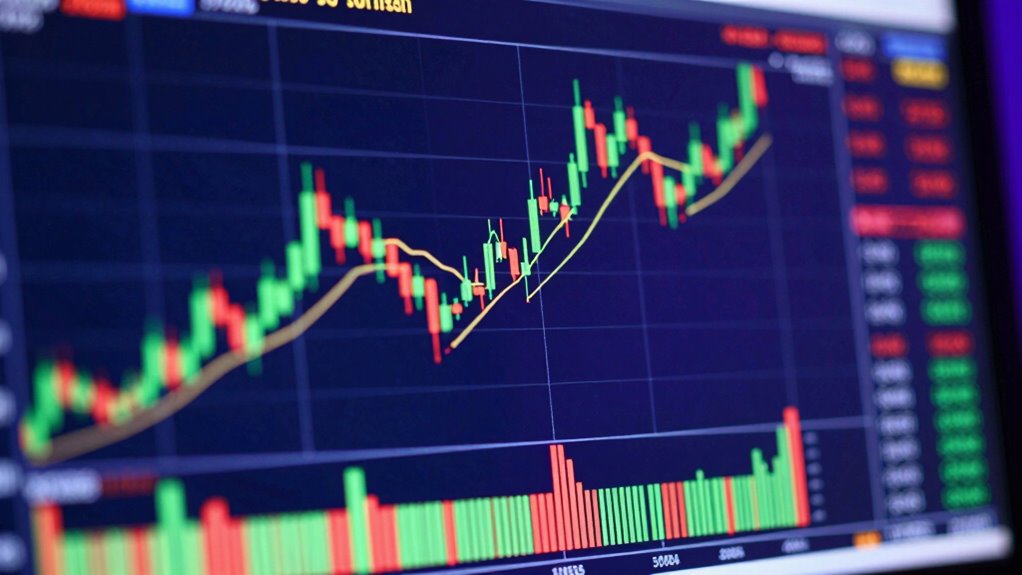
Understanding how to read a funding rate is essential if you want to trade effectively in the cryptocurrency derivatives market. Funding rates are periodic payments exchanged between traders, based on the difference between the perpetual contract price and the spot price. These rates are a vital part of leverage trading on cryptocurrency exchanges, as they help keep the contract price aligned with the underlying asset. When you grasp how funding rates work, you can better anticipate market movements and avoid costly surprises.
Funding rates are typically displayed as a percentage, often calculated on an hourly basis. If the rate is positive, traders with long positions pay those with short positions, signaling that the market is bullish. Conversely, a negative funding rate means short traders pay long traders, indicating a bearish sentiment. It’s important to recognize that these rates fluctuate regularly, often reflecting market sentiment, demand, and supply dynamics. Most cryptocurrency exchanges that support leverage trading clearly show the current funding rate on their trading interface, making it easier for you to monitor and interpret. Additionally, understanding the essential concepts behind funding rates can help you develop better trading strategies.
Funding rates, usually shown hourly, reflect market sentiment—positive rates indicate bullishness, negative rates suggest bearishness.
To read a funding rate effectively, start by checking whether it’s positive or negative. A positive rate suggests that longs are willing to pay a premium, often because traders expect the price to increase. If you’re holding a long position, this could mean additional costs, so you might want to consider your entry point or set stop-losses accordingly. On the other hand, a negative rate indicates that shorts are paying longs, which might be an opportunity if you’re thinking about entering a long position, as your costs could decrease or even become profitable. Recognizing the market sentiment reflected in funding rates can help you make more informed trading decisions.
You should also pay attention to how the funding rate compares to previous rates. Sharp changes can signal shifts in market sentiment, possibly alerting you to upcoming price movements. For example, a sudden spike in positive funding rates might mean traders are overly optimistic, risking a correction. Conversely, persistent negative rates could indicate bearish momentum, prompting caution or a potential short-selling opportunity. Recognizing the role of leverage in funding rates is also crucial, as it amplifies the impact of these rates on your overall trading costs and strategies.
cryptocurrency funding rate indicator
As an affiliate, we earn on qualifying purchases.
As an affiliate, we earn on qualifying purchases.
Frequently Asked Questions
How Often Do Funding Rates Update?
Funding rates update usually every 8 hours, but this can vary depending on the platform. You should stay alert because market volatility and leverage impact how often these updates occur. During high volatility, updates might happen more frequently to reflect rapid price changes. Keep an eye on the funding rate schedule, as understanding these updates helps you manage your leverage impacts and avoid surprises in your trading strategy.
What Factors Influence Funding Rate Changes?
You should know that market sentiment heavily influences funding rate changes, as bullish or bearish trends sway trader positions and demand. Leverage impact also plays a role; higher leverage can amplify funding rate shifts because traders with more leverage are more sensitive to price movements. When the market sentiment shifts or leverage use increases, funding rates tend to fluctuate more, reflecting the changing risk appetite and trader behavior.
Are Funding Rates the Same Across All Exchanges?
Funding rates aren’t the same across all exchanges because market volatility and exchange reliability vary. Different platforms might set distinct rates based on their specific trading activity and risk management. You should compare funding rates on multiple exchanges to understand the broader market trend, but also consider how reliable each exchange is during high volatility periods. This helps you avoid surprises and make more informed trading decisions.
How Can I Predict Future Funding Rate Trends?
You can predict future funding rate trends by analyzing market sentiment and leverage impact. Follow news, social media, and technical charts to gauge trader emotions and expectations, which influence funding rates. Keep an eye on leverage levels, since high leverage can cause rapid shifts. Combining these insights helps you anticipate whether rates will rise or fall, so you can make more informed trading decisions and avoid surprises.
Do Funding Rates Affect Long-Term Investment Strategies?
Funding rates influence your long-term investment strategies by reflecting market sentiment and potential volatility. High funding rates often indicate increased market volatility, prompting you to reassess your risk exposure. They also impact liquidity—higher rates can tighten liquidity, affecting your ability to enter or exit positions smoothly. By monitoring funding rates, you can better navigate market fluctuations, adapt your strategies, and optimize your investments for stability and growth over time.
perpetual contract trading tools
As an affiliate, we earn on qualifying purchases.
As an affiliate, we earn on qualifying purchases.
Conclusion
Remember, reading a funding rate is like deciphering a secret code—once you understand its language, the market’s hidden stories unfold. Don’t let confusion be your anchor; instead, navigate with clarity and confidence. As traders before you have learned to read these signals, so can you. Embrace the challenge, and soon you’ll see the market’s rhythm clearly—transforming uncertainty into an advantage, much like the explorers who read the stars to chart their course.
crypto leverage trading monitor
As an affiliate, we earn on qualifying purchases.
As an affiliate, we earn on qualifying purchases.
cryptocurrency market sentiment analysis
As an affiliate, we earn on qualifying purchases.
As an affiliate, we earn on qualifying purchases.