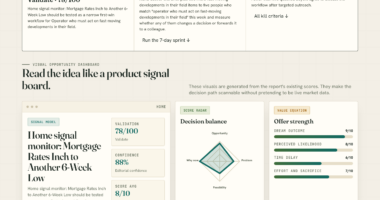
📊 Full opportunity report: Costco's Business Operations: A Clear Anti-Amazon Signal on IdeaNavigator AI — validation score, market gap, and execution plan.
Open a free Amazon Business account
Business pricing, bulk buying and tax-exempt orders.
Create a free accountAs an affiliate, we earn on qualifying purchases.
TL;DR

Costco’s recent business operations suggest a strategic move that positions it as an anti-Amazon. This shift was identified through industry signals and could influence small business tactics. The development offers a new perspective on retail competition.
Costco’s recent business operations demonstrate a clear strategic shift that positions the retailer as an anti-Amazon, according to industry signals analyzed by IdeaNavigator AI. This development is significant for small business operators and founders seeking to understand evolving retail dynamics and competitive threats.
Industry signals, notably from recent filings and market behavior, indicate that Costco is adopting practices that differentiate it from Amazon’s model. Industry signals. Unlike Amazon’s focus on rapid delivery, expansive product range, and aggressive online expansion, Costco emphasizes brick-and-mortar retail, member loyalty, and limited SKUs to maintain cost efficiencies. These operational choices suggest a strategic intent to appeal to a different consumer base and avoid direct confrontation with Amazon’s e-commerce dominance.
Recent moves include increased investments in physical stores, enhanced in-store customer experience, and a focus on private-label brands that reinforce value and exclusivity. industry signals. Industry observers note that these shifts could be a response to Amazon’s aggressive expansion and market encroachment, positioning Costco as a counterpoint that emphasizes traditional retail strengths.
While these signals are clear, it is still uncertain whether Costco’s strategy will significantly impact Amazon’s market share or influence broader retail trends. The company has not publicly articulated a comprehensive anti-Amazon strategy, but the operational signals are consistent with a deliberate positioning to appeal to consumers seeking value and familiarity over rapid online delivery.
Implications for Small Business and Retail Competition
This shift by Costco signals a notable change in retail competition, emphasizing the importance for small businesses to reassess their positioning. For operators and founders, understanding Costco’s move can inform decisions about product offerings, customer engagement, and competitive differentiation. It also highlights the importance of monitoring industry signals that may indicate broader strategic shifts, which can influence market opportunities and threats.
For small companies, recognizing Costco’s anti-Amazon stance may suggest avenues for niche targeting or partnership, especially in local or value-focused segments. It underscores the need for agility in adapting to evolving retail landscapes driven by major players’ strategic realignments.
As an affiliate, we earn on qualifying purchases.
Costco’s Evolving Business Model and Market Position
Costco has long been known for its warehouse club model, emphasizing membership loyalty, bulk sales, and limited product variety to control costs. Historically, it has competed by offering value through low prices and quality, primarily through physical stores. Recently, industry signals from filings and market behavior suggest that Costco is doubling down on this model while subtly shifting its focus away from the online-centric approach favored by Amazon.
In recent quarters, Costco has increased investments in physical store expansion and improved in-store experiences, contrasting with Amazon’s relentless push into online retail and logistics infrastructure. These moves appear to be part of a broader strategy to reinforce its core strengths and avoid direct competition with Amazon’s e-commerce dominance. Analysts note that this could be a response to the intensifying competition in online retail, as well as a desire to preserve its traditional retail advantages.
Historically, Costco’s approach has been to serve loyal members with a limited SKU set, emphasizing quality and value. This operational focus appears to be a deliberate contrast to Amazon’s expansive and fast-paced online model, signaling a strategic positioning that could influence how small businesses view retail partnerships and competition.
Costco in-store customer experience tools
As an affiliate, we earn on qualifying purchases.
As an affiliate, we earn on qualifying purchases.
While industry signals point to a strategic shift, it is still uncertain how significantly Costco’s approach will affect Amazon’s market share or influence broader retail dynamics. The company’s future online initiatives, if any, remain unclear, as do the long-term effects of this anti-Amazon positioning on competitors and consumers. Analysts caution that these signals are early indicators, and the full impact will unfold over time.
As an affiliate, we earn on qualifying purchases.
Monitoring Costco’s Strategic Moves and Industry Responses
The next steps involve closely observing Costco’s ongoing investments in physical stores, product strategies, and any new initiatives that reinforce its positioning against Amazon. Industry watchers will also monitor competitors’ responses, including Amazon’s potential adjustments to its online and logistics strategies. For small businesses, the key will be to identify how these shifts create new opportunities or threats in their markets.
Further analysis and signals from quarterly earnings, filings, and market behavior will clarify whether Costco’s anti-Amazon stance translates into sustained strategic advantage or remains a tactical positioning.
As an affiliate, we earn on qualifying purchases.
Key Questions
What specific operational changes indicate Costco is positioning itself against Amazon?
Recent moves include increased physical store investments, enhanced in-store customer experiences, and a focus on private-label brands that emphasize value and exclusivity, contrasting with Amazon’s online-centric approach.
How might this shift affect small businesses and local retailers?
Small businesses may find new opportunities to partner with Costco or target niche segments that value traditional retail and value offerings. It also signals the importance of agility in adapting to evolving retail strategies.
Does Costco plan to expand its online presence significantly?
It is not yet clear if Costco will pursue a major online expansion or continue focusing on its core physical retail strengths. Current signals suggest a cautious approach aligned with its traditional model.
Could this strategic shift impact Amazon’s market dominance?
While it signals a strategic contrast, the actual impact on Amazon’s dominance remains uncertain. The shift may influence consumer preferences and competitive tactics but is unlikely to cause immediate market share changes.
What should small business operators do in response to this development?
Small businesses should monitor industry signals like Costco’s moves, reassess their positioning, and explore partnerships or niche targeting that leverage traditional retail strengths or value propositions.
Source: IdeaNavigator AI
Flea & tick season Picks
flea and tick prevention
As an affiliate, we earn on qualifying purchases.