
📊 Full opportunity report: Industrial Safety Innovation: Near-Miss Detection AI For Warehouses on IdeaNavigator AI — validation score, market gap, and execution plan.

Get hardware and tech essentials delivered free — and shop member deals
- Fast, free delivery on millions of items
- Access to Prime Big Deal Days deals on October 6–7
- Prime Video, Amazon Music and more included
TL;DR
An AI-based system is being tested to analyze existing warehouse CCTV feeds for near-misses like forklift-pedestrian proximity and rack strikes. The initiative aims to enhance safety management and reduce incident costs by providing actionable safety insights.
Warehouse safety managers are beginning to test an AI system that analyzes existing CCTV footage to detect near-misses such as forklift-pedestrian proximity, blind-corner conflicts, and rack contact, marking a potential shift in safety monitoring practices. This development aims to leverage existing surveillance infrastructure to proactively identify hazards and reduce workplace injuries.
The AI system, developed by IdeaNavigator AI, ingests real-time RTSP camera feeds from warehouses and automatically flags unsafe events, including forklift-to-pedestrian proximity, blind-corner near-misses, rack strikes, and speed violations. It then compiles weekly summaries with clips, dates, shifts, and severity levels, which are sent via email to safety managers. The initial testing involves processing two weeks of archived footage from three mid-market warehouses, with the goal of demonstrating its ability to identify safety incidents that often go unreviewed due to the volume of CCTV data.
According to sources, this approach addresses a key industry challenge: warehouses record hundreds of hours of CCTV daily, but most footage remains unanalyzed, leaving near-misses unreported until an injury occurs. The AI aims to fill this gap by providing actionable insights that can inform safety improvements and potentially lower insurance premiums. The system is positioned as a subscription service, scaled by the number of cameras, and is intended to complement existing safety protocols.
Potential Impact on Warehouse Safety Management
This AI system could significantly improve safety oversight in warehouses by enabling continuous, automated monitoring of hazards without the need for manual review. Early detection of near-misses allows safety teams to address issues proactively, potentially preventing injuries and reducing associated costs. Additionally, documented safety initiatives may lead to insurance premium reductions, providing a financial incentive for facilities to adopt such technology. The approach also demonstrates how existing CCTV infrastructure can be repurposed for advanced safety analytics, making it a cost-effective innovation for the industry.
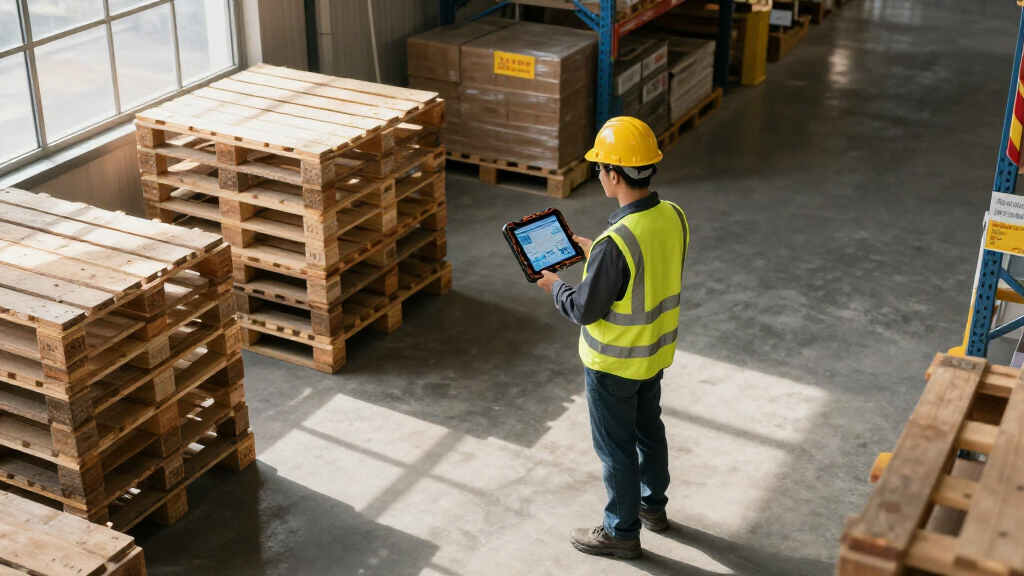
warehouse CCTV safety monitoring system
As an affiliate, we earn on qualifying purchases.
As an affiliate, we earn on qualifying purchases.
Industry Challenges in CCTV Monitoring and Safety Reporting
Warehouses and 3PL providers typically operate dozens of cameras across multiple shifts, generating extensive footage that is rarely reviewed in detail. This often results in near-misses and unsafe behaviors going unnoticed until they cause injuries or property damage. Industry experts have highlighted the difficulty of manual review and the need for automated solutions. Vision models capable of classifying proximity and speed violations have recently become more accurate and accessible, creating opportunities for safety improvements. Insurers are increasingly rewarding documented safety programs, incentivizing warehouses to adopt proactive monitoring tools.
“Leveraging existing CCTV feeds with AI can transform reactive safety reporting into proactive hazard management.”
— an anonymous researcher
As an affiliate, we earn on qualifying purchases.
Uncertainties About System Effectiveness and Adoption
It is not yet confirmed how accurately the AI will detect all relevant near-misses across diverse warehouse environments. The initial testing phase will provide data on its detection rate and false positives, but broader adoption depends on demonstrated reliability, ease of integration, and cost-effectiveness. Additionally, safety managers’ willingness to rely on automated alerts for incident prevention remains to be seen, as some may prefer traditional review methods.
As an affiliate, we earn on qualifying purchases.
Next Steps in Validation and Industry Adoption
Following the two-week testing period, the developers plan to analyze detection accuracy and gather feedback from safety managers. If successful, they will refine the system and expand pilot programs to additional warehouses. The goal is to establish a scalable, subscription-based service that can be integrated into existing safety workflows. Broader industry adoption will depend on demonstrated ROI, including incident reduction and insurance premium savings. Further research may explore integrating the AI with other safety management tools for comprehensive hazard monitoring.
warehouse safety incident alert device
As an affiliate, we earn on qualifying purchases.
As an affiliate, we earn on qualifying purchases.
Key Questions
How does the AI identify near-misses in warehouse footage?
The AI uses vision models trained to classify forklift-pedestrian proximity, blind-corner conflicts, rack contact, and speed violations from existing CCTV feeds, automatically flagging unsafe events.
Will this system replace manual safety reviews?
It is designed to complement manual reviews by providing automated alerts and summaries, reducing the workload and helping safety teams focus on critical issues.
What are the cost implications for warehouses adopting this AI?
The system is offered as a per-facility subscription scaled by camera count, with potential savings from lower incident rates and insurance premiums.
When will broader deployment be expected?
After successful pilot testing and validation, wider deployment could begin within the next few months, depending on feedback and system refinement.
Are there privacy concerns with this AI monitoring system?
Since the system analyzes existing CCTV footage primarily for safety events, privacy concerns are minimal if footage is handled according to industry standards and regulations.
Source: IdeaNavigator AI
Halloween Picks
halloween
As an affiliate, we earn on qualifying purchases.