

📊 Full opportunity report: Kill-Switch-Proof: How To Build So Washington Can’t Take Your AI Stack Down on ThorstenMeyerAI.com — validation score, market gap, and execution plan.
TL;DR
Following June 2026 government shutdowns of top AI models, organizations are adopting strategies to make their AI stacks resistant to government or provider shutdowns. The key is architectural resilience through dependency mapping, model abstraction gateways, fallback tiers, and open-weight models.
In June 2026, the US government ordered the shutdown of the most capable AI models, including Anthropic’s Fable 5 and limited access to OpenAI’s GPT-5.6 for select partners. This exposed a critical vulnerability: reliance on external providers for core AI capabilities can lead to indefinite outages beyond a company’s control. As a result, organizations are now adopting architectural strategies to build ‘kill-switch-proof’ AI stacks, ensuring they can maintain operational continuity regardless of government or provider actions.
The June 2026 shutdowns demonstrated that model access is no longer solely a technical issue but a political and legal one. The US government’s directives led to global, indefinite outages, especially affecting entities with international or mixed-nationality teams. These events highlighted the importance of designing AI infrastructure that is resilient to such disruptions.
Key strategies include maintaining a comprehensive dependency map of all models, providers, and integrations; implementing a model abstraction gateway that allows easy swapping of models via configuration changes; establishing fallback tiers with models that require no approval to run; and developing or hosting open-weight models on infrastructure under full control. These measures aim to reduce dependency on external vendors and mitigate risks associated with government shutdowns and export restrictions.
Kill-switch-proof: build so Washington can’t take your AI stack down
In June, the US government switched off the market’s most capable model — twice, in three weeks. You can’t stop the gate. You can decide whether it takes you down. The difference is entirely architectural — and buildable.
You can’t control the gate — Washington will keep deciding which frontier models ship, and both labs are pushing to make review permanent. What you control is your exposure to it. Kill-switch-proofing isn’t predicting the next directive — it’s making the next one a config change instead of an outage, a routing rule that fails over to a model no one can pull while your users notice nothing. The question stops being “will they take my model away?” and becomes the boring one you can answer: “which one do I route to next?”
Why Resilient AI Architecture Matters Post-2026 Shutdowns
Building a kill-switch-proof AI stack is crucial for organizations that rely heavily on large language models, especially in regulated or sensitive environments. It ensures operational continuity and sovereignty, reducing vulnerability to political decisions and export controls. This shift also influences how companies approach AI development, emphasizing control over dependencies and infrastructure.
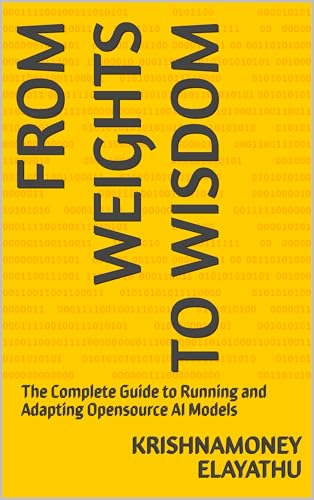
From Weights to Wisdom: The Complete Guide to Running and Adapting Opensource AI Models
As an affiliate, we earn on qualifying purchases.
As an affiliate, we earn on qualifying purchases.
The June 2026 Model Shutdowns and Their Impact
In June 2026, the US government issued directives that resulted in the shutdown of Anthropic’s Fable 5 and limited access to OpenAI’s GPT-5.6 to select government-vetted partners. These actions revealed that reliance on external AI models can lead to indefinite outages with no recourse, especially when export restrictions and geopolitical considerations come into play. The events underscored the need for organizations to rethink their AI architecture, moving towards more self-owned and flexible systems.
“The key to resilience is making your AI dependencies configurable and portable—it’s no longer enough to rely on vendor APIs.”
— Thorsten Meyer, AI infrastructure expert

As an affiliate, we earn on qualifying purchases.
Remaining Questions About Implementation and Effectiveness
It is not yet clear how widely organizations are adopting these architectural strategies or how effective they are in practice. The feasibility of maintaining open-weight models with sufficient performance for all use cases remains uncertain, especially for complex reasoning tasks. Additionally, the legal and logistical challenges of hosting and managing self-owned models at scale are still being addressed.

Designing Machine Learning Systems: An Engineer's Field Guide to Building ML That Ships, Scales, and Survives Production (From Machine Learning Model to Production Series)
As an affiliate, we earn on qualifying purchases.
As an affiliate, we earn on qualifying purchases.
Next Steps for Organizations Building Resilient AI Systems
Organizations are expected to begin comprehensive dependency mapping and implement abstraction gateways as standard practice. The development and deployment of open-weight models on self-hosted infrastructure are likely to accelerate, alongside industry standards for fallback tiers. Monitoring how these strategies perform during future disruptions will inform best practices and guide further architectural refinements.
As an affiliate, we earn on qualifying purchases.
Key Questions
What is a kill-switch-proof AI stack?
A kill-switch-proof AI stack is an architecture designed so that AI capabilities can be quickly swapped or maintained independently of external vendors or government actions, ensuring operational continuity.
How can dependency mapping help prevent outages?
Dependency mapping involves cataloging all models, providers, and integrations, which helps organizations identify single points of failure and prepare fallback options in advance.
Are open-weight models reliable enough for production use?
Open-weight models have improved significantly but may still lag behind closed models on complex reasoning. They are considered a resilient fallback, not always a daily driver.
What legal risks are associated with self-hosted models?
Self-hosting models requires compliance with licensing terms, export laws, and data sovereignty regulations, which can vary by jurisdiction.
Will these strategies be enough to prevent future shutdowns?
While architectural resilience reduces risk, no system can be entirely immune to political or legal actions. Continuous updates and monitoring are essential.
Source: ThorstenMeyerAI.com