
You might find Elon Musk's plan to merge AI with the Department of Government Efficiency (DOGE) intriguing. This initiative aims to reshape federal budgeting through advanced data analysis, potentially enhancing operational efficiency. However, it also raises significant concerns about AI's reliability and the future of government jobs. As these changes unfold, you may wonder what this means for public accountability and the overall governance landscape.

Get hardware and tech essentials delivered free with Prime
- Fast, free delivery on millions of items
- Prime Video, Amazon Music and more included
- Member-only deals all year
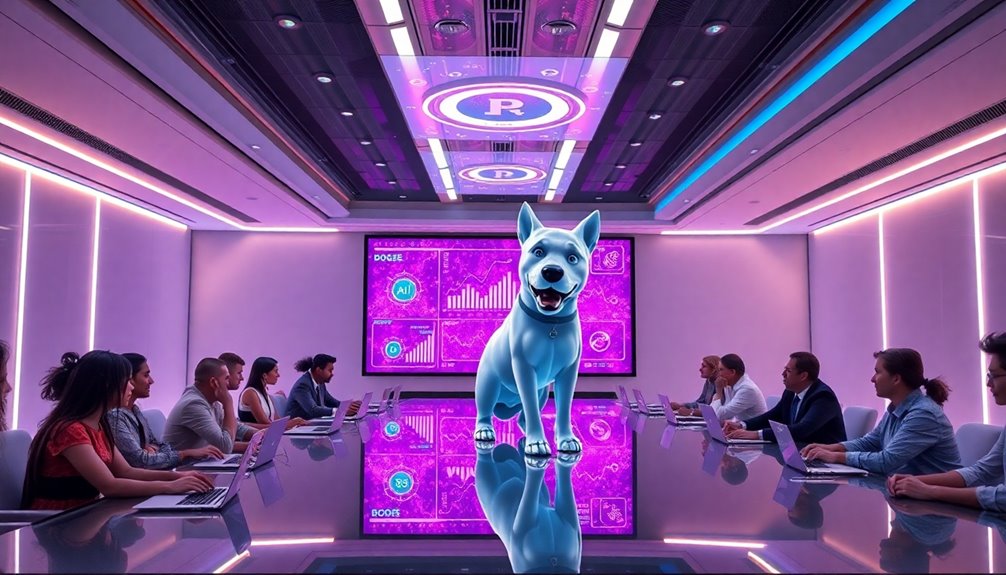
In a bold move, Elon Musk aims to revolutionize federal operations by integrating artificial intelligence (AI) with the Department of Government Efficiency (DOGE). This initiative isn't just about cutting costs; it's about leveraging advanced technology to analyze vast amounts of government data. Think about it: AI tools can sift through contracts and financial records much faster than any human ever could, potentially uncovering areas ripe for spending cuts.
You might wonder, though, about the challenges that come with such an ambitious project. One significant concern is the reliability of AI systems. These tools can make errors or generate inaccurate information, which could lead to costly mistakes. The rapid rollout of AI in federal budgets has also drawn criticism for a lack of transparency. You deserve to know how your government is using your data, especially when sensitive information is involved. Feeding this data into AI systems raises significant privacy issues, and you should be aware of the risks. Additionally, maintaining content quality throughout this process is crucial to ensure that the information generated remains trustworthy.
Moreover, the initiative has received backing from high-level government officials, despite the raised eyebrows. It's essential to consider that not everyone is on board with the plan. Staff unions express valid worries about job security, particularly for marginalized groups. Will AI replace human workers, or will it merely augment their roles? It's a question that remains unanswered.
As the Department of Education becomes one of the first to implement AI for cost-cutting measures, you might think about the potential benefits. Plans include developing "AI coding agents" to automate government processes and centralize data, which could streamline operations significantly. DOGE's focus on identifying spending cuts within this department exemplifies the intention behind the use of AI.
Microsoft's Azure and GitHub Copilot are among the technological tools being utilized for this integration, but they come with their own set of challenges. Cybersecurity risks are heightened when sensitive data is at stake, making robust safeguards crucial.
The ultimate goal is clear: streamline government operations and reduce spending. But at what cost? The initiative operates in a regulatory environment that's rapidly changing, and the long-term implications for both government efficiency and employee roles remain uncertain.
You may find yourself questioning whether this innovation will truly lead to better governance or if it opens the door to more significant issues. As you consider Musk's bold plan, keep an eye on how these developments unfold. The future of federal operations could look very different, and your perspective matters in this evolving landscape.
Products Worth Considering

Apple MacBook Air 15-inch Laptop with M5 Chip, 16GB Memory, 512GB SSD, and Liquid Retina Display

Logitech MX Mechanical Mini Mac Wireless Keyboard Low-Profile – Space Grey

Apple MacBook Pro 14.2-inch with M5 Pro, 15-core CPU, 16-core GPU, 48GB Memory, 1TB SSD, Silver
As an affiliate, we earn on qualifying purchases.

![President Ilham Aliyev receives delegation from House of Representatives of Hashemite Kingdom of Jordan [PHOTOS/VIDEO]](https://dailycoinfeed.com/wp-content/uploads/2026/06/president-ilham-aliyev-receives-delegation-from-house-of-representatives-of-hash-featured-380x200.jpg)