📊 Full opportunity report: Phone-Photo Gauge Reading: Making Industrial Checks Faster And Safer on IdeaNavigator AI — validation score, market gap, and execution plan.

Get hardware and tech essentials delivered free — and shop member deals
- Fast, free delivery on millions of items
- Access to Prime Big Deal Days deals on October 6–7
- Prime Video, Amazon Music and more included
TL;DR
A pilot project tests using phone photos and AI to read analog gauges in industrial facilities, aiming to replace manual clipboard rounds. The method improves speed, accuracy, and safety, with plans for broader validation.
Industrial facilities are piloting a new workflow that replaces manual gauge readings with smartphone photos and AI analysis, aiming to improve safety, speed, and data accuracy. This development could significantly change how routine equipment checks are conducted across legacy systems, reducing errors and enabling real-time monitoring without costly sensor retrofits.
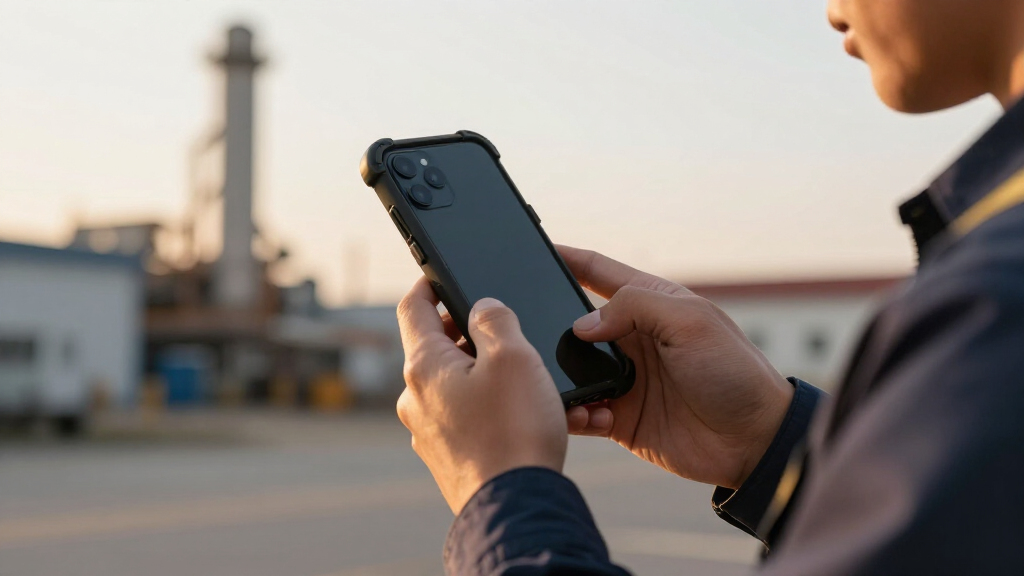
The new approach involves technicians taking photographs of analog gauges during their routine rounds. These images are processed by vision-based AI models that accurately read the gauge values, compare them against expected ranges, and log the data with timestamps and location tags. The system flags anomalies immediately, facilitating early detection of potential failures.
This method is currently being tested at three facilities over a one-month period, with the goal of comparing error rates and anomaly detection effectiveness against traditional clipboard-based readings. The pilot aims to validate whether the phone-photo approach can reliably replace manual transcription, which often introduces errors and delays in identifying developing issues.
The proposed system offers a low-cost, scalable solution for legacy equipment, as it requires no hardware retrofits—only smartphones and a dedicated app. Facilities would subscribe monthly on a tiered pricing model based on the number of gauges monitored, making it accessible for various plant sizes.
Potential Impact on Industrial Maintenance Practices
This innovation could dramatically improve the safety and efficiency of routine maintenance checks by reducing human errors associated with manual transcription. Faster detection of anomalies allows maintenance teams to act proactively, potentially preventing costly equipment failures and downtime. Additionally, the digital records created through this process enable better trend analysis and predictive maintenance strategies, which are increasingly vital in modern industrial operations.
By leveraging existing smartphone technology and AI, this approach offers a cost-effective alternative to expensive sensor retrofits, especially for legacy systems where installing IoT sensors is impractical or cost-prohibitive. If validated at scale, it could become a standard workflow for facilities worldwide, transforming traditional inspection routines into real-time, data-driven processes.
industrial gauge photo reading app
As an affiliate, we earn on qualifying purchases.
As an affiliate, we earn on qualifying purchases.
Legacy Equipment and the Need for Better Data Collection
Many industrial facilities rely on analog gauges and sight glasses to monitor equipment, but manual transcription of readings introduces errors and delays. These inaccuracies can obscure developing failures, leading to unplanned downtime and safety risks. Retrofitting legacy equipment with IoT sensors is often costly and complex, deterring widespread adoption.
Recent advances in AI, particularly vision models trained to interpret images of gauges and counters, have reached a level of reliability suitable for operational use. This technological progress opens the door for a new workflow that transforms simple phone photos into accurate, actionable data, bypassing the need for hardware upgrades.
The concept of using phone photos for gauge reading has been discussed in industry circles for several years but has only recently become feasible due to improvements in AI accuracy and smartphone camera quality. The current pilot aims to demonstrate its practical viability and benefits in real-world settings.
As an affiliate, we earn on qualifying purchases.
Validation Results and Broader Adoption Challenges
It is not yet confirmed how the system will perform across diverse gauge types and environmental conditions. The pilot is ongoing, and results regarding accuracy, error reduction, and anomaly detection are still being analyzed. Broader adoption will depend on validation outcomes, integration with existing maintenance systems, and user acceptance.
Further uncertainties include the scalability of the workflow for large facilities with hundreds of gauges and the potential need for training technicians to use the app effectively.
As an affiliate, we earn on qualifying purchases.
Next Steps for Pilot Validation and Industry Rollout
The pilot at three facilities will continue over the next month, with detailed analysis of error rates and anomaly detection. If results are positive, plans include expanding testing to additional sites and refining the app’s features. Industry stakeholders will monitor the outcomes to determine whether this approach can replace traditional methods on a wider scale.
Further development may involve integrating the system with existing maintenance management software and exploring automation opportunities for data analysis and reporting.
industrial equipment monitoring smartphone
As an affiliate, we earn on qualifying purchases.
As an affiliate, we earn on qualifying purchases.
Key Questions
How accurate are phone photos for gauge reading compared to manual methods?
Preliminary tests suggest AI models can interpret gauge images with high accuracy, comparable to manual readings, but validation is ongoing to confirm reliability across different gauges and environments.
What are the main benefits of using phone photos for gauge readings?
This approach reduces transcription errors, speeds up data collection, enhances safety by minimizing technician exposure, and provides digital records for trend analysis without costly hardware upgrades.
Could this method replace all manual inspections in the future?
While promising for routine checks, some complex or high-risk inspections may still require direct human oversight. The phone-photo workflow aims to complement, not entirely replace, existing procedures.
What are the main challenges before industry-wide adoption?
Challenges include validating accuracy across diverse gauges, integrating with existing systems, training technicians, and ensuring consistent image quality in various environmental conditions.
When will this system be available for general use?
The current pilot is ongoing, with broader deployment contingent on successful validation results, likely within the next few months to a year.
Source: IdeaNavigator AI
Fall Picks
fall essentials
As an affiliate, we earn on qualifying purchases.